 뒤로
Microbial Metabolism: Pathways, Enzymes, and Energy Production
스터디 가이드 - 스마트 노트
 자료에 맞춘 맞춤형 노트, 핵심 정의, 예시, 맥락을 확장해 제공합니다.
Microbial Metabolism
Basic Concepts of Metabolism
Microbial metabolism encompasses all the chemical reactions that occur within microorganisms, enabling them to obtain energy and build cellular components. These reactions are divided into two main categories: catabolism (breaking down molecules to release energy) and anabolism (using energy to synthesize macromolecules).
Catabolism: The breakdown of complex molecules into simpler ones, releasing energy and providing raw materials for the cell.
Anabolism: The synthesis of complex molecules from simpler ones, requiring energy input.
Reduction and Oxidation (Redox Reactions)
Redox reactions are central to metabolism, involving the transfer of electrons between molecules. In these reactions, one molecule is oxidized (loses electrons) and another is reduced (gains electrons). The molecule that donates electrons is the electron donor, and the one that accepts electrons is the electron acceptor.
Oxidation: Loss of electrons, often associated with the addition of oxygen or removal of hydrogen.
Reduction: Gain of electrons, often associated with the addition of hydrogen or removal of oxygen.
LEO-GER: "Loss of Electron is Oxidation; Gain of Electron is Reduction."
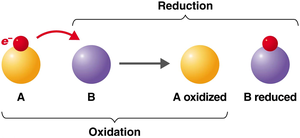
Reduced forms of carbon (e.g., hydrocarbons, fats, carbohydrates) store significant chemical energy, while oxidized forms (e.g., CO2, carboxylic acids) store little energy.
Enzymatic Pathways for Metabolism
Metabolic reactions occur in stepwise sequences called metabolic pathways, each step catalyzed by a specific enzyme. Enzymes lower the activation energy required for reactions and ensure specificity.
Apoenzyme: The protein portion of an enzyme.
Cofactor/Coenzyme: Non-protein components required for enzyme activity. Inorganic cofactors include metal ions (Fe, Mg, Zn, Cu); organic cofactors (coenzymes) are often derived from vitamins (e.g., NAD+, FAD).
Holoenzyme: The complete, active enzyme with its cofactor/coenzyme.
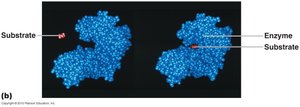
Enzymes are classified by the type of reaction they catalyze: oxidoreductases, transferases, hydrolases, lyases, isomerases, and ligases.
ATP: The Energy Currency
Adenosine triphosphate (ATP) is the primary energy carrier in cells. Energy released from catabolic reactions is stored in ATP, which can be hydrolyzed to release energy for cellular work.
Phosphorylation: The addition of a phosphate group to ADP to form ATP, requiring energy input.
ATP hydrolysis releases energy for processes such as active transport and biosynthesis.
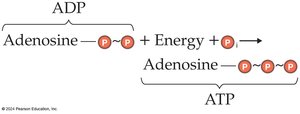
Key reactions:
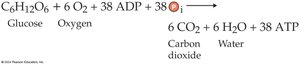
Carbohydrate Catabolism
Overview of Cellular Respiration
Carbohydrate catabolism involves three main stages:
Glycolysis – Breakdown of glucose to pyruvic acid.
Synthesis of Acetyl-CoA and Krebs Cycle – Complete oxidation of pyruvic acid to CO2.
Electron Transport Chain (ETC) and Chemiosmosis – Generation of ATP via oxidative phosphorylation.
Glycolytic Pathways (Glycolysis)
Glycolysis is the first step in cellular respiration, occurring in the cytoplasm and not requiring oxygen. It converts one molecule of glucose into two molecules of pyruvic acid, producing a net gain of two ATP and two NADH molecules.
Preparatory stage: 2 ATP are used to phosphorylate glucose and split it into two three-carbon molecules.
Energy-conserving stage: The three-carbon molecules are oxidized, generating 4 ATP and 2 NADH.
Net reaction:
Glucose + 2 NAD+ + 2 ADP + 2 Pi → 2 Pyruvic acid + 2 NADH + 2 ATP + 2 H2O
Alternative glycolytic pathways in bacteria include the hexose monophosphate pathway, Entner-Doudoroff pathway, and phosphoketolase pathway.
Respiratory Pathways
After glycolysis, pyruvic acid is further oxidized in the presence of oxygen (aerobic respiration) or other inorganic electron acceptors (anaerobic respiration). The complete oxidation of glucose yields up to 38 ATP per molecule in prokaryotes.
Synthesis of Acetyl-CoA
Before entering the Krebs cycle, pyruvic acid is converted to acetyl-CoA, producing NADH and CO2 in the process. Acetyl-CoA then enters the Krebs cycle for further oxidation.
Krebs Cycle (Citric Acid Cycle)
The Krebs cycle is a series of enzymatic reactions that oxidize acetyl-CoA to CO2, transferring electrons to NAD+ and FAD to form NADH and FADH2. For each glucose molecule, the cycle produces:
2 ATP
6 NADH
2 FADH2
Electron Transport Chain (ETC) and Chemiosmosis
The ETC is a series of redox reactions where electrons from NADH and FADH2 are transferred through membrane-bound carriers to a final electron acceptor (O2 in aerobic respiration). The energy released pumps protons across the membrane, creating a proton gradient. ATP synthase uses this gradient to synthesize ATP in a process called chemiosmosis.
Each NADH yields 3 ATP; each FADH2 yields 2 ATP.
Theoretical yield: 38 ATP per glucose (prokaryotes).
Fermentation
Overview of Fermentation
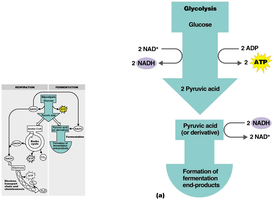
Fermentation is an anaerobic process that allows cells to generate ATP without using the Krebs cycle or ETC. It uses an organic molecule as the final electron acceptor and produces small amounts of ATP.
Does not require oxygen.
Does not use the Krebs cycle or ETC.
Produces end-products such as acids, alcohols, and gases.
Types of Fermentation
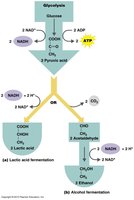
Lactic Acid Fermentation: Pyruvic acid is reduced to lactic acid (e.g., Streptococcus, Lactobacillus).
Alcohol Fermentation: Pyruvic acid is decarboxylated and reduced to ethanol and CO2 (e.g., Saccharomyces cerevisiae).
Acetic Acid Fermentation: Conversion of sugars to acetic acid (vinegar production).
Mixed Acid Fermentation: Produces a variety of acids (e.g., Escherichia coli).
Fermentation End-Products and Industrial Uses
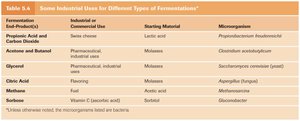
Fermentation End-Product(s) | Industrial Use | Starting Material | Microorganism |
|---|---|---|---|
Propionic Acid and CO2 | Swiss cheese | Lactic acid | Propionibacterium freudenreichii |
Acetone and Butanol | Pharmaceutical, industrial solvents | Molasses | Clostridium acetobutylicum |
Glycerol | Pharmaceutical, industrial uses | Molasses | Saccharomyces cerevisiae (yeast) |
Citric Acid | Flavoring | Molasses | Aspergillus niger |
Methane | Fuel | Acetic acid | Methanobacterium |
Sorbose | Vitamin C (ascorbic acid) synthesis | Sorbitol | Gluconobacter |
Lipid and Protein Catabolism
Catabolism of Lipids
Microbes produce extracellular lipases to break down fats into fatty acids and glycerol. Fatty acids are converted to acetyl-CoA (via beta-oxidation) and enter the Krebs cycle. Glycerol is converted to an intermediate of glycolysis.
Catabolism of Proteins
Proteins are degraded by extracellular proteases into amino acids, which are deaminated and converted into intermediates that enter glycolysis or the Krebs cycle.
Proteins → Amino acids → Pyruvic acid, Acetyl-CoA, or Krebs cycle intermediates
Carbohydrates → Sugars → Glycolysis → Pyruvic acid → Acetyl-CoA → Krebs cycle
Lipids → Glycerol & Fatty acids → Glycolysis/Krebs cycle
All these pathways converge at the Krebs cycle, where electrons are transferred to the ETC for ATP production.
