 뒤로
Microbial Metabolism: Structured Study Notes for Microbiology Students
스터디 가이드 - 스마트 노트
 자료에 맞춘 맞춤형 노트, 핵심 정의, 예시, 맥락을 확장해 제공합니다.
Microbial Metabolism
Overview of Metabolism
Metabolism encompasses all controlled biochemical reactions within a microbe, serving the ultimate function of reproducing the organism. It is divided into two major classes: catabolism and anabolism.
Catabolism: Breakdown of larger molecules into smaller products; releases energy (exergonic).
Anabolism: Synthesis of larger molecules from smaller products; requires energy (endergonic).
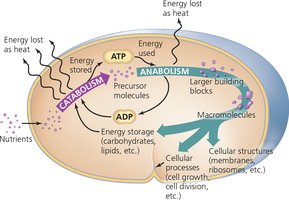
Eight Elementary Statements Guiding Metabolic Processes
Every cell acquires nutrients.
Metabolism requires energy from light or catabolism of nutrients.
Energy is stored in adenosine triphosphate (ATP).
Cells catabolize nutrients to form precursor metabolites.
Precursor metabolites, energy from ATP, and enzymes are used in anabolic reactions.
Enzymes plus ATP form macromolecules.
Cells grow by assembling macromolecules.
Cells reproduce once they have doubled in size.
Catabolism vs. Anabolism
Catabolic pathways: Break larger molecules into smaller products; use NAD+ as electron collector for ATP production.
Anabolic pathways: Synthesize large molecules; use NADP+ as electron donor for biosynthesis.
Oxidation and Reduction Reactions
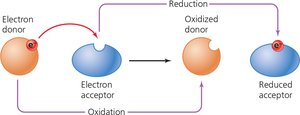
Oxidation-reduction (redox) reactions involve the transfer of electrons from an electron donor to an electron acceptor. These reactions always occur simultaneously and are essential for energy transfer in cells.
Cells use electron carriers: NAD+, NADP+, FAD.
ATP Production and Energy Storage
Organisms release energy from nutrients and store it in high-energy phosphate bonds of ATP. ATP is produced by phosphorylation of ADP in three ways:
Substrate-level phosphorylation
Oxidative phosphorylation
Photophosphorylation
The Roles of Enzymes in Metabolism
Enzyme Structure and Function
Enzymes are organic catalysts that increase the likelihood of a reaction. They are classified based on their mode of action:
Hydrolases
Isomerases
Ligases or polymerases
Lyases
Oxidoreductases
Transferases
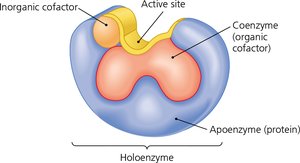
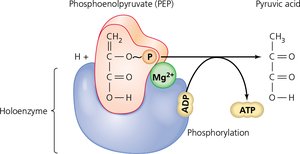
Many protein enzymes are complete in themselves, but some require nonprotein cofactors (inorganic ions or coenzymes) to become active. The combination of an apoenzyme and its cofactor forms a holoenzyme. Some enzymes are RNA molecules called ribozymes.
Enzyme Activity and Reaction Rates
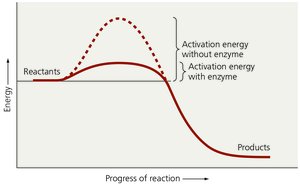
Enzymes lower the activation energy required for chemical reactions, thus speeding up metabolic processes.
Enzyme-Substrate Interaction
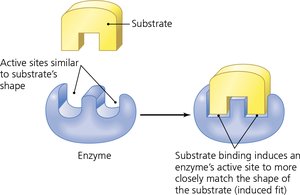
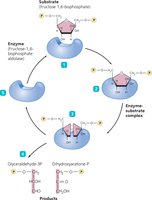
Enzymes bind substrates at their active sites, often inducing a fit that enhances catalytic activity.
Factors Influencing Enzyme Activity
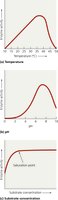
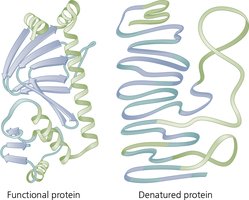
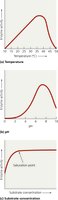
Several factors affect the rate of enzymatic reactions:
Temperature
pH
Enzyme and substrate concentrations
Presence of inhibitors
Control of Enzymatic Activity
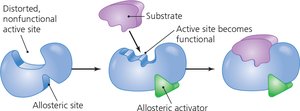
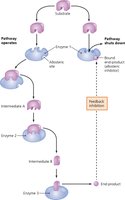
Activators: Some enzymes are activated when a cofactor binds to a site other than the active site (allosteric activation).
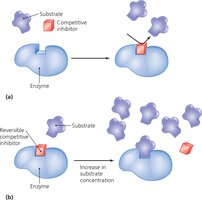
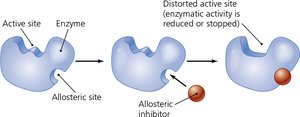
Inhibitors: Substances that block enzyme activity, including competitive and noncompetitive inhibitors. Feedback inhibition controls the action of some enzymes.
Carbohydrate Catabolism
Glucose Catabolism: Cellular Respiration and Fermentation
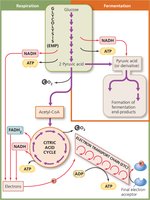
Many organisms oxidize carbohydrates, primarily glucose, as their main energy source. Glucose is catabolized by two processes:
Cellular respiration: Complete oxidation of pyruvic acid to produce ATP via redox reactions.
Fermentation: Partial oxidation of sugar to release energy using an organic molecule as the final electron acceptor.
Glycolysis
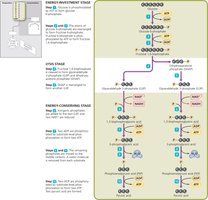
Glycolysis occurs in the cytoplasm and involves splitting a six-carbon glucose into two three-carbon pyruvic acid molecules. It consists of three stages:
Energy-investment stage
Lysis stage
Energy-conserving stage
Net gain: 2 ATP, 2 NADH, and 2 pyruvic acid.
Cellular Respiration
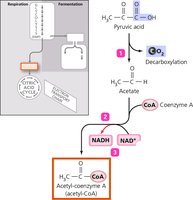
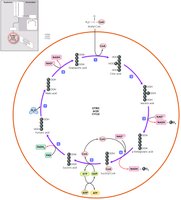
Cellular respiration consists of three stages:
Synthesis of acetyl-CoA
Krebs cycle
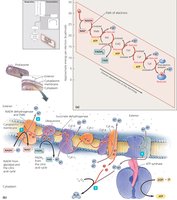
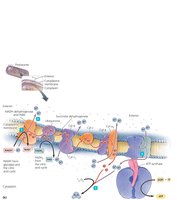
Electron transport chain (ETC)
Electron Transport Chain and Chemiosmosis
The ETC is a series of carrier molecules that pass electrons to a final electron acceptor, using the energy to pump protons and establish a gradient. Chemiosmosis uses this gradient to generate ATP via ATP synthase.
Metabolic Diversity: Alternative Pathways
Entner-Doudoroff pathway: Found only in prokaryotes; produces 1 ATP, 1 NADH, and 1 NADPH.
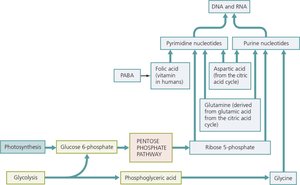
Pentose phosphate pathway: Alternative to glycolysis; produces precursor metabolites and NADPH for biosynthesis.
Fermentation
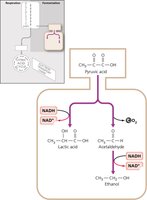
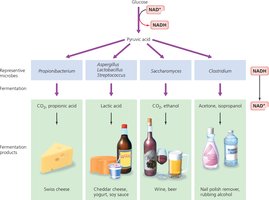
Fermentation regenerates NAD+ by using an organic molecule as the final electron acceptor. End products vary by organism (e.g., lactic acid, ethanol).
Other Catabolic Pathways
Lipid Catabolism
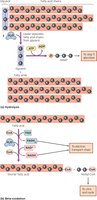
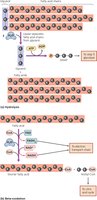
Lipids are broken down by lipases. Glycerol enters glycolysis, while fatty acids undergo beta-oxidation to form acetyl-CoA, which enters the citric acid cycle.
Protein Catabolism
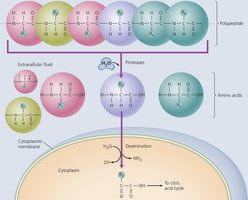
Proteins are broken down into amino acids, which are deaminated and converted into metabolites that enter the citric acid cycle. Waste products include ammonia and urea.
Other Anabolic Pathways
Gluconeogenesis and Biosynthesis
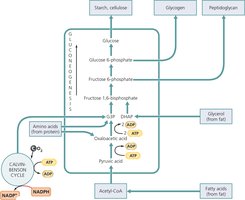
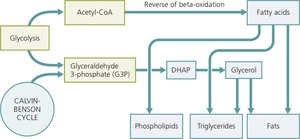
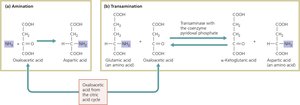
Anabolic reactions synthesize complex molecules using energy from ATP and precursor metabolites. Many anabolic pathways are the reverse of catabolic pathways and are termed amphibolic.
Integration and Regulation of Metabolic Function
Regulation of Metabolism
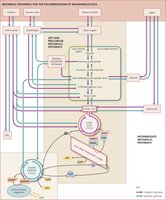
Cells regulate metabolism by controlling gene expression and metabolic expression. Feedback inhibition, allosteric regulation, and compartmentalization in eukaryotes are key mechanisms.
Key Equations and Concepts
ATP Formation:
Glycolysis Net Reaction:
Citric Acid Cycle Net Reaction:
Electron Transport Chain:
Summary Table: Catabolic Pathways
Pathway | Major Substrate | Key Products | ATP Yield |
|---|---|---|---|
Glycolysis | Glucose | Pyruvate, NADH, ATP | 2 |
Citric Acid Cycle | Acetyl-CoA | CO2, NADH, FADH2, ATP | 2 |
Electron Transport Chain | NADH, FADH2 | ATP, H2O | ~34 |
Fermentation | Pyruvate | Lactic acid, ethanol, NAD+ | 2 |
Summary Table: Enzyme Regulation
Regulation Type | Mechanism | Effect |
|---|---|---|
Allosteric Activation | Cofactor binds to allosteric site | Enzyme becomes active |
Competitive Inhibition | Inhibitor binds to active site | Blocks substrate binding |
Noncompetitive Inhibition | Inhibitor binds to allosteric site | Distorts active site, reduces activity |
Feedback Inhibition | End product inhibits pathway | Prevents overproduction |
Conclusion
Microbial metabolism is a complex network of catabolic and anabolic reactions, regulated by enzymes and cellular mechanisms. Understanding these pathways is essential for comprehending microbial growth, energy production, biosynthesis, and adaptation.
