 뒤로
Microbial Metabolism: Structured Study Notes for Microbiology Students
스터디 가이드 - 스마트 노트
 자료에 맞춘 맞춤형 노트, 핵심 정의, 예시, 맥락을 확장해 제공합니다.
Microbial Metabolism
Overview of Metabolism
Metabolism encompasses all chemical reactions occurring within a living organism. These reactions are organized into metabolic pathways, which are determined by enzymes encoded by genes. Metabolism is divided into two fundamental types: catabolism and anabolism.
Catabolism: The breakdown of complex molecules into simpler ones, releasing energy. Catabolic reactions are typically hydrolytic and exergonic.
Anabolism: The synthesis of complex molecules from simpler ones, requiring energy input. Anabolic reactions are biosynthetic, often involving dehydration synthesis, and are endergonic.
ATP (Adenosine Triphosphate): Serves as the energy currency, linking catabolic and anabolic pathways. Energy released from catabolism is stored in ATP, which is then used to drive anabolic reactions.
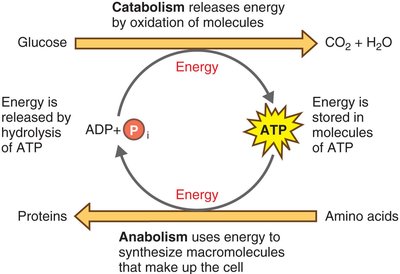
Example: Glucose catabolism releases energy, which is stored in ATP. ATP hydrolysis then provides energy for protein synthesis from amino acids.
Metabolic Pathways and ATP
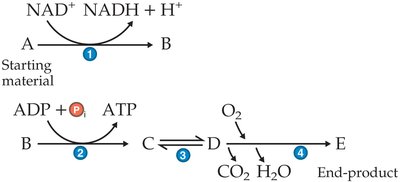
Metabolic pathways are sequences of enzymatically catalyzed reactions. The energy released by catabolic reactions is used to generate ATP, which is then consumed in anabolic reactions.
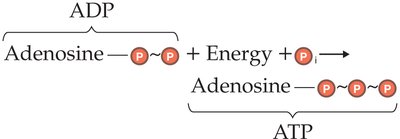
Equation:
Enzymes: Structure and Function
Enzymes are biological catalysts that speed up chemical reactions without being consumed. They act on specific substrates, lowering the activation energy required for reactions.
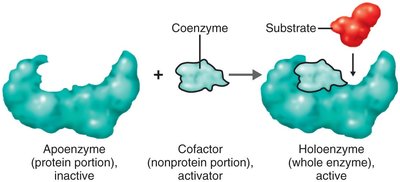
Apoenzyme: Protein portion, inactive alone.
Cofactor: Nonprotein component; can be inorganic (metal ions) or organic (coenzyme).
Holoenzyme: Apoenzyme plus cofactor, forming the active enzyme.
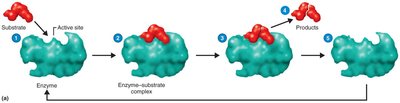
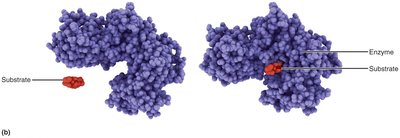
Mechanism of Enzymatic Action: Substrate binds to the enzyme's active site, forming an enzyme-substrate complex. The substrate is transformed into products, which are released, leaving the enzyme unchanged.
Factors Influencing Enzyme Activity
Several factors affect enzyme activity, including temperature, pH, substrate concentration, and inhibitors.
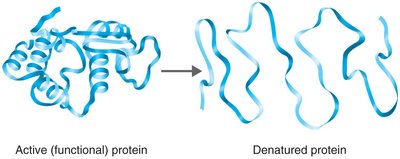
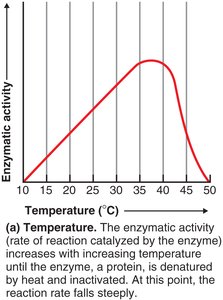
Temperature: Enzyme activity increases with temperature up to an optimum, then decreases due to denaturation.
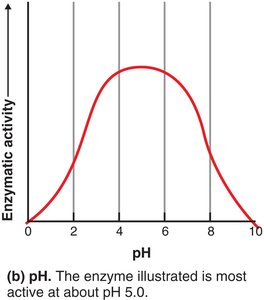
pH: Each enzyme has an optimal pH; extreme pH denatures proteins.
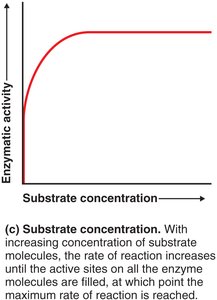
Substrate Concentration: Activity increases with substrate concentration until saturation is reached.
Enzyme Inhibition
Enzyme inhibitors regulate enzymatic activity and can be classified as competitive or noncompetitive.
Competitive Inhibitors: Bind to the active site, competing with the substrate.
Noncompetitive Inhibitors: Bind to an allosteric site, altering the enzyme's shape and rendering it nonfunctional.
Feedback Inhibition: The end-product of a pathway inhibits an earlier enzyme, often via allosteric inhibition.
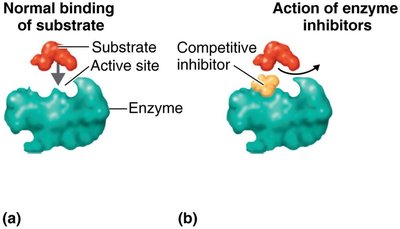
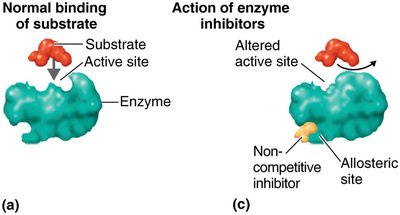
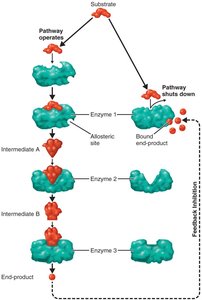
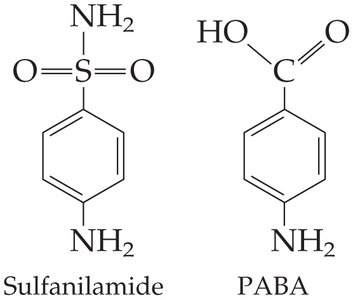
Example: Sulfanilamide acts as a competitive inhibitor of PABA in bacterial folic acid synthesis.
Ribozymes
Ribozymes are RNA molecules that function as catalysts, binding to substrates and facilitating reactions such as RNA splicing and protein synthesis.
Oxidation-Reduction Reactions
Oxidation-reduction (redox) reactions are central to energy production in cells. Oxidation is the loss of electrons, while reduction is the gain of electrons. In biological systems, these reactions often involve the transfer of hydrogen atoms.
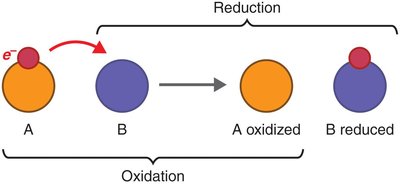
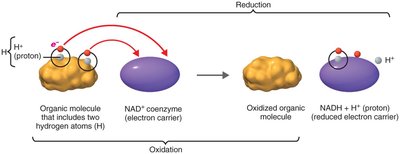
Mnemonic: OIL RIG (Oxidation Is Loss, Reduction Is Gain)
ATP Generation Mechanisms
ATP is generated by phosphorylation of ADP, which occurs via three main mechanisms:
Substrate-Level Phosphorylation: Direct transfer of a phosphate group from a substrate to ADP.
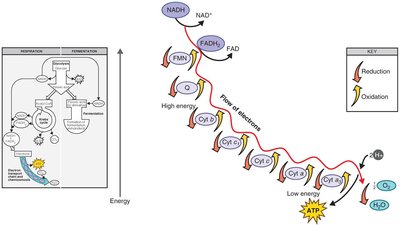
Oxidative Phosphorylation: Electrons are transferred through an electron transport chain, generating ATP via chemiosmosis.
Photophosphorylation: Light energy is used to generate ATP in photosynthetic cells.
Metabolic Pathways of Energy Production
Metabolic pathways extract energy from organic compounds and store it in ATP. These pathways include glycolysis, the Krebs cycle, and the electron transport chain.
Carbohydrate Catabolism
Microorganisms primarily oxidize carbohydrates, with glucose as the main energy source. Carbohydrate catabolism occurs via cellular respiration (glycolysis, Krebs cycle, electron transport chain) or fermentation.
Glycolysis
Glycolysis is the oxidation of glucose to pyruvic acid, producing ATP and NADH. It consists of a preparatory stage (ATP investment) and an energy-conserving stage (ATP and NADH production).
Equation:
Cellular Respiration
Cellular respiration involves the oxidation of molecules, liberating electrons for the electron transport chain. The final electron acceptor is inorganic (oxygen in aerobic respiration, other molecules in anaerobic respiration).
Aerobic Respiration
Aerobic respiration includes glycolysis, the Krebs cycle, and the electron transport chain. The transition step converts pyruvic acid to acetyl CoA, which enters the Krebs cycle. The electron transport chain generates ATP via chemiosmosis, with oxygen as the final electron acceptor.
ATP Yield: Each NADH produces 3 ATP; each FADH2 produces 2 ATP. Total yield in prokaryotes is 38 ATP per glucose.
Anaerobic Respiration
Anaerobic respiration uses a final electron acceptor other than oxygen, yielding less energy (2–34 ATP). Examples include nitrate, sulfate, and carbonate as acceptors.
Fermentation
Fermentation releases energy from the oxidation of organic molecules without oxygen, the Krebs cycle, or the electron transport chain. The final electron acceptor is an organic molecule, producing small amounts of ATP.
Biochemical Tests and Bacterial Identification
Biochemical tests identify bacteria by detecting specific enzymes involved in catabolism, fermentation, oxidation, and H2S production.
Photosynthesis
Photosynthesis synthesizes complex organic compounds from simple inorganic substances using light energy. It consists of light-dependent reactions (producing ATP and NADPH) and light-independent reactions (Calvin-Benson cycle, reducing CO2 to sugar).
Metabolic Diversity Among Organisms
Organisms are classified by their energy and carbon sources:
Photoautotrophs: Use light energy and CO2 as carbon source (e.g., cyanobacteria, plants).
Photoheterotrophs: Use light energy and organic compounds as carbon source (e.g., green bacteria).
Chemoautotrophs: Use inorganic chemicals and CO2 as carbon source (e.g., iron-oxidizing bacteria).
Chemoheterotrophs: Use organic chemicals for both energy and carbon (e.g., animals, fungi, most bacteria).
Example: Most medically important microbes are chemoheterotrophs.
----------------------------------------
