 뒤로
뒤로Microbial Nutrition and Growth: Study Notes for Microbiology Students
스터디 가이드 - 스마트 노트
 자료에 맞춘 맞춤형 노트, 핵심 정의, 예시, 맥락을 확장해 제공합니다.
.
.crobial Nutrition and Growth
Growth Requirements
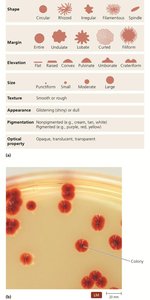
Microbial growth refers to the increase in a population of microbes, primarily through reproduction. Growth results in discrete colonies or biofilms, which are complex communities of microbes living on surfaces.
Colony: Aggregation of cells from a single parent cell.
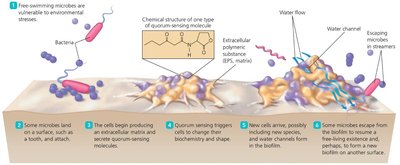
Biofilm: Collection of microbes living in a complex community on a surface.
Chemical and Energy Requirements
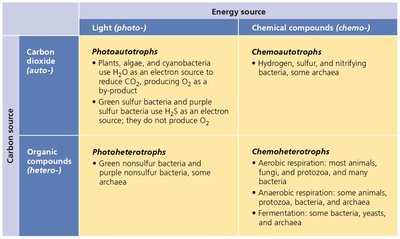
Microorganisms require various nutrients for energy and to build cellular structures. The most common elements are carbon, oxygen, nitrogen, and hydrogen. Microbes are classified based on their sources of carbon, energy, and electrons.
Carbon Source:
Autotrophs: Use carbon dioxide.
Heterotrophs: Use organic compounds.
Energy Source:
Chemotrophs: Use chemical compounds.
Phototrophs: Use light.
Electron Source:
Organotrophs: Use organic molecules.
Lithotrophs: Use inorganic molecules.
Oxygen Requirements
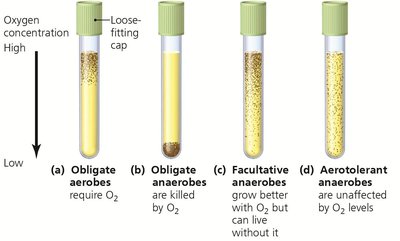
Oxygen is essential for some microbes but toxic for others due to reactive oxygen species. Microbes are classified by their oxygen requirements:
Obligate aerobes: Require oxygen.
Obligate anaerobes: Killed by oxygen.
Facultative anaerobes: Grow better with oxygen but can survive without it.
Aerotolerant anaerobes: Unaffected by oxygen levels.
Microaerophiles: Require low oxygen concentrations.
Nitrogen, Phosphorus, Sulfur, and Growth Factors
Nitrogen is essential for amino acids and nucleotides. Some bacteria fix atmospheric nitrogen. Other elements like phosphorus and sulfur are required in smaller amounts. Growth factors are organic chemicals that some organisms cannot synthesize and must obtain from the environment.
Growth Factor | Function |
|---|---|
Amino acids | Protein components |
Cholesterol | Cell membrane structure (mycoplasmas) |
Heme | Cytochrome function in electron transport |
NADH | Electron carrier |
Niacin | Precursor of NAD+ and NADP+ |
PABA | Precursor of folic acid |
Physical Requirements
Microbial growth is influenced by temperature, pH, and water availability.
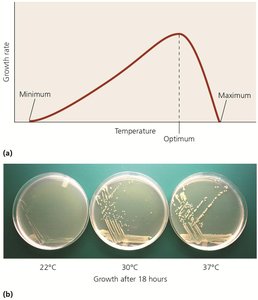
Temperature: Affects protein structure and membrane fluidity. Microbes are classified by their optimal temperature ranges.
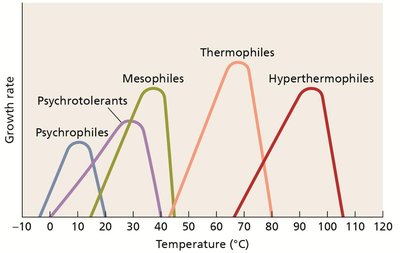
Psychrophiles: Grow at low temperatures.
Mesophiles: Grow at moderate temperatures.
Thermophiles: Grow at high temperatures.
Hyperthermophiles: Grow at extremely high temperatures.
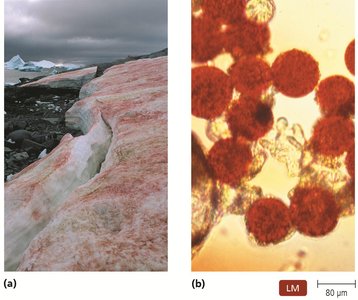
pH:
Neutrophiles: Grow best at neutral pH.
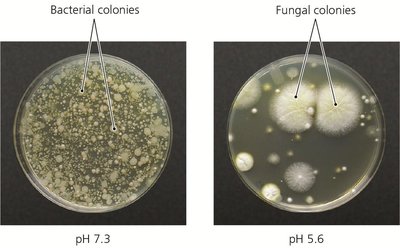
Acidophiles: Grow best in acidic environments.
Alkalinophiles: Grow best in alkaline environments.
Water: Required for metabolic reactions.
Osmotic pressure: Determines cell survival in different solute concentrations.
Hydrostatic pressure: Barophiles thrive under high pressure.
Associations and Biofilms
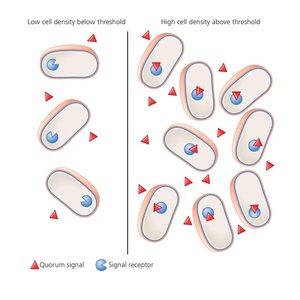
Microbes often live in associations with other species, forming antagonistic, synergistic, or symbiotic relationships. Biofilms are complex communities formed through quorum sensing, making microbes more resistant and sometimes more harmful.
Culturing Microorganisms
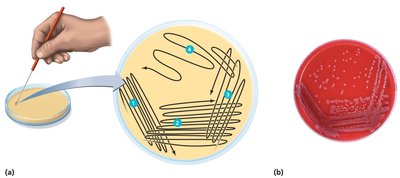
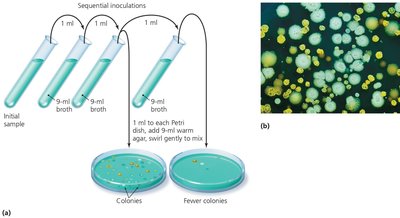
Culturing involves growing microbes in nutrient media. Pure cultures are obtained using aseptic techniques and isolation methods such as streak plates and pour plates.
Culture: Act of cultivating microorganisms.
Inoculum: Microorganisms introduced into a medium.
Isolation techniques: Streak plate, pour plate, dilution, and picking single cells.
Culture Media Types
Defined media: Exact chemical composition known.
Complex media: Composition unknown; supports diverse microbes.
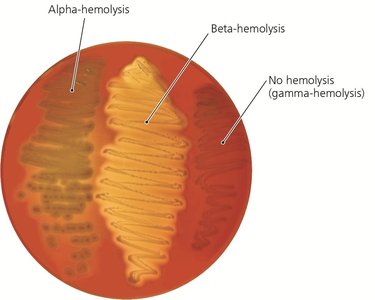
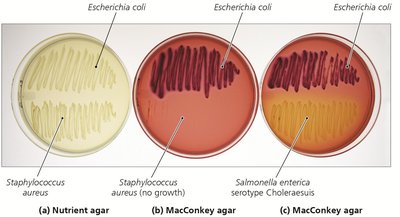
Selective media: Favors or inhibits specific microbes.
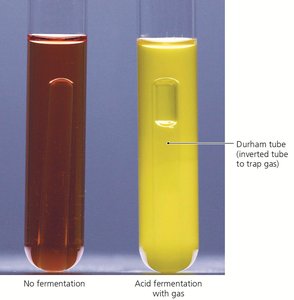
Differential media: Distinguishes microbes by visible changes.
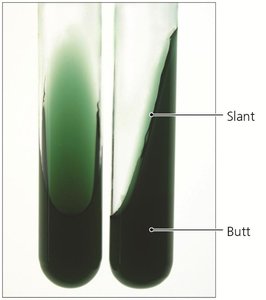
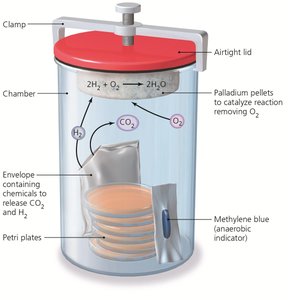
Anaerobic media: Supports anaerobic growth.
Transport media: Maintains specimen integrity during transport.
Growth of Microbial Populations
Binary Fission
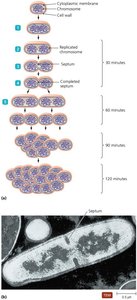
Most bacteria reproduce by binary fission, a process involving cell growth, DNA replication, septum formation, and cell division.
Generation Time and Growth Curves
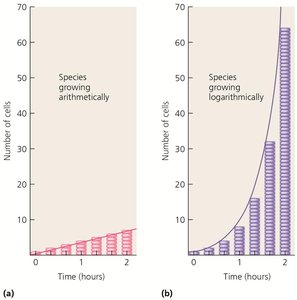
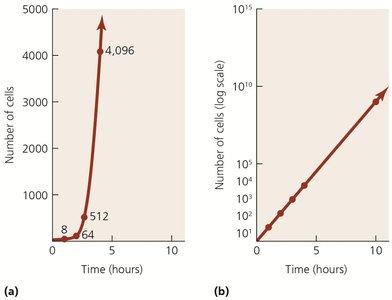
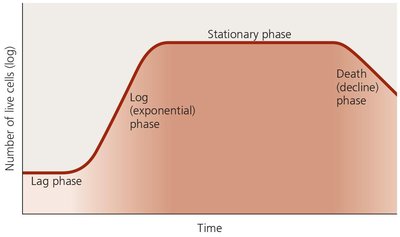
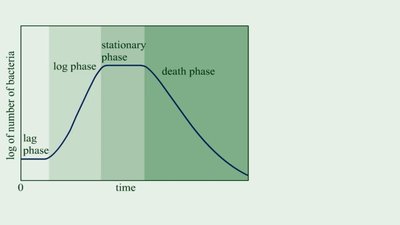
Generation time is the period required for a cell to divide. Microbial populations grow logarithmically, resulting in characteristic growth curves with lag, log, stationary, and death phases.
Continuous Culture
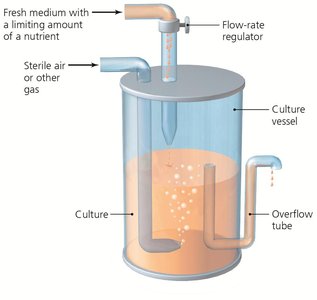
A chemostat maintains microbial populations in a specific growth phase by continuously adding fresh medium and removing old medium. This is useful in industrial microbiology.
Measuring Microbial Reproduction
Microbial numbers are estimated using direct and indirect methods.
Direct methods:
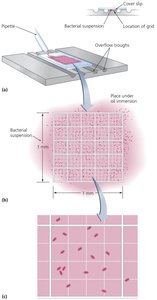
Microscopic counts
Electronic counters (Coulter counter, flow cytometry)
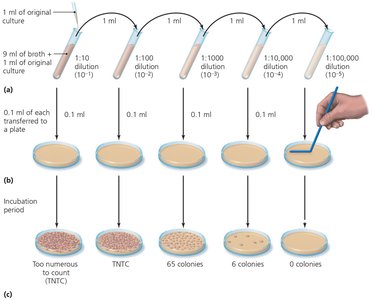
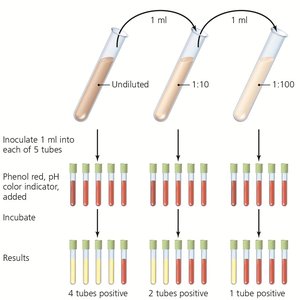
Serial dilution and viable plate counts
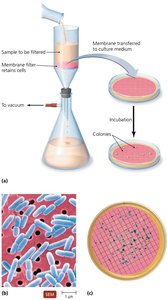
Membrane filtration
Most probable number (MPN)
Indirect methods:
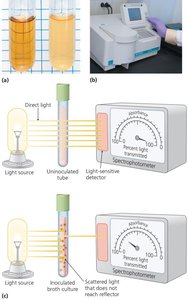
Turbidity (spectrophotometry)
Metabolic activity
Dry weight
Molecular methods (DNA sequencing)
Micro Matters: Listeria monocytogenes
Listeria monocytogenes is a pathogen capable of surviving in diverse environments and causing CNS infections in immunocompromised individuals. It can be identified using selective and differential media, and treated with antibiotics targeting bacterial enzymes.
Summary Table: Microbial Growth Factors and Media Types
Media Type | Purpose |
|---|---|
Defined | Known composition; research |
Complex | Unknown composition; general growth |
Selective | Favors/inhibits specific microbes |
Differential | Distinguishes by visible changes |
Anaerobic | Supports anaerobes |
Transport | Maintains specimen integrity |
Key Equations
Logarithmic Growth Equation: Where N is the final number of cells, N0 is the initial number, and n is the number of generations.
Additional info: These notes expand on brief points with academic context, definitions, and examples to provide a comprehensive study guide for Chapter 6: Microbial Nutrition and Growth.
