 뒤로
Microbiology and Infectious Disease: Study Notes for College Students
스터디 가이드 - 스마트 노트
 자료에 맞춘 맞춤형 노트, 핵심 정의, 예시, 맥락을 확장해 제공합니다.
Introduction to Microbiology
Definition and Scope
Microbiology is the study of microorganisms, which are organisms invisible to the naked eye. These include bacteria, viruses, fungi, and parasites. Most microorganisms are harmless or beneficial, but a small proportion are pathogenic, causing disease in animals and plants.
Microorganisms: Single-celled microscopic organisms; viruses are microscopic but not cellular.
Pathogens: Microorganisms that produce harmful effects.
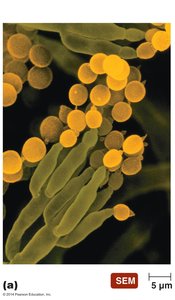
Penicillium chrysogenum: Mold from which penicillin is produced, illustrating the usefulness of microbes.
Importance of Microbiology
Studying microbiology is essential for understanding infectious diseases, their prevention, and their impact on public health. Microbes play critical roles in medicine, industry, and ecology.
Microbes are involved in nutrient cycling, food production, and biotechnology.
Understanding pathogens helps prevent and treat diseases.
Basic Microbial Structures
Classes of Microorganisms
Microorganisms vary in size, complexity, and growth conditions.
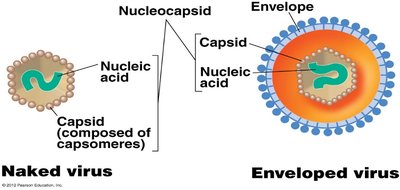
Viruses: Consist mainly of nucleic acids (DNA or RNA) encapsulated in a protein shell (capsid). They replicate only inside host cells.
Chlamydia: More complex than viruses, multiply only within living cells, have cell walls, and exhibit two life stages: elementary body (infectious) and reticulate body (reproductive).
Mycoplasmas: Smallest self-replicating microbes, lack a rigid cell wall, making them delicate. M. pneumoniae causes atypical pneumonia.
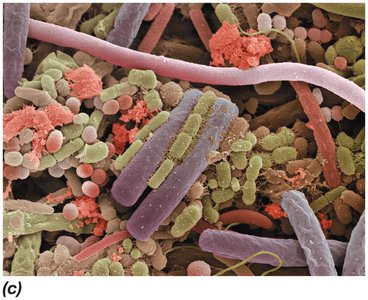
Bacteria: Prokaryotes with a rigid cell wall, circular chromosome, and no membrane-bound organelles.

Symbiotic Relationships Between Microbes and Hosts
Types of Symbiosis
Symbiosis refers to "living together" and describes the relationship between microbes and their hosts.
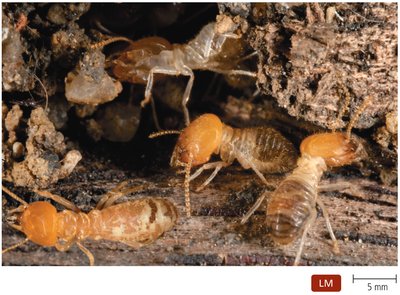
Mutualism: Both organisms benefit (e.g., bacteria in human colon).
Commensalism: One benefits, the other is unaffected (e.g., mites in hair follicles).
Amensalism: One is harmed, the other is unaffected (e.g., fungus secreting antibiotics).
Parasitism: One benefits, the other is harmed (e.g., tuberculosis bacteria in human lung).
Type | Organism 1 | Organism 2 | Example |
|---|---|---|---|
Mutualism | Benefits | Benefits | Bacteria in human colon |
Commensalism | Benefits | Neither benefits nor is harmed | Mites in human hair follicles |
Amensalism | Is harmed | Neither benefits nor is harmed | Fungus secreting antibiotic |
Parasitism | Benefits | Is harmed | Tuberculosis bacteria in human lung |
Human Microbiome
The human microbiome consists of organisms colonizing the body's surfaces without causing disease.
Resident microbiota: Present throughout life, mostly commensal.
Transient microbiota: Present for short periods, eliminated by competition, body defenses, or changes in the body.
Normal Microbiota and Opportunistic Pathogens
Normal Microbiota
Resident microbiota: Stable population, mostly commensal.
Transient microbiota: Temporary, removed by competition or body defenses.
Opportunistic Pathogens
Normal microbiota can cause disease under certain conditions, such as immune suppression, introduction to unusual sites, or changes in the microbiota.
Examples: Staphylococcus aureus causing infection when entering wounds.
Reservoirs of Infectious Diseases
Types of Reservoirs
Pathogens are maintained in reservoirs, which are sources of infection.
Animal reservoirs: Zoonoses are diseases spread from animals to humans (e.g., rabies, malaria).
Human carriers: Asymptomatic individuals can transmit pathogens.
Nonliving reservoirs: Soil, water, and food contaminated by pathogens.
Disease | Causative Agent | Animal Reservoir | Mode of Transmission |
|---|---|---|---|
Tapeworm infestation | Dipylidium caninum | Dogs | Ingestion of larvae in dog saliva |
Malaria | Plasmodium spp. | Monkeys | Bite of Anopheles mosquito |
Ringworm | Trichophyton spp. | Domestic animals | Direct contact |
Anthrax | Bacillus anthracis | Domestic livestock | Direct contact, inhalation |
Rabies | Lyssavirus sp. | Bats, dogs | Bite of infected animal |
Infection: The Invasion and Establishment of Microbes in Hosts
Contamination vs. Infection
Contamination: Presence of microbes on or in the body.
Infection: Microbes evade defenses, multiply, and establish in the body.
Portals of Entry
Pathogens enter the body through specific sites:
Skin: Through cuts or by burrowing.
Mucous membranes: Respiratory and gastrointestinal tracts.
Placenta: Can cross and infect fetus.
Parenteral route: Direct deposition into tissues, bypassing normal portals.
Adhesion and Colonization
Microorganisms attach to host cells using adhesion factors (fimbriae, pili, adhesins). Attachment is necessary for colonization and infection.
Fimbriae: Protein filaments aiding in adherence and biofilm formation.
Pili: Fewer per cell, involved in adhesion and genetic exchange (conjugation).
The Nature of Infectious Disease
Manifestations of Disease
Symptoms: Subjective, felt by patient.
Signs: Objective, observed by others.
Syndrome: Collection of symptoms and signs characterizing a disease.
Etiology: Causation of Disease
Etiology is the study of disease causes. Infectious diseases are caused by infectious agents.
Koch's postulates: Criteria to prove a pathogen causes a disease.
Exceptions: Some pathogens can't be cultured, diseases may have multiple causes, ethical limitations.
Categories of Diseases
Category | Description | Examples |
|---|---|---|
Hereditary | Genetic errors | Sickle-cell anemia |
Congenital | Defects present at birth | Fetal alcohol syndrome |
Degenerative | Aging-related | Renal failure |
Nutritional | Lack of nutrients | Rickets |
Infectious | Caused by infectious agents | Colds, influenza |
Iatrogenic | Medical treatment | Surgical error |
Idiopathic | Unknown cause | Alzheimer's disease |
Nosocomial | Healthcare-associated | Pseudomonas infection |
Virulence Factors of Infectious Agents
Pathogenicity and Virulence
Pathogenicity: Ability to cause disease.
Virulence: Degree of pathogenicity, often measured by LD50 (lethal dose for 50% of test animals).
Virulence Factors
Adhesion factors: Enable attachment to host cells.
Biofilms: Communities of microbes adhering to surfaces.
Extracellular enzymes: Dissolve host tissues, aiding invasion.
Toxins: Harm tissues or trigger damaging immune responses.
Exotoxins: Secreted proteins, highly toxic, specific effects.
Endotoxins: Lipid A from Gram-negative bacteria, released upon cell death, less specific, can cause fever and shock.
Antiphagocytic factors: Prevent phagocytosis, allowing pathogens to evade host defenses.
Bacterial capsules: Not recognized as foreign, slippery, difficult to engulf.
Antiphagocytic chemicals: Prevent fusion of lysosome and phagocytic vesicles, destroy phagocytic cells.
Feature | Exotoxins | Endotoxins |
|---|---|---|
Source | Gram-positive and Gram-negative bacteria | Gram-negative bacteria |
Relation to Bacteria | Secreted metabolic product | LPS released upon cell death |
Chemical Nature | Protein/peptide | Lipid A of LPS |
Toxicity | High | Low, may be fatal in high doses |
Heat Stability | Unstable above 60°C | Stable at 121°C |
Effect on Host | Variable (cytotoxin, neurotoxin, etc.) | Fever, malaise, shock |
Fever Producing? | No | Yes |
Antigenicity | Strong | Weak |
Toxoid Formation | Possible | Not feasible |
Representative Diseases | Botulism, tetanus, cholera | Typhoid fever, endotoxic shock |
Capsules and Antiphagocytic Factors
Capsules protect bacteria from host defenses and aid in adherence.
Encapsulated strains are more virulent than nonencapsulated strains.
Conclusion
Microbiology is fundamental to understanding infectious diseases, their transmission, and prevention. The study of microbial structures, symbiotic relationships, reservoirs, infection processes, and virulence factors provides a comprehensive foundation for students preparing for exams and careers in health sciences. Additional info: Some explanations and context were expanded for clarity and completeness based on standard academic sources.
