 뒤로
Microbiology: The Microbial World and Chemical Principles
스터디 가이드 - 스마트 노트
 자료에 맞춘 맞춤형 노트, 핵심 정의, 예시, 맥락을 확장해 제공합니다.
The Microbial World and You
Introduction to Microorganisms
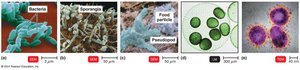
Microorganisms, or microbes, are organisms too small to be seen with the unaided eye. They include bacteria, fungi, protozoa, microscopic algae, viruses, and prions. Microbes play essential roles in the environment, industry, and health.
Pathogenic microbes: Only a few microbes cause disease.
Food spoilage: Some microbes are responsible for spoiling food.
Ecological roles: Microbes form the basis of aquatic food chains, decompose organic waste, and recycle elements like nitrogen and oxygen.
Industrial roles: Microbes produce chemicals (e.g., ethanol, acetone), fermented foods (e.g., cheese, yogurt), and pharmaceuticals (e.g., insulin).
The Microbiome
The microbiome refers to the community of microbes living in and on the human body. These microbes help maintain health, prevent pathogen growth, and train the immune system.
Normal microbiota: Microbes acquired before birth and throughout life, which may be permanent or transient.
Colonization: Occurs only at body sites providing suitable nutrients and environments.
Human Microbiome Project: Aimed to characterize the human microbiota and its role in health and disease.
Naming and Classifying Microorganisms
Carolus Linnaeus established the binomial system of nomenclature in 1735. Each organism has a genus and a specific epithet (species name), both italicized or underlined. The genus is capitalized, and the species is lowercase.
Example: Escherichia coli (named after Theodor Escherich; found in the colon)
Example: Staphylococcus aureus (describes clustered, spherical, gold-colored cells)
After first use, names may be abbreviated (e.g., E. coli, S. aureus).
Types of Microorganisms
Bacteria: Prokaryotic, unicellular, peptidoglycan cell walls, divide by binary fission, may have flagella.
Archaea: Prokaryotic, lack peptidoglycan, often live in extreme environments, not known to cause disease.
Fungi: Eukaryotic, chitin cell walls, absorb organic chemicals, include unicellular yeasts and multicellular molds/mushrooms.
Protozoa: Eukaryotic, absorb/ingest organic chemicals, may be motile, free-living or parasitic.
Algae: Eukaryotic, cellulose cell walls, photosynthetic, produce oxygen and carbohydrates.
Viruses: Acellular, DNA or RNA core, protein coat, replicate only in living hosts.
Multicellular Animal Parasites: Eukaryotic, include helminths (flatworms, roundworms), some stages are microscopic.
Historical Foundations of Microbiology
Early Observations and Cell Theory
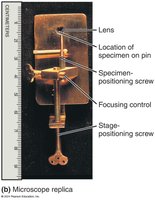
Robert Hooke (1665) observed cells in cork, leading to cell theory: all living things are composed of cells. Anton van Leeuwenhoek (1673–1723) observed "animalcules" (bacteria, protozoa) with simple microscopes.
Spontaneous Generation vs. Biogenesis
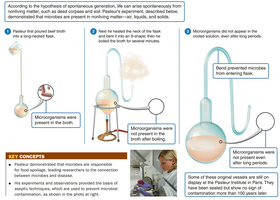
Debate existed over whether life could arise spontaneously from nonliving matter. Experiments by Redi, Needham, Spallanzani, and Pasteur ultimately disproved spontaneous generation, supporting biogenesis (life arises from preexisting life).
The Golden Ages of Microbiology
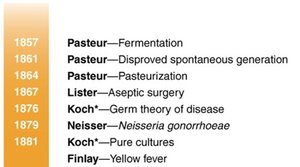
First Golden Age (1857–1914): Discoveries included fermentation, pasteurization, germ theory, aseptic techniques, and Koch's postulates.
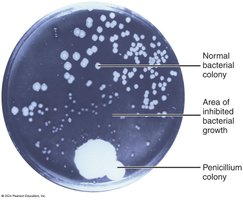
Second Golden Age: Focused on chemotherapy and antibiotics (e.g., penicillin).
Third Golden Age: Genomics, recombinant DNA technology, and molecular genetics.
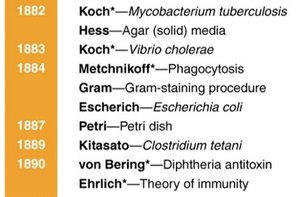
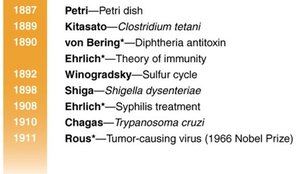
The Germ Theory of Disease
The germ theory states that microorganisms cause disease. Key contributors include Agostino Bassi, Louis Pasteur, Joseph Lister, and Robert Koch. Koch's postulates provided experimental steps to link specific microbes to specific diseases.
Vaccination and Chemotherapy
Vaccination: Edward Jenner developed the first vaccine (smallpox) using cowpox virus.
Chemotherapy: Paul Ehrlich developed the first synthetic drug (salvarsan for syphilis); Alexander Fleming discovered penicillin.
Modern Microbiology
Subdisciplines
Bacteriology: Study of bacteria
Mycology: Study of fungi
Parasitology: Study of protozoa and parasitic worms
Immunology: Study of immunity
Virology: Study of viruses
Molecular genetics: Study of microbial inheritance and gene function
Microbial Ecology and Applications
Recycling elements: Microbes recycle carbon, nitrogen, sulfur, and phosphorus.
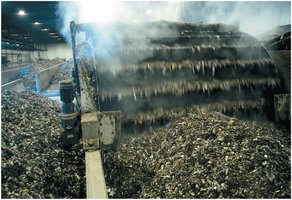
Sewage treatment: Microbes decompose organic matter in sewage.
Bioremediation: Microbes degrade pollutants (e.g., oil spills, mercury).
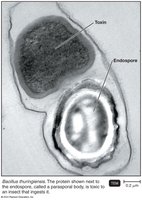
Insect pest control: Microbes like Bacillus thuringiensis are used as biological insecticides.
Biotechnology: Use of microbes for practical applications (e.g., gene therapy, genetically modified crops).
Normal Microbiota and Biofilms
Normal microbiota: Microbes normally present in the body, providing protection and producing vitamins.
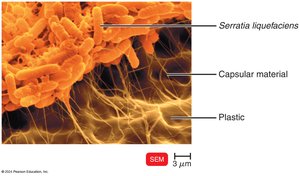
Biofilms: Complex microbial communities attached to surfaces; can be beneficial or harmful (e.g., resistant to antibiotics).
Emerging Infectious Diseases (EIDs)
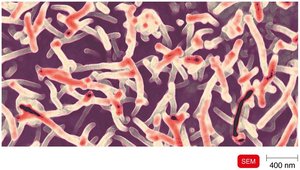
EIDs are new or increasing diseases, often due to microbial evolution, resistance, or changes in human behavior and environment. Examples include COVID-19, Mpox, Zika, H1N1 influenza, antibiotic-resistant infections, Ebola, and Marburg virus.
Chemical Principles in Microbiology
Structure of Atoms
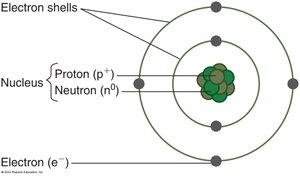
Atoms are the smallest units of matter, composed of protons, neutrons, and electrons. Protons and neutrons form the nucleus, while electrons occupy shells around the nucleus.
Chemical Elements and Isotopes
Atomic number: Number of protons in the nucleus.
Atomic mass: Total number of protons and neutrons.
Isotopes: Atoms of the same element with different numbers of neutrons.
Electronic Configurations
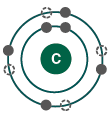
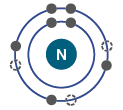
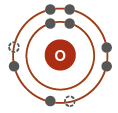
Electrons are arranged in shells. The number of electrons in the outermost shell (valence shell) determines chemical reactivity.
Chemical Bonds
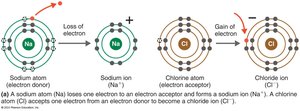
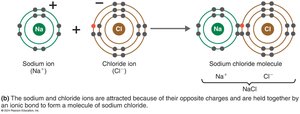
Ionic bonds: Formed by transfer of electrons between atoms, resulting in attraction between oppositely charged ions.
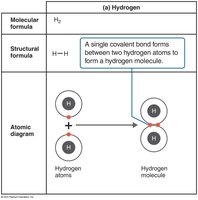
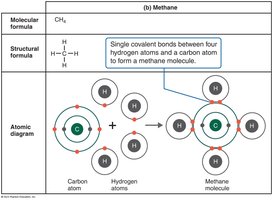
Covalent bonds: Formed by sharing of electron pairs between atoms; stronger and more common in living organisms.
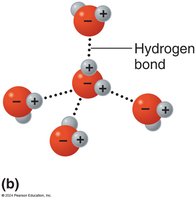
Hydrogen bonds: Weak attractions between a hydrogen atom covalently bonded to O or N and another O or N atom.
Water and Its Properties
Water is a polar molecule, an excellent solvent, and a temperature buffer. Its polarity and hydrogen bonding are crucial for life.
Acids, Bases, and pH
Acids: Substances that release hydrogen ions (H+).
Bases: Substances that release hydroxide ions (OH-).
Salts: Substances that dissociate into cations and anions, neither of which is H+ or OH-.
pH scale: Measures hydrogen ion concentration; pH 7 is neutral, below 7 is acidic, above 7 is basic.
Organic Molecules and Macromolecules
Organic compounds: Contain carbon and hydrogen, often with oxygen or nitrogen.
Functional groups: Specific groups of atoms responsible for chemical properties (e.g., hydroxyl, carboxyl, amino).
Macromolecules: Large molecules formed by joining monomers via dehydration synthesis (e.g., carbohydrates, proteins, nucleic acids, lipids).
Carbohydrates
Monosaccharides: Simple sugars (e.g., glucose, fructose).
Disaccharides: Two monosaccharides joined by dehydration synthesis (e.g., sucrose, lactose).
Polysaccharides: Many monosaccharides joined (e.g., starch, glycogen, cellulose).
Lipids
Simple lipids: Fats/triglycerides (glycerol + fatty acids).
Complex lipids: Include phospholipids (major component of cell membranes).
Steroids: Four carbon rings; cholesterol is a key example in membranes.
Proteins
Functions: Enzymes, transport, structure, movement, toxins.
Structure: Polymers of amino acids; levels of structure include primary, secondary, tertiary, and quaternary.
Denaturation: Loss of structure and function due to environmental changes.
Nucleic Acids
DNA: Double helix, stores genetic information.
RNA: Single-stranded, involved in protein synthesis.
Nucleotides: Building blocks (pentose sugar, phosphate, nitrogenous base).
Adenosine Triphosphate (ATP)
ATP is the main energy carrier in cells. It stores and releases energy by adding or removing phosphate groups.
Additional info: This guide covers foundational concepts from Chapters 1 and 2 of a standard microbiology textbook, suitable for introductory college-level study.
