 뒤로
Regulation of Gene Expression in Eukaryotes: Steroid Hormones and Embryonic Development
스터디 가이드 - 스마트 노트
 자료에 맞춘 맞춤형 노트, 핵심 정의, 예시, 맥락을 확장해 제공합니다.
Regulation of Gene Expression by Steroid Hormones
Introduction to Steroid Hormones
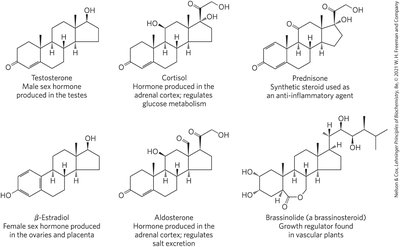
Steroid hormones are a class of lipids derived from cholesterol, acting as signaling molecules that regulate numerous physiological processes in animal and plant cells. Their hydrophobic nature allows them to diffuse through cell membranes and exert effects on gene expression.
Key Steroid Hormones: Testosterone, estradiol, cortisol, aldosterone, prednisone, and brassinolide.
Functions: Regulation of metabolism, salt excretion, inflammation, and growth.
Structure: Four-ring organic compounds, highly hydrophobic.
Example: Testosterone regulates male sexual development; cortisol regulates glucose metabolism.

Mechanism of Gene Regulation by Steroid Hormones
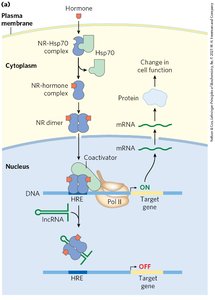
Steroid hormones regulate gene expression by binding to specific intracellular receptors, which then act as transcription factors.
Transport: Steroid hormones are carried in the blood by carrier proteins.
Cell Entry: They diffuse through the plasma membrane due to their lipid solubility.
Receptor Binding: In the cytoplasm, steroid hormone receptors (SHRs) are inactive due to association with chaperone proteins (e.g., HSP70).
Activation: Hormone binding removes HSP70, causing SHR dimerization and activation.
Nuclear Translocation: The activated SHR dimer enters the nucleus and binds to hormone response elements (HREs) in the DNA via zinc finger motifs.
Transcription Modulation: SHR interacts with other transcription factors and co-activators, modulating target gene expression.

Hormone Response Elements (HREs)
Definition: HREs are specialized DNA sequences in gene promoters recognized by steroid hormone receptors.
Structure: Conserved 6 bp palindromic repeats separated by variable nucleotides (e.g., N3).
Example: Oestrogen response element: RGGTCAN3TGACCY; Androgen response element: GG(A/T)ACAN2TGTTCT.
Clinical Applications of Steroid Hormone Regulation
RU486 (Mifepristone)
RU486 is an antagonist of progesterone, used as an abortion pill. It binds to the progesterone receptor, preventing activation and subsequent gene expression required for implantation of the fertilized egg.
Mechanism: RU486 blocks receptor activation, preventing gene expression necessary for embryo implantation.

Tamoxifen
Tamoxifen is used to slow the growth of hormone receptor-positive breast cancers by competing with estrogen for binding to its receptor. The tamoxifen-receptor complex cannot bind to the estrogen response element, preventing gene expression and slowing cancer cell division.
Mechanism: Competitive inhibition of estrogen receptor, blocking gene expression required for cancer cell proliferation.

Regulation of Gene Expression in Embryonic Development
Genetic Control of Early Embryonic Development
Embryonic development is orchestrated by a hierarchy of genes acting in sequence, as demonstrated in Drosophila melanogaster (fruit fly) studies.
Model Organism: Fruit fly used to identify genes controlling development.
Hierarchy: Genes act in a cascade, regulating spatial and temporal aspects of development.

Maternal Genes and Morphogens
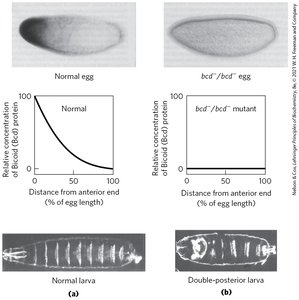
Maternal Genes: Expressed from the mother's genome; mRNAs deposited unevenly in the egg.
Morphogens: Proteins that establish polarity and influence tissue development (e.g., Bicoid for anterior, Nanos for posterior).
Regulatory Cascade: Maternal mRNAs/proteins regulate expression of embryonic genes, leading to segmentation and body plan formation.

Mutations in Pattern-Regulating Genes
Bicoid Mutant: Loss of anterior structures, duplication of posterior segments; lethal mutation.
Nanos Mutant: Affects posterior development.
Gene Cascade: Bicoid acts as a transcription factor and translational repressor; Nanos represses translation of hunchback mRNA.
Homeotic (Hox) Genes
Definition: Hox genes are master control genes determining anatomical identity of body segments.
Mutations: Homeosis—body parts develop features of others (e.g., Antennapedia, Bithorax mutants).
Conservation: Hox genes are highly conserved across species, including humans.

Relevance to Human Development and Stem Cell Research
Homeobox: Unique ~180 bp conserved sequence encoding a homeodomain with HTH motif, binding to gene promoters.
Developmental Genes: Highly conserved, aiding understanding of human development and stem cell differentiation.
Stem Cell Potential: Totipotent, pluripotent, and unipotent cells differ in their differentiation capacity.
Example: Bone marrow hematopoietic stem cells are multipotent, giving rise to various blood cells.
Summary Table: Types of Stem Cells
Type | Definition | Example |
|---|---|---|
Totipotent | Can differentiate into any tissue type or a complete organism | Zygote |
Pluripotent | Can differentiate into many tissue types, but not a complete organism | Embryonic stem cells |
Multipotent | Can differentiate into several related cell types | Adult stem cells (e.g., hematopoietic) |
Unipotent | Can differentiate into only one cell type | Skin stem cells |
Further Reading
Lehninger Biochemistry: Nelson and Cox, Ed. VII, Ch 28, section 28.3 (p1083-1092).
Library Link: Swinburne Library
