 뒤로
Study Guide: Yeasts and Fungal Growth in Microbiology lab 9
스터디 가이드 - 스마트 노트
 자료에 맞춘 맞춤형 노트, 핵심 정의, 예시, 맥락을 확장해 제공합니다.
Fungi: Introduction and Classification
Mycology and Mycoses
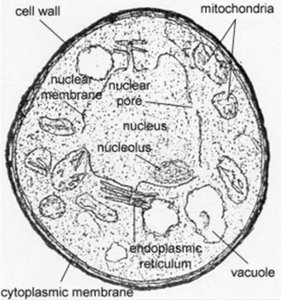
The study of fungi is known as mycology, and diseases caused by fungi are referred to as mycoses. Fungi are a diverse group of eukaryotic organisms that play important roles in both environmental and clinical contexts.
Fungi include yeasts (microscopic, unicellular) and molds (multinucleated, filamentous).
Yeasts are typically oval or spherical and divide by budding.
Molds form multicellular filaments called hyphae.
Nutrition and Metabolism of Fungi
All fungi are chemoheterotrophs, requiring organic compounds for both energy and carbon sources. Their nutritional strategies can be classified as follows:
Saprophytes: Obtain nutrients from decaying organic material.
Parasites: Derive nutrients from living plants or animals.
Yeasts are facultative anaerobes, capable of both aerobic respiration and fermentation.
Yeasts: Structure, Division, and Pathogenesis
Yeast Morphology and Division
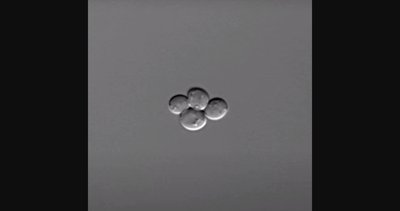
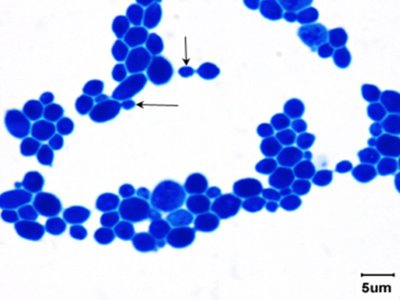
Yeasts are unicellular fungi that reproduce primarily by budding. During budding, a new cell forms as a protrusion from the parent cell, eventually separating or remaining attached.
Budding produces daughter cells; sometimes buds remain attached, forming fragile filaments called hyphae.
Hyphae facilitate tissue invasion after colonization of epithelial surfaces.
Pathogenic Yeasts and Hyphal Formation
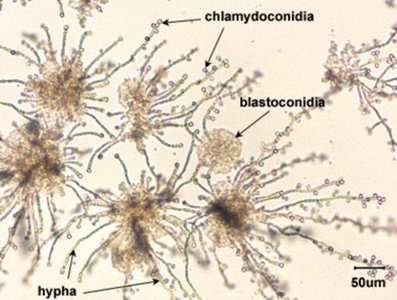
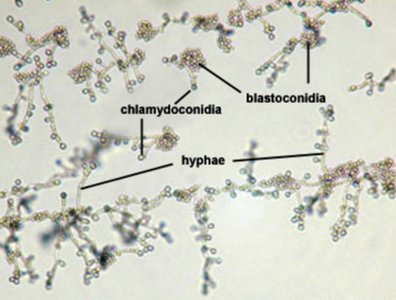
Some yeasts, such as Candida albicans, can switch from a unicellular yeast form to a filamentous hyphal form, which is important for pathogenesis.
Hyphae allow deeper tissue invasion.
Yeasts may form specialized spores:
Blastoconidia (blastospores): Asexual spores developing in clusters along hyphae, often at branching points.
Chlamydoconidia (chlamydospores): Thick-walled survival spores formed at hyphal tips under certain conditions.
Growing Yeasts: Media and Colony Morphology
Colony Appearance and Growth Media
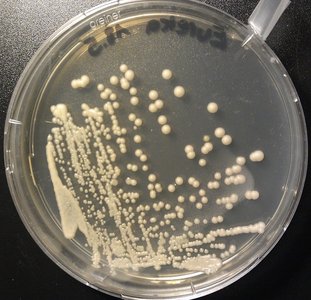
Yeast colonies on solid media resemble bacterial colonies due to their unicellular nature. However, specific media are used to optimize fungal growth and select for particular types.
Trypticase Soy Agar (TSA): General-purpose medium; supports both bacteria and yeasts.
Saboraud Dextrose Agar (SDA): Higher sugar concentration and lower pH; inhibits bacteria and promotes fungal growth. SDA is selective for fungi.
Mycosel Agar: Contains chloramphenicol (inhibits bacteria) and cycloheximide (inhibits most saprophytic fungi); selective for pathogenic fungi.
Rice Extract Agar: Stimulates formation of hyphae, blastoconidia, and chlamydoconidia in pathogenic yeasts like Candida albicans.
Selective and Differential Media
SDA: Selective for fungi due to high sugar and low pH; inhibits bacterial growth.
Mycosel Agar: Selective for pathogenic fungi; inhibits bacteria and most saprophytic fungi.
Rice Extract Agar: Used for morphological studies of pathogenic yeasts.
Laboratory Procedures for Yeast Cultivation
Plate Inoculation and Streaking Techniques
Proper inoculation and streaking techniques are essential for isolating and studying yeast colonies.
Divide agar plates (TSA, SDA, Mycosel) into thirds for inoculation with different organisms.
Use sterile swabs and loops for inoculation and streaking.
Incubate plates at appropriate temperatures (e.g., 37°C for clinical isolates).


Key Terms and Concepts
Mycology: Study of fungi.
Mycoses: Fungal diseases.
Yeasts: Unicellular fungi, divide by budding.
Molds: Multicellular, filamentous fungi.
Hyphae: Filamentous structures aiding tissue invasion.
Blastoconidia: Asexual spores on hyphae.
Chlamydoconidia: Survival spores at hyphal tips.
Saprophytes: Fungi feeding on decaying matter.
Parasites: Fungi feeding on living hosts.
Facultative Anaerobes: Organisms capable of both aerobic and anaerobic metabolism.
Table: Comparison of Fungal Growth Media
Medium | Purpose | Selective For | Inhibits |
|---|---|---|---|
Trypticase Soy Agar (TSA) | General growth | Bacteria, Yeasts | None |
Saboraud Dextrose Agar (SDA) | Fungal growth | Fungi | Bacteria |
Mycosel Agar | Pathogenic fungi | Pathogenic fungi | Bacteria, Saprophytic fungi |
Rice Extract Agar | Morphological study | Pathogenic yeasts | None |
Example: Identification of Yeast Structures
In stained slides, identify buds (small protrusions) and mother cells (larger parent cells).
Recognize hyphae, blastoconidia, and chlamydoconidia in microscopic images.
Summary of Laboratory Study Questions
Define mycology and mycoses.
Describe fungi and their forms (yeasts vs. molds).
Explain nutritional modes and metabolic pathways of fungi.
Identify yeast division, hyphae, and spore types.
Compare growth media and their selectivity.
Apply laboratory techniques for yeast cultivation and identification.
----------------------------------------
