 뒤로
Ch 13 Viruses, Viroids, and Prions: Structure, Multiplication, and Pathogenicity
스터디 가이드 - 스마트 노트
 자료에 맞춘 맞춤형 노트, 핵심 정의, 예시, 맥락을 확장해 제공합니다.
Viruses, Viroids, and Prions
Characteristics and Structure of Viruses
Viruses are unique infectious agents that differ fundamentally from bacteria and other microorganisms. They are obligate intracellular parasites, meaning they require a living host cell to replicate.
Size: Viruses are extremely small, ranging from 20 to 300 nm, and are filterable.
Nucleic Acid: Each virus contains either DNA or RNA, never both.
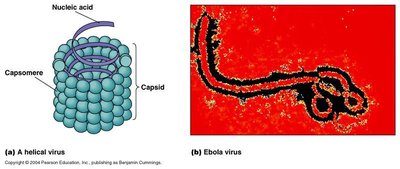
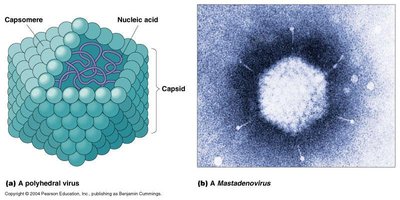
Capsid: The nucleic acid is surrounded by a protein coat called the capsid, which is made up of subunits called capsomeres.
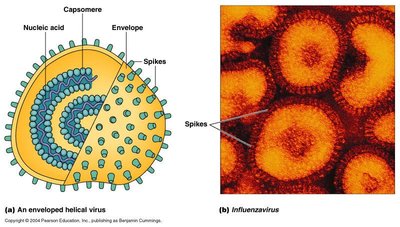
Envelope: Some viruses have an envelope composed of lipids, carbohydrates, and proteins; those without are termed "naked" or non-enveloped viruses.
Virion: The complete, infectious viral particle is called a virion.
Spikes: Viral envelopes may have spikes that aid in attachment and can be associated with virulence.
Metabolism: Viruses lack metabolic enzymes and are inert outside the host cell.
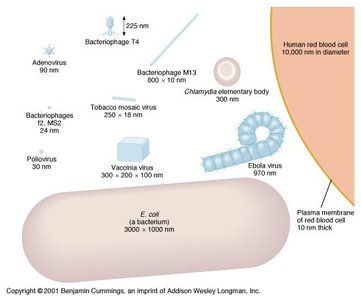
Viral Morphology
Viral morphology is determined by the structure of the capsid and can be classified into four main types:
Helical: Capsids are hollow cylinders with nucleic acid inside. Examples include Tobacco mosaic virus and Ebola virus.
Polyhedral: Many-sided, usually icosahedral (20 sides). Examples include Adenovirus and Poliovirus.
Enveloped: Viruses are covered by an envelope and are often roughly spherical but pleomorphic. Examples include Influenza virus (enveloped helical) and Herpes simplex virus (enveloped polyhedral).
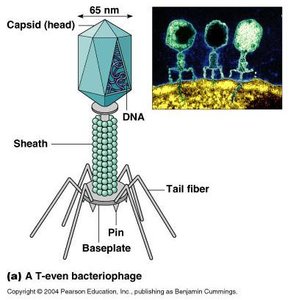
Complex: These have complicated structures, often seen in bacteriophages, with polyhedral heads and helical tails.
Host Range and Viral Attachment
The host range of a virus is determined by its ability to attach to specific receptor sites on the host cell and the availability of host cell factors required for replication. All living cells can be infected by viruses, but each virus has a specific host range.
Isolation and Cultivation of Viruses
Viruses require living hosts for growth and cultivation in the laboratory.
Animal hosts: Some viruses can only be cultured in animals (e.g., HIV).
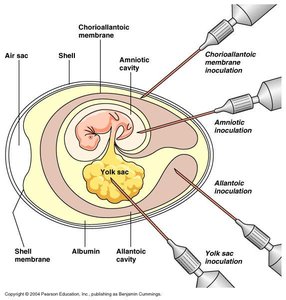
Embryonated eggs: Used especially for vaccine production; viral growth may result in embryo death.
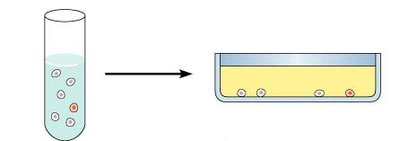
Cell culture: The preferred method, where cells form a monolayer in a dish containing growth media.
Cytopathic Effects of Viral Infection
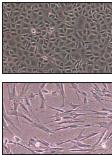
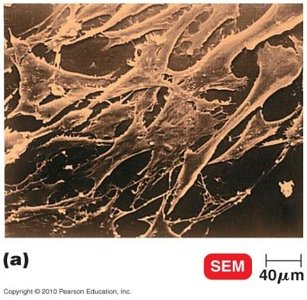
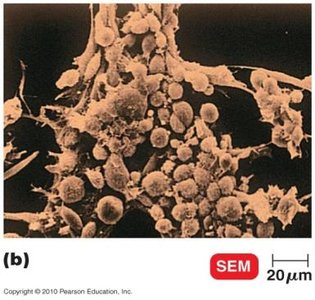
Viral infection can cause visible changes in host cells, known as cytopathic effects (CPE).
Cell death
Inclusion bodies: e.g., Negri bodies in rabies
Giant cells: Host cell fusion
Interferon production: Protective to nearby uninfected cells; potential anticancer agent
Identification of Viruses
Virus identification is challenging and involves several methods:
Electron microscopy
Cytopathic effects
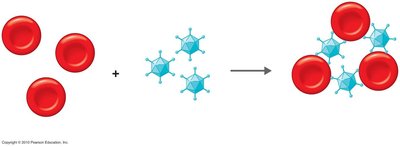
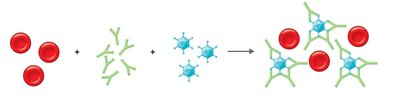
Serological tests: Most common, including viral hemagglutination and neutralization tests
PCR: Used to amplify viral nucleic acid
Viral Multiplication
Viral multiplication requires invasion of the host cell and hijacking of its metabolic machinery.
Viral genes
Capsid proteins
Viral enzymes
Host enzymes: Ribosomes, tRNA, ATP production
Multiplication of Bacteriophages
Bacteriophages multiply by two mechanisms:
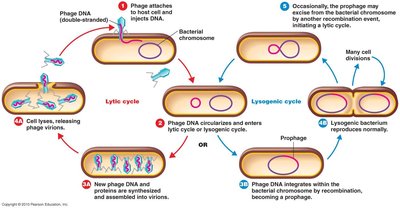
Lytic cycle: Ends with death of the host cell. Steps:
Attachment
Penetration
Biosynthesis
Maturation
Lysis
Lysogeny: Host cell remains alive. Steps:
Attachment
Penetration
Phage nucleic acid recombines with host chromosome (prophage)
Prophage is replicated with chromosome
Prophages may confer new properties to host
Prophages may be induced into the lytic cycle
Multiplication of Animal Viruses
Animal viruses multiply similarly to phages but with key differences:
Attachment: Mediated by spikes, fibers, and host cell receptors
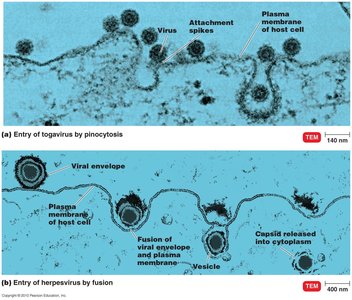
Entry: Occurs by pinocytosis or membrane fusion
Uncoating and biosynthesis: DNA viruses replicate in the nucleus; capsid and other structures are made in the cytoplasm. RNA viruses may convert RNA to DNA (e.g., HIV).
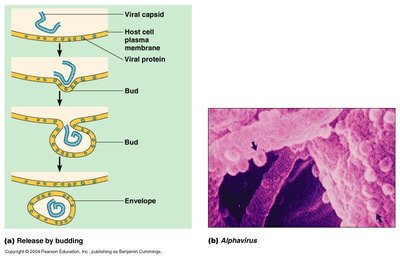
Maturation and release: May involve budding (enveloped viruses) or cell lysis (naked viruses)
Viruses and Cancer
Some viruses can cause cancer by altering the host cell's DNA.
~10% of cancers are virally induced
Oncogenes: Genes that can cause cancerous transformation when mutated
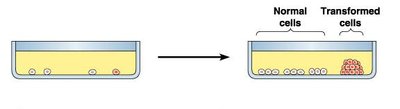
Contact inhibition: Loss of this property leads to uncontrolled cell growth
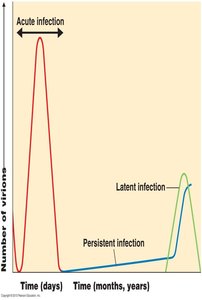
Latent and Persistent Viral Infections
Viruses may remain dormant (latent) or continuously released (persistent) in host cells.
Latent infections: Virus remains in host cells for extended periods without symptoms (e.g., Herpes simplex, Varicella zoster)
Persistent infections: Virus is continuously released, causing chronic effects (e.g., HIV, Hepatitis B)
Disease | Primary Effect | Causative Virus |
|---|---|---|
Cold sores | No symptoms during latency, viruses not usually released | Herpes simplex 1 and 2 |
Leukemia | Skin and mucous membrane lesions; genital lesions | HTLV-1 and 2 |
Shingles | Skin lesions | Varicella zoster (Herpesvirus) |
Cervical cancer | Viruses continuously released | Human papillomavirus |
HIV/AIDS | Decreased CD4 T cells | HIV-1 and 2 (Lentivirus) |
Liver cancer | Decreased cell growth | Hepatitis B virus |
Progressive encephalitis | Mental deterioration | Rubella virus, Measles virus |
Prions and Prion-Induced Diseases
Prions are proteinaceous infectious particles that cause spongiform encephalopathies.
Diseases: Scrapie (sheep), BSE (cows), variant Creutzfeldt-Jakob disease and kuru (humans)
Transmission: Eating infected material, transplants, contaminated surgical instruments
Resistance: Prions cannot be destroyed by standard sterilization methods

Recap
Differentiated a bacterium from a virus
Described the general characteristics and morphology of viruses
Characterized cytopathic effects of viral infection
Summarized methods used for viral identification and cultivation
Compared the multiplication patterns of bacterial and animal viruses
Evaluated the effects of the lytic cycle and lysogeny on the host cell
Discussed the link between viruses and cancer
Described prions and prion-induced diseases
