
Ch. 20 - Antimicrobial Drugs
Tortora - Microbiology: An Introduction 14th Edition
Tortora14th EditionMicrobiology: An IntroductionISBN: 9780138200398당신이 사용하는 게 아니라요?교과서 변경
16장, 문제 1

Show where the following antibiotics work: ciprofloxacin, tetracycline, streptomycin, vancomycin, polymyxin B, sulfanilamide, rifampin, erythromycin.
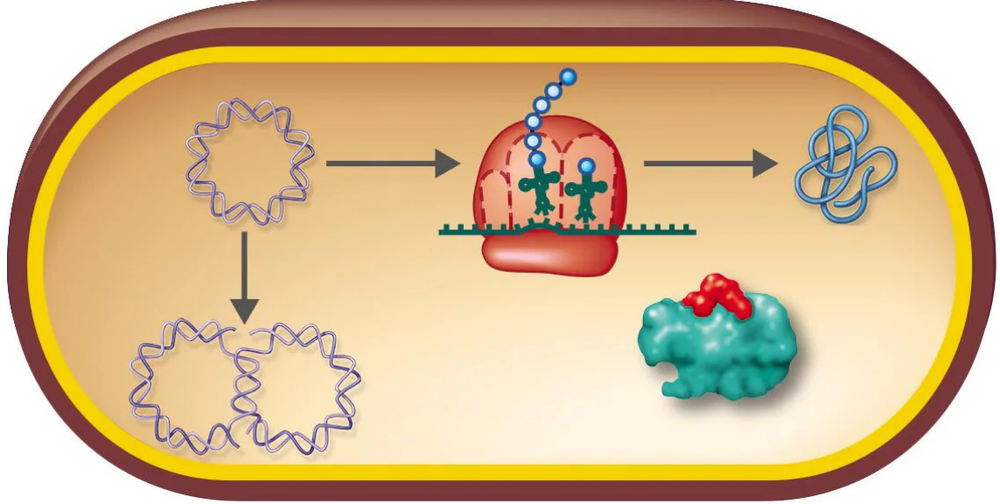
Diagram of antibiotic targets showing DNA replication, transcription, and protein synthesis processes inside a bacterial cell.

검증된 단계별 안내
1
Identify the main targets within a bacterial cell where antibiotics typically act: the cell wall, the cell membrane, DNA replication machinery, RNA synthesis machinery, and the ribosomes (protein synthesis).
Locate ciprofloxacin and rifampin as antibiotics that interfere with nucleic acid processes: ciprofloxacin inhibits DNA gyrase affecting DNA replication, while rifampin inhibits RNA polymerase affecting transcription.
Place tetracycline, streptomycin, and erythromycin at the ribosome level, noting that tetracycline blocks the attachment of tRNA to the ribosome, streptomycin causes misreading of mRNA, and erythromycin blocks the exit tunnel of the ribosome, all disrupting protein synthesis.
Mark vancomycin as targeting the bacterial cell wall by inhibiting peptidoglycan synthesis, which is crucial for cell wall integrity.
Assign polymyxin B to the bacterial cell membrane, where it disrupts membrane integrity by interacting with phospholipids, and sulfanilamide as a metabolic inhibitor that blocks folic acid synthesis, which is essential for nucleotide production.

비슷한 문제에 대한 검증된 영상 답변:

이 영상 해법은 위 문제에 도움이 된다고 튜터들이 추천한 것입니다.
영상 길이:
2m

주요 개념

질문에 올바르게 답하기 위해 반드시 이해해야 하는 핵심 개념들은 다음과 같습니다.

Mechanism of Action of Antibiotics

Understanding how antibiotics inhibit or kill bacteria is essential. Each antibiotic targets specific bacterial structures or processes, such as cell wall synthesis, protein synthesis, DNA replication, or metabolic pathways. Knowing these mechanisms helps identify where each drug acts within the bacterial cell.
추천 영상:
01:59
Introduction to Avoiding Host Defense Mechanisms

Bacterial Cell Structure and Function

Familiarity with bacterial cell components like the cell wall, ribosomes, DNA, and cell membrane is crucial. Antibiotics interact with these structures differently; for example, vancomycin targets the cell wall, while tetracycline affects ribosomes. This knowledge aids in mapping antibiotic action sites.
추천 영상:
05:33
Cell Junctions

Classes of Antibiotics and Their Targets

Antibiotics are grouped by their target sites and chemical nature, such as fluoroquinolones (ciprofloxacin) targeting DNA gyrase, aminoglycosides (streptomycin) affecting the 30S ribosomal subunit, or sulfonamides inhibiting folic acid synthesis. Recognizing these classes helps categorize and locate their action points.
추천 영상:
04:43
Classes of Antibodies