 뒤로
Chapter 1: What is Economics? (Microeconomics Study Guide)
스터디 가이드 - 스마트 노트
 자료에 맞춘 맞춤형 노트, 핵심 정의, 예시, 맥락을 확장해 제공합니다.
What is Economics?
Definition and Scope of Economics
Economics is the social science that studies the choices individuals, businesses, governments, and societies make as they cope with scarcity and the incentives that influence and reconcile those choices. It is divided into two main branches: Microeconomics and Macroeconomics.
Scarcity: Our inability to satisfy all our wants, which forces us to make choices.
Incentives: Rewards or penalties that influence choices.
Microeconomics: Focuses on individual and business choices, market interactions, and government influence.
Macroeconomics: Studies national and global economic performance.
Key Questions: What, how, and for whom are goods and services produced? When do self-interested choices promote the social interest?
Microeconomics vs. Macroeconomics
Microeconomics examines the behavior of individuals and firms in making decisions regarding the allocation of resources and the interactions among these entities. Macroeconomics looks at the economy as a whole, including issues like unemployment, inflation, and economic growth.
Microeconomic Questions: Why are people streaming more movies? Would a tax on online shopping affect Amazon?
Macroeconomic Questions: Why does the unemployment rate fluctuate? Can the Federal Reserve reduce unemployment by lowering interest rates?
The Economic Problem
Scarcity and Choice
All economic questions arise because resources are limited. Scarcity means that we must make choices, and these choices depend on the incentives we face.
Goods and Services: Objects that people value and produce to satisfy human wants.
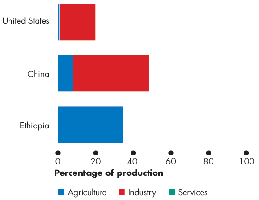
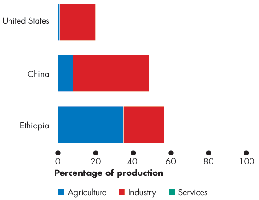
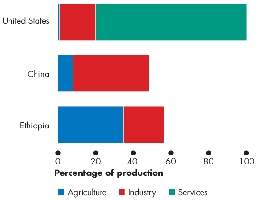
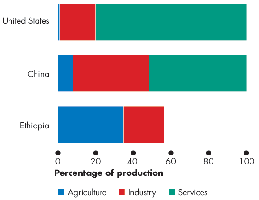
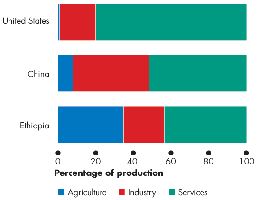
Production Patterns: Vary by country and income level. For example, agriculture is a small part of U.S. production but a large part in Ethiopia.
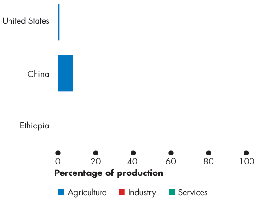
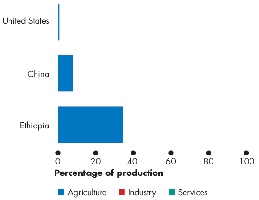
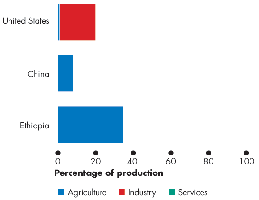
Factors of Production
Goods and services are produced using resources called factors of production, grouped into four categories:
Land: Natural resources used in production.
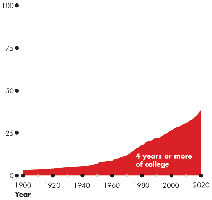
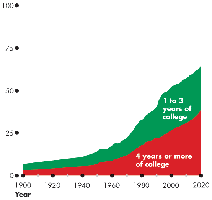
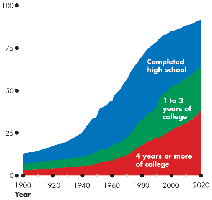
Labor: Human effort, measured in work time and skill (human capital).
Capital: Tools, machines, buildings, and other constructions used in production.
Entrepreneurship: The human resource that organizes land, labor, and capital.
Distribution of Income
Who gets the goods and services depends on the incomes earned from the factors of production:
Land earns rent
Labor earns wages
Capital earns interest
Entrepreneurship earns profit
Self-Interest vs. Social Interest
Efficiency and Fair Shares
Choices made in self-interest may or may not promote the social interest. Social interest is defined by efficiency (making someone better off without making someone else worse off) and fair shares (equitable distribution).
Efficiency: Resource use is efficient if it is not possible to make someone better off without making someone else worse off.
Fair Shares: The idea that social interest requires fair shares is widely held, but what constitutes a fair share is debated.
Contemporary Issues
Four major topics illustrate the tension between self-interest and social interest:
Globalization: Expansion of international trade and investment. Benefits consumers and multinational firms, but may harm low-wage workers and less competitive firms.
Information-age Monopolies: Technological advances have benefited consumers and entrepreneurs, but raise questions about social interest.
Climate Change: Economic activity contributes to carbon emissions. Individual choices affect the environment, and government policies may be needed to align self-interest with social interest.
Covid Pandemic: Individual choices about social isolation affect both personal and public health.
The Economic Way of Thinking
Key Ideas
Six key ideas define the economic way of thinking:
A choice is a tradeoff: Every choice involves giving up one thing to get another.
Rational choices: People make rational choices by comparing benefits and costs.
Benefit: The gain or pleasure from something, determined by preferences.
Cost: What must be given up to get something; the opportunity cost is the highest-valued alternative forgone.
Marginal analysis: Most choices are "how-much" decisions made at the margin, comparing marginal benefit and marginal cost.
Incentives: Choices respond to changes in incentives.
Opportunity Cost
The opportunity cost of an action is the value of the next best alternative forgone. It includes both monetary and time costs.
Formula:
Example: Attending a concert may mean giving up the chance to buy something else or use your time differently.
Economists as Social Scientists and Policy Advisers
Positive vs. Normative Statements
Economists distinguish between:
Positive statements: Can be tested against facts.
Normative statements: Express opinions and cannot be tested.
Economic Models
Economists use models to describe aspects of the economic world, focusing only on relevant features. Models are tested by comparing predictions with facts, using natural experiments, statistical investigations, and economic experiments.
Policy Advice
Economics provides a toolkit for advising governments and businesses. For a given goal, economics helps evaluate alternative solutions by comparing marginal benefits and marginal costs.
Jobs and Skills in Economics
Career Opportunities
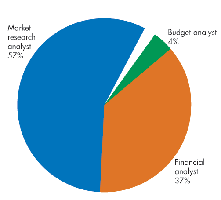
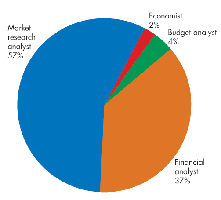
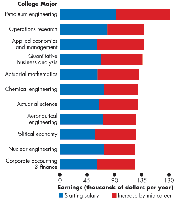
A major in economics opens doors to careers as economists, market research analysts, financial analysts, and budget analysts. Economists work in private firms, government, and international organizations.
Job Growth and Earnings
Economists (PhD): Expected job growth of 14% (2019-2029).
Budget analysts: 3% growth.
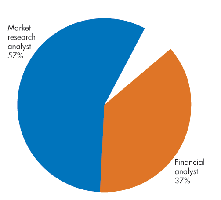
Financial analysts: 5% growth.
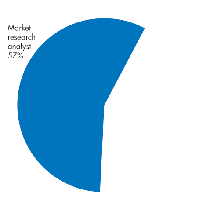
Market research analysts: 18% growth.
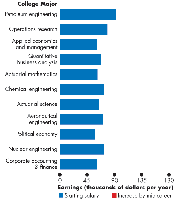
Earnings: Economists earn $56,500 to $139,600, with a median of $105,100. PhD economists earn about $150,000 by mid-career. Analyst jobs average $55,000 to $82,000.
Skills Needed
Critical-thinking skills
Analytical skills
Math skills
Writing skills
Oral communication skills
Diversity in Economics
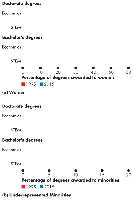
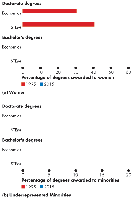
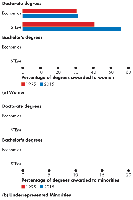
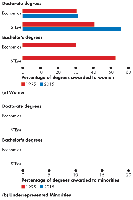
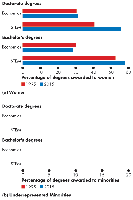
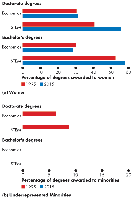
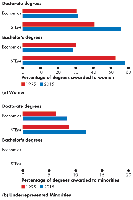
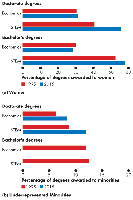
The economics profession needs to attract more women and minorities at all levels. Trends show changes in the percentages of women and minorities with economics and STEM degrees.
Appendix: Graphs in Economics
Graphing Data
Graphs are essential tools in economics for visualizing relationships between variables. The x-axis represents one variable, and the y-axis represents another. The origin is the zero point common to both axes.
Scatter diagrams: Plot values of two variables for different observations, revealing relationships.
Linear relationships: Variables move together in a straight line.
Nonlinear relationships: Variables move together in a curve.
Slope: Measures the change in the y-variable per unit change in the x-variable.
Types of Relationships
Positive (Direct) Relationship: Both variables move in the same direction; upward sloping line.
Negative (Inverse) Relationship: Variables move in opposite directions; downward sloping line.
Maximum/Minimum: Relationship changes direction at a peak or trough.
Unrelated: No discernible pattern between variables.
Graphing More Than Two Variables
When analyzing relationships among more than two variables, economists use the ceteris paribus assumption, holding other variables constant.
Example: The quantity of ice cream consumed at different prices as temperature varies.
Curve Shifts: When a third variable changes, the curve shifts, indicating a new relationship.
Summary Table: Factors of Production
Factor | Income Earned |
|---|---|
Land | Rent |
Labor | Wages |
Capital | Interest |
Entrepreneurship | Profit |
Summary Table: Types of Economic Statements
Type | Description |
|---|---|
Positive | Can be tested against facts |
Normative | Expresses opinion, cannot be tested |
Summary Table: Key Skills for Economics Jobs
Skill | Description |
|---|---|
Critical-thinking | Ability to analyze and evaluate arguments |
Analytical | Ability to interpret data and trends |
Math | Ability to use quantitative methods |
Writing | Ability to communicate findings clearly |
Oral communication | Ability to present ideas effectively |
Additional info: Academic context was added to clarify definitions, examples, and formulas, and to ensure completeness for exam preparation.
