 뒤로
뒤로Chapter 1: What is Economics? (Microeconomics Study Notes)
스터디 가이드 - 스마트 노트
 자료에 맞춘 맞춤형 노트, 핵심 정의, 예시, 맥락을 확장해 제공합니다.
What is Economics?
Definition and Scope of Economics
Economics is the social science that studies the choices individuals, businesses, governments, and societies make as they cope with scarcity and the incentives that influence and reconcile those choices. Economics is divided into two main branches: Microeconomics and Macroeconomics.
Scarcity: Our inability to satisfy all our wants due to limited resources.
Choice: Because of scarcity, we must make choices about how to allocate resources.
Incentives: Rewards or penalties that influence choices.
Microeconomics focuses on the choices of individuals and businesses, market interactions, and government influence. Macroeconomics studies the performance of national and global economies.
Examples of Microeconomic Questions: Why are people streaming more movies? Would a tax on online shopping affect Amazon?
Examples of Macroeconomic Questions: Why does the unemployment rate fluctuate? Can the Federal Reserve lower unemployment by keeping interest rates low?
The Two Big Economic Questions
Economics seeks to answer two fundamental questions:
How do choices determine what, how, and for whom goods and services are produced?
When do choices made in self-interest also promote the social interest?
What, How, and For Whom?
Goods and Services: Objects people value and produce to satisfy wants.
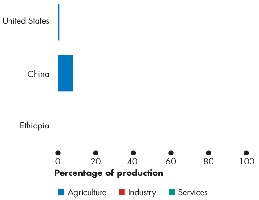
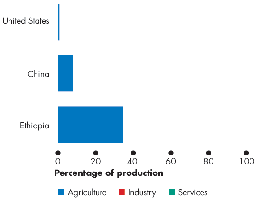
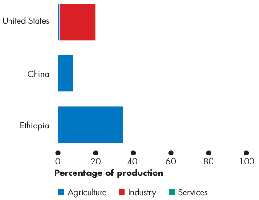
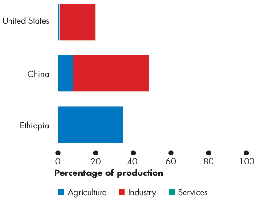
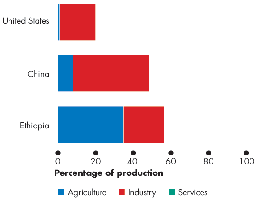
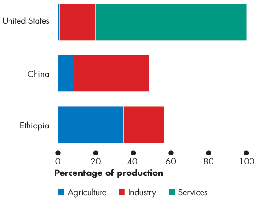
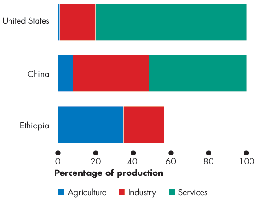
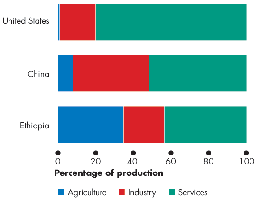
Production Patterns: Vary by country and income level (e.g., agriculture, industry, services).
How?
Goods and services are produced using factors of production:
Land: Natural resources
Labor: Human effort (quality depends on human capital)
Capital: Tools, machines, buildings
Entrepreneurship: Organizes land, labor, and capital
For Whom?
Distribution depends on income earned from factors of production:
Land earns rent
Labor earns wages
Capital earns interest
Entrepreneurship earns profit
Self-Interest vs. Social Interest
Self-interest: Choices best for the individual
Social interest: Choices best for society as a whole (involves efficiency and fair shares)
Major topics illustrating the tension between self-interest and social interest include globalization, information-age monopolies, climate change, and the Covid pandemic.
The Economic Way of Thinking
Six Key Ideas
A choice is a tradeoff.
People make rational choices by comparing benefits and costs.
Benefit is what you gain from something.
Cost is what you must give up to get something.
Most choices are "how-much" choices made at the margin.
Choices respond to incentives.
Tradeoffs and Opportunity Cost
Tradeoff: Giving up one thing to get another.
Opportunity cost: The highest-valued alternative forgone.
Marginal Analysis
Marginal benefit: The additional benefit from one more unit.
Marginal cost: The additional cost from one more unit.
Rational choice: If marginal benefit > marginal cost, do more of the activity.
Incentives
Changes in marginal cost or benefit alter incentives and thus choices.
Economics as a Social Science and Policy Tool
Positive vs. Normative Statements
Positive statement: Can be tested against facts.
Normative statement: Expresses an opinion; cannot be tested.
Economic Models and Testing
Models simplify reality to focus on essential relationships.
Tested using natural experiments, statistical investigations, and economic experiments.
Economist as Policy Adviser
Economics provides tools for evaluating policy alternatives by comparing marginal benefits and costs.
Jobs and Skills in Economics
Careers for Economics Majors
Economists (private firms, government, international organizations)
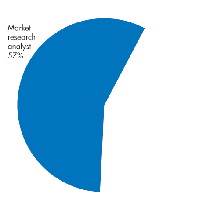
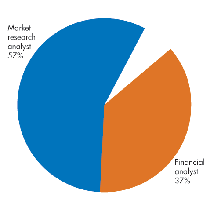
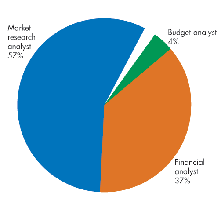
Market research analysts
Financial analysts
Budget analysts
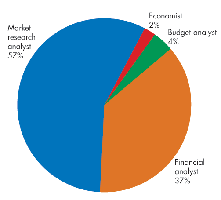
Job Growth and Earnings
Economist jobs (PhD): +14% growth (2019-2029)
Budget analysts: +3% growth
Financial analysts: +5% growth
Market research analysts: +18% growth
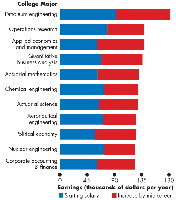
Median economist salary: $105,100/year
Market research analyst: $55,000/year
Financial analyst: $82,000/year
Skills Needed
Critical-thinking skills
Analytical skills
Math skills
Writing skills
Oral communication skills
Diversity in Economics
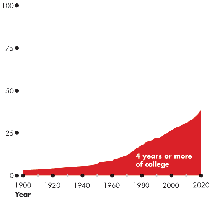
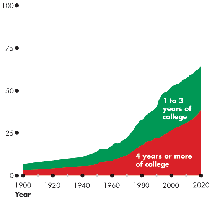
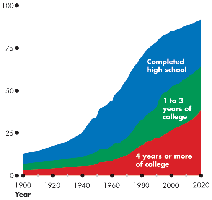
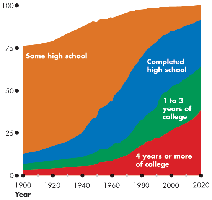
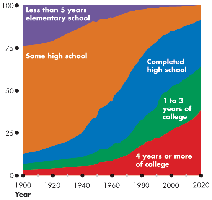
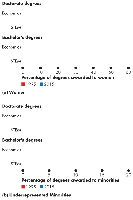
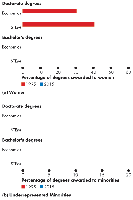
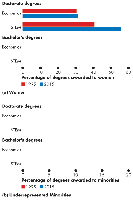
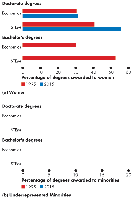
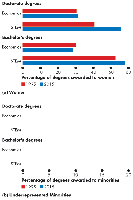
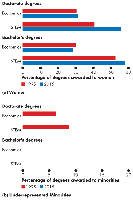
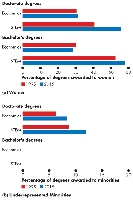
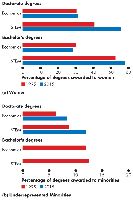
The economics profession seeks to attract more women and minorities at all levels, as shown by trends in degree attainment.
Appendix: Graphs in Economics
Graphing Data
Graphs are essential tools in economics for visualizing relationships between variables. The most common graph is the two-variable graph, with the x-axis (horizontal) and y-axis (vertical) meeting at the origin.
Scatter Diagrams
A scatter diagram plots one variable against another for multiple observations, revealing relationships or patterns.
Types of Relationships in Graphs
Positive (Direct) Relationship: Variables move in the same direction; shown by an upward-sloping line.
Negative (Inverse) Relationship: Variables move in opposite directions; shown by a downward-sloping line.
Maximum/Minimum: Relationship changes direction at a peak or trough.
No Relationship: Variables are unrelated; points are scattered randomly.
Slope of a Relationship
Slope: Measures the rate of change between two variables.
Formula:
For straight lines, the slope is constant; for curves, the slope varies at different points.
Graphing More Than Two Variables
When more than two variables are involved, economists use the ceteris paribus assumption (holding other variables constant) to analyze the relationship between two variables.
Factor of Production | Definition | Income Earned |
|---|---|---|
Land | Natural resources used in production | Rent |
Labor | Human effort and skill | Wages |
Capital | Tools, machinery, buildings | Interest |
Entrepreneurship | Organization of other factors | Profit |
Additional info: This summary covers the foundational concepts of microeconomics, including the definition of economics, the economic problem, the role of incentives, and the use of graphs and models in economic analysis. It also introduces the types of jobs available to economics majors and the skills required for success in the field.
