 뒤로
Chapter 4: Extensions of Demand and Supply Analysis – Microeconomics Study Notes
스터디 가이드 - 스마트 노트
 자료에 맞춘 맞춤형 노트, 핵심 정의, 예시, 맥락을 확장해 제공합니다.
Chapter 4: Extensions of Demand and Supply Analysis
The Price System and Markets
The price system, also known as the market system, is an economic framework where prices constantly adjust to reflect changes in supply and demand. Prices act as signals, indicating what is scarce or abundant, and guide individuals and businesses in allocating resources efficiently. Voluntary exchange is a key feature, where both parties benefit from trade.
Transaction Costs: These are costs associated with exchanging goods or services, such as price shopping, determining quality, reliability, service availability, and contracting costs.
Voluntary Exchange: Trading based on mutual agreement, making both parties subjectively better off.
Changes in Demand and Supply
Market equilibrium price and quantity are determined by the interaction of demand and supply. Shifts in either curve affect these outcomes, sometimes in predictable ways and sometimes requiring more information for precise determination.
Shift in Demand Only: An increase in demand raises both equilibrium price and quantity; a decrease lowers both.
Shift in Supply Only: An increase in supply lowers equilibrium price and raises quantity; a decrease raises price and lowers quantity.
Simultaneous Shifts: When both curves shift, the effect on price or quantity may be indeterminate, depending on the magnitude of each shift.
Price Flexibility: Prices may adjust through hidden fees or quality changes rather than published price changes.
Adjustment Speed: Markets may not return to equilibrium immediately; adjustment speed depends on market characteristics and government intervention.
Examples:
Increase in demand: ,
Decrease in demand: ,
Increase in supply: ,
Decrease in supply: ,
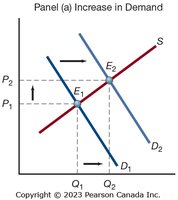
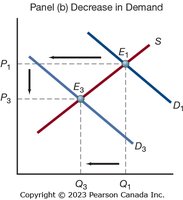
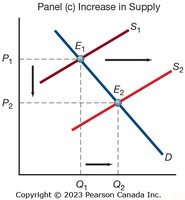
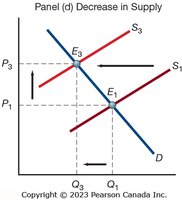
The Rationing Function of Prices
Prices adjust to clear markets when surpluses or shortages exist, efficiently allocating limited resources. If prices are prevented from rationing goods, non-price rationing methods such as waiting, random assignment, or coupons are used.
Price Controls: Government-mandated minimum or maximum prices.
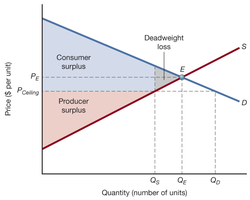
Price Ceiling: Legal maximum price, set below equilibrium, causing shortages.
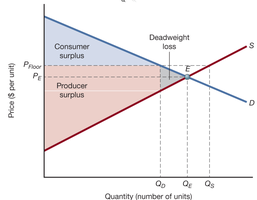
Price Floor: Legal minimum price, set above equilibrium, causing surpluses.
Price Ceilings: The Policy of Rent Controls
Rent control is a form of price ceiling, aiming to keep rents below market levels. While intended to help tenants, it can lead to shortages, reduced quality, inefficient allocation, and illicit markets.
Effects: Shortage of rental units, reduced construction and maintenance, housing gridlock, and increased bureaucracy.
Winners: Upper-income professionals who can navigate the system.
Losers: Property owners and low-income individuals.
Price Floors & Quantity Restrictions
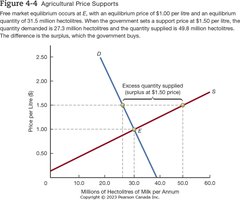
Price floors are often used in agricultural and labor markets. They are set above equilibrium price, resulting in surpluses. Governments may buy the surplus or impose quantity restrictions such as import quotas or licensing.
Agricultural Price Supports: Government sets a support price, leading to excess supply.
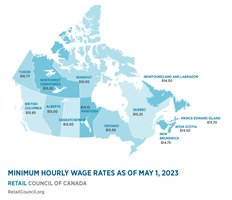
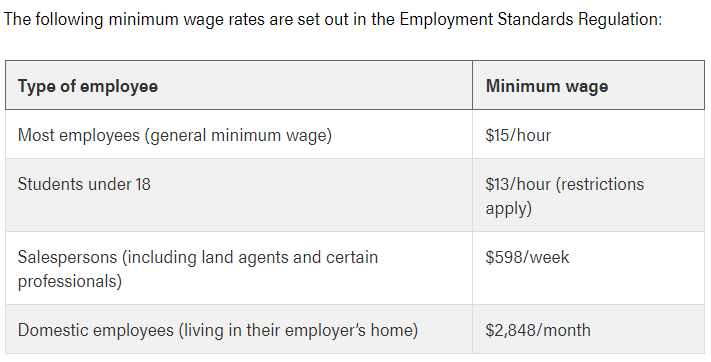
Minimum Wage: Legal minimum wage rates can increase unemployment, especially among unskilled workers.
Quantity Restrictions: Bans, licensing, import quotas, and tariff rate quotas are used to support price floors.
Appendix C: Consumer & Producer Surplus within a Price System
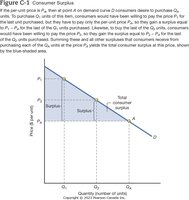
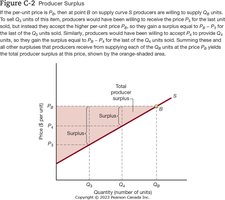
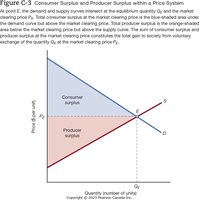
Consumer surplus is the difference between what consumers are willing to pay and what they actually pay. Producer surplus is the difference between what producers receive and the minimum they would accept. Total surplus is the sum of consumer and producer surplus, representing the total value from voluntary exchange.
Deadweight Loss: Occurs when total surplus is reduced due to inefficiency, such as price controls.
Formulas:
Consumer Surplus:
Producer Surplus:
Total Surplus:
Deadweight Loss:
Summary Discussion of Learning Objectives
Essential Features of the Price System: Prices respond to supply and demand, intermediaries reduce transaction costs.
Effects of Changes in Demand and Supply: Directional impacts on equilibrium price and quantity depend on which curve shifts.
Rationing Function of Prices: Prices allocate scarce goods; alternatives include waiting, random assignment, and coupons.
Effects of Price Ceilings: Shortages, nonprice rationing, and illicit markets.
Effects of Price Floors and Quantity Restrictions: Surpluses, government intervention, and trade restrictions.
Consumer and Producer Surplus: Measures of market benefits; deadweight loss indicates inefficiency.
