 뒤로
뒤로Elasticity in Microeconomics: Price, Income, Cross, and Supply Elasticity
스터디 가이드 - 스마트 노트
 자료에 맞춘 맞춤형 노트, 핵심 정의, 예시, 맥락을 확장해 제공합니다.
Elasticity in Microeconomics
Introduction to Elasticity
Elasticity is a fundamental concept in microeconomics that measures the responsiveness of one variable to changes in another variable. The most common types are price elasticity of demand, income elasticity of demand, cross elasticity of demand, and price elasticity of supply. Understanding elasticity helps explain consumer and producer behavior, market outcomes, and the effects of policy interventions.
Price Elasticity of Demand
Definition and Calculation
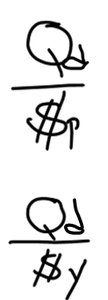
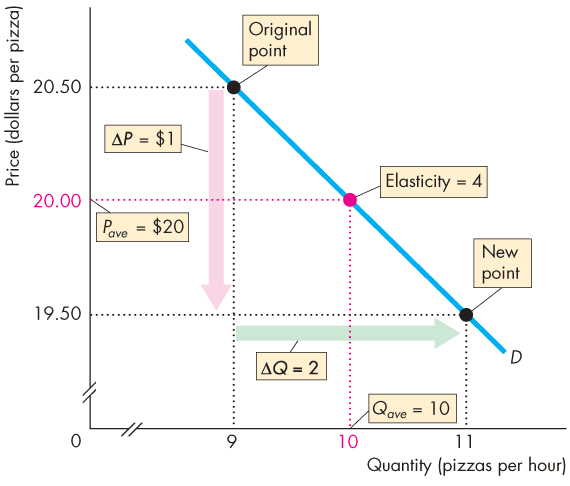
Price elasticity of demand measures how much the quantity demanded of a good responds to a change in its price, holding all other factors constant. It is calculated as the percentage change in quantity demanded divided by the percentage change in price.
Formula:
Absolute Value: The result is typically negative due to the inverse relationship between price and quantity demanded, but the absolute value is used for interpretation.
Types of Price Elasticity of Demand
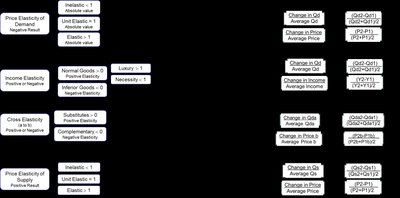
Elastic Demand (|E| > 1): Quantity demanded changes by a larger percentage than price.
Inelastic Demand (|E| < 1): Quantity demanded changes by a smaller percentage than price.
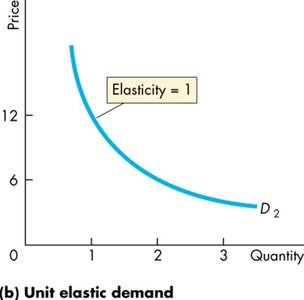
Unit Elastic Demand (|E| = 1): Quantity demanded changes by the same percentage as price.
Determinants of Price Elasticity of Demand
Availability of Substitutes: More substitutes make demand more elastic.
Proportion of Income: Goods that take a larger share of income have more elastic demand.
Time Horizon: Demand is more elastic over longer periods as consumers adjust.
Necessities vs. Luxuries: Necessities tend to have inelastic demand; luxuries are more elastic.
Total Revenue and Elasticity
Total revenue is calculated as price multiplied by quantity demanded. The effect of a price change on total revenue depends on the elasticity of demand:
If demand is elastic, a price decrease increases total revenue.
If demand is inelastic, a price increase increases total revenue.
If demand is unit elastic, total revenue remains unchanged when price changes.
Graphical Representation
Special Cases of Demand Curves
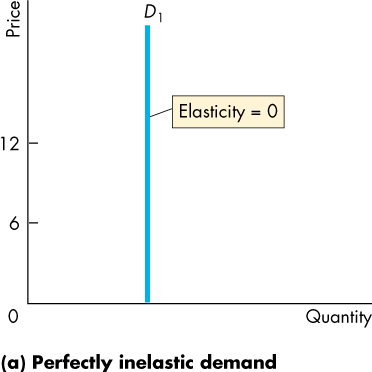
Perfectly Inelastic Demand: Quantity demanded does not change with price (vertical demand curve).
Perfectly Elastic Demand: Quantity demanded is infinitely responsive to price (horizontal demand curve).
Unit Elastic Demand: Proportional change in quantity and price.
Income Elasticity of Demand
Definition and Calculation
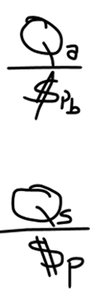
Income elasticity of demand measures how the quantity demanded of a good responds to a change in consumer income, holding other factors constant.
Formula:

Types of Goods by Income Elasticity
Normal Goods (E > 0): Quantity demanded increases as income increases.
Inferior Goods (E < 0): Quantity demanded decreases as income increases.
Luxury Goods (E > 1): A subset of normal goods with high income elasticity.
Necessities (0 < E < 1): Normal goods with low income elasticity.
Cross Elasticity of Demand
Definition and Calculation
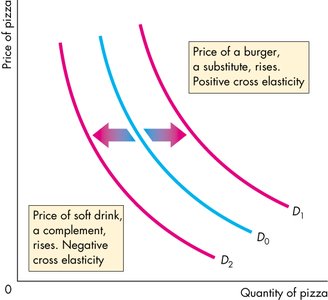
Cross elasticity of demand measures the responsiveness of the quantity demanded for one good to a change in the price of another good.
Formula:

Types of Relationships
Substitutes (E > 0): An increase in the price of one good increases the demand for the other.
Complements (E < 0): An increase in the price of one good decreases the demand for the other.
Price Elasticity of Supply
Definition and Calculation
Price elasticity of supply measures the responsiveness of the quantity supplied of a good to a change in its price, holding other factors constant.
Formula:


Determinants of Price Elasticity of Supply
Resource Substitution Possibilities: Greater ease of substituting resources increases elasticity.
Time Frame: Supply is more elastic in the long run than in the short run or momentarily.
Special Cases of Supply Curves
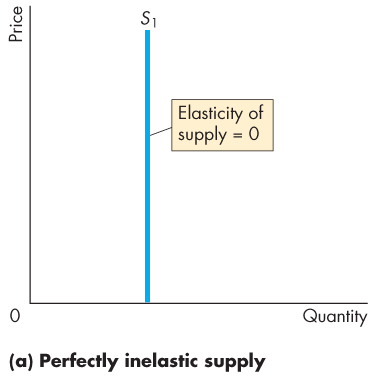
Perfectly Inelastic Supply: Quantity supplied does not change with price (vertical supply curve).
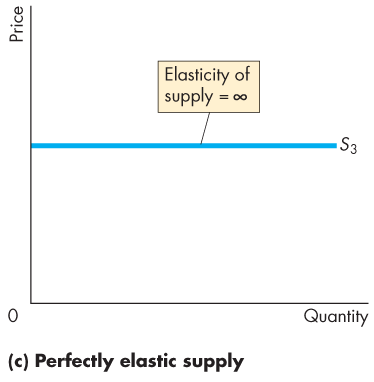
Perfectly Elastic Supply: Quantity supplied is infinitely responsive to price (horizontal supply curve).
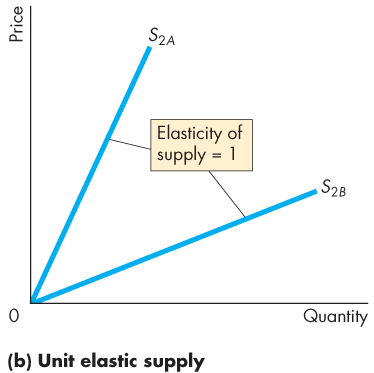
Unit Elastic Supply: Proportional change in quantity and price.

Practice: Calculating Elasticity of Supply
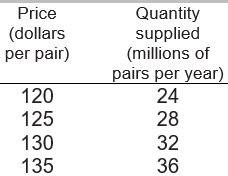
The following table shows the supply schedule for jeans. Use the midpoint formula to calculate elasticity over different price ranges.
Price (dollars per pair) | Quantity supplied (millions of pairs per year) |
|---|---|
120 | 24 |
125 | 28 |
130 | 32 |
135 | 36 |
Summary Table: Elasticity Formulas
Elasticity Type | Formula | Interpretation |
|---|---|---|
Price Elasticity of Demand | Measures responsiveness of quantity demanded to price changes | |
Income Elasticity of Demand | Measures responsiveness of quantity demanded to income changes | |
Cross Elasticity of Demand | Measures responsiveness of demand for one good to price changes in another | |
Price Elasticity of Supply | Measures responsiveness of quantity supplied to price changes |

Additional info: The notes above include expanded academic context, definitions, and examples to ensure completeness and clarity for exam preparation.
