 뒤로
뒤로How Consumers and Producers Make Economic Decisions: Foundations of Microeconomics
스터디 가이드 - 스마트 노트
 자료에 맞춘 맞춤형 노트, 핵심 정의, 예시, 맥락을 확장해 제공합니다.
Scarcity and Individual Choices
Understanding Scarcity
Scarcity is a fundamental concept in economics, referring to the condition where human wants for goods and services exceed the available resources. Because resources are limited, both consumers and producers must make choices about how to allocate them most effectively.
Scarcity: The basic economic problem that arises because resources are limited while wants are unlimited.
Choices: Individuals and firms must decide how to use their limited resources to satisfy their needs and wants.
Example: Deciding how many children to have is an economic choice influenced by limited resources such as time and money.
Assumptions about Economic Decision-Making
Three Key Assumptions
Economists make several assumptions about how consumers and producers behave when faced with scarcity:
Rational Behavior: Individuals use all available information and act rationally to improve their well-being and that of those around them.
Response to Incentives: Economic agents respond to incentives, which are rewards or penalties that influence behavior.
Marginal Analysis: Optimal decisions are made by comparing the additional (marginal) benefits and costs of an action.
Incentives in Economics
How Incentives Influence Behavior
An incentive is anything that motivates or encourages a person to take a particular action. Incentives can be financial, such as tax credits or discounts, or non-financial, such as recognition or convenience. Economists believe that incentives are crucial for changing behavior.
Government Incentives: Policies like universal child care, tax benefits for parents, and tuition reimbursement are designed to encourage certain behaviors (e.g., having more children).
Business Incentives: Companies may offer price discounts or coupons to incentivize consumers to purchase goods and services.
Economic Skepticism: Economists are generally skeptical of attempts to change behavior without providing clear incentives.
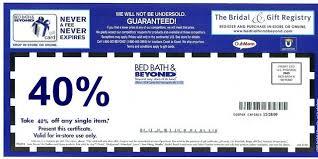
Example: A store offering a 40% off coupon to encourage purchases.
Marginal Analysis: Decisions at the Margin
Making Optimal Decisions
Marginal analysis involves comparing the additional benefits and additional costs of a decision. The best decisions are made when the marginal benefit equals or exceeds the marginal cost.
Marginal Benefit: The extra benefit received from consuming or producing one more unit of a good or service.
Marginal Cost: The extra cost incurred from consuming or producing one more unit of a good or service.
Formula:
Example: Deciding whether to read a book or attend the Super Bowl by comparing the additional enjoyment (benefit) and the costs (both monetary and non-monetary).
Opportunity Cost
The Real Cost of Choices
Opportunity cost is the value of the next best alternative that must be forgone to undertake an activity. It is a key concept in economics because it highlights that every choice has a cost, even if there is no explicit monetary payment.
Definition: The highest-valued alternative that must be given up to engage in an activity.
Application: When choosing between reading a book and attending the Super Bowl, the opportunity cost of reading is missing the game, and vice versa.
Table: Comparing Monetary and Opportunity Costs
Activity | Monetary Cost | Opportunity Cost |
|---|---|---|
Read a Book | $25 (book price) | Missing the Super Bowl experience |
Attend the Super Bowl | $10,000 (ticket, travel, etc.) | Time could be spent on other activities |
Zero Monetary Cost: Even if an activity is free, there is still an opportunity cost because choosing one activity means forgoing another.

Summary
Scarcity forces individuals and firms to make choices.
Economists assume rational behavior, responsiveness to incentives, and decision-making at the margin.
Opportunity cost is central to understanding economic choices—nothing is truly free.
