 뒤로
chapter 10 pt1
스터디 가이드 - 스마트 노트
 자료에 맞춘 맞춤형 노트, 핵심 정의, 예시, 맥락을 확장해 제공합니다.
Achieving and Maintaining a Healthful Body Weight
Defining a Healthful Body Weight
A healthful body weight is not a single number, but rather a range that is appropriate for an individual's age, physical development, genetic background, and lifestyle. It is a weight that can be sustained without extreme dieting, is compatible with normal blood pressure, lipid levels, and glucose tolerance, and is supported by good eating habits and regular physical activity. Social and cultural perceptions of healthful weight have changed over time and vary across countries.
Key Point: There is no universal body type or weight that defines health; individual factors must be considered.
Key Point: Healthful weight is also one that is acceptable to the individual and does not compromise physical or mental health.
Example: A physically active person who is moderately overweight may still be considered healthy if other health markers are normal.
Evaluating Body Weight
There are three primary methods used to evaluate whether a person's body weight is healthful:
Body Mass Index (BMI): Expresses the ratio of weight to height squared. It is a quick screening tool but has limitations, such as not distinguishing between muscle and fat mass.
Body Composition: Measures the proportion of fat and lean mass in the body. Methods include underwater weighing, skinfold measurements, bioelectrical impedance analysis (BIA), dual-energy x-ray absorptiometry (DXA), and Bod Pod.
Fat Distribution Pattern: Assessed by waist circumference; patterns such as apple-shaped (upper body) and pear-shaped (lower body) have different health risks.
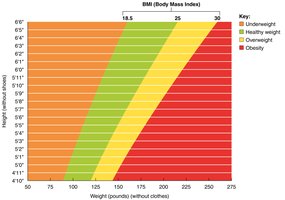
BMI Categories and Health Risks
Underweight: BMI < 18.5 kg/m2 – Increased risk for health problems due to insufficient body fat.
Normal weight: BMI 18.5–24.9 kg/m2 – Lowest disease risk.
Overweight: BMI 25–29.9 kg/m2 – Moderate excess body weight.
Obesity: BMI 30–39.9 kg/m2 – Excess body weight adversely affects health.
Severe obesity: BMI > 40 kg/m2 – Very high risk of serious health complications.
Body Composition Assessment Methods
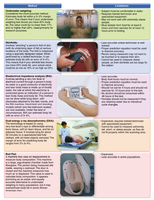
Underwater Weighing: Accurate but requires specialized equipment and is not suitable for all populations.
Skinfold Measurements: Simple and inexpensive, but accuracy depends on technician skill.
BIA: Quick and noninvasive, but results can be affected by hydration status.
DXA: Highly accurate, but expensive and requires access to specialized equipment.
Bod Pod: Uses air displacement, accurate but costly and less accessible.
Fat Distribution Patterns
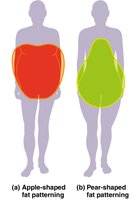
Apple-shaped (android): Fat stored in upper body; increased risk of chronic diseases such as type 2 diabetes and heart disease.
Pear-shaped (gynoid): Fat stored in lower body; not significantly associated with increased chronic disease risk.
Energy Balance and Its Limitations
Energy balance is the relationship between energy intake (calories from food) and energy expenditure (calories burned). Maintaining energy balance is essential for sustaining a healthful body weight.
Key Point: Energy balance occurs when energy intake equals energy expenditure.
Key Point: The energy balance equation is simple and static, but real-life regulation of body weight is dynamic and influenced by many factors.
Example: To gain 1 pound of fat:

Components of Energy Expenditure
Basal Metabolic Rate (BMR): Energy expended to maintain basic physiological functions at rest; accounts for 60–75% of total energy expenditure. BMR decreases with age and is higher with more lean body mass.
Thermic Effect of Food (TEF): Energy used to digest, absorb, and metabolize food; about 5–10% of meal energy.
Physical Activity: Includes exercise and nonexercise activity thermogenesis (NEAT); represents 15–35% of total energy output.
Factors Influencing Body Weight
Body weight is determined by a complex interplay of biological, genetic, metabolic, physiologic, and sociocultural factors.
Genetic Factors: 40–75% of BMI can be attributed to genetics. Key genes include FTO (fat mass and obesity-associated gene) and MC4R (melanocortin 4 receptor gene). Hypotheses include the thrifty gene, set-point, protein leverage, and drifty gene hypotheses.
Metabolic Factors: Low metabolic rate, low spontaneous activity, low sympathetic nervous system activity, low fat utilization, low thyroid hormones, elevated cortisol, and certain medications.
Physiologic Factors: Satiety mechanisms in the hypothalamus, energy-regulating hormones (leptin, ghrelin, PYY), gut microbiome, and other signals (serotonin, CCK, blood glucose).
Sociocultural Factors: Physical activity levels, culture, societal pressures, social determinants of health (SDOH) such as access to healthcare, food, transportation, socioeconomic status, and environmental stress.
Summary Table: Factors Influencing Body Weight
Factor | Examples |
|---|---|
Genetic | FTO, MC4R, thrifty gene, set-point hypothesis |
Metabolic | BMR, thyroid hormones, cortisol, medications |
Physiologic | Leptin, ghrelin, PYY, satiety center, gut microbiome |
Sociocultural | Culture, SDOH, physical activity, societal pressures |
Limitations of BMI and Energy Balance Equation
BMI: Does not distinguish between muscle and fat, does not account for age, sex, ethnicity, or bone structure.
Energy Balance Equation: Oversimplifies the dynamic regulation of body weight; does not account for metabolic adaptation, hormonal regulation, or environmental influences.
Conclusion
Achieving and maintaining a healthful body weight requires understanding the multifactorial influences on weight, using appropriate evaluation methods, and recognizing the limitations of simple tools like BMI and the energy balance equation. A holistic approach considers genetic, metabolic, physiologic, and sociocultural factors for optimal health.
