 뒤로
Energy Balance, Body Composition, and Eating Disorders: Study Guide for Nutrition Students
스터디 가이드 - 스마트 노트
 자료에 맞춘 맞춤형 노트, 핵심 정의, 예시, 맥락을 확장해 제공합니다.
Energy Balance and Body Composition
Energy Balance: Definitions and Importance
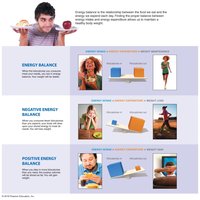
Energy balance is the relationship between the energy consumed from food and beverages and the energy expended through basal metabolism and physical activity. Maintaining proper energy balance is essential for regulating body weight and overall health.
Energy Balance: Occurs when energy intake equals energy expenditure, resulting in stable body weight.
Positive Energy Balance: Energy intake exceeds energy expenditure, leading to weight gain. This can result from increased muscle mass, adipose tissue, or both, and is common during periods of growth (e.g., pregnancy, childhood, adolescence).
Negative Energy Balance: Energy expenditure exceeds energy intake, resulting in weight loss. This can cause loss of fat, muscle, glycogen, or water.
Example: A person consuming more calories than they burn will gain weight, while someone burning more calories than they consume will lose weight.
Components of Energy Intake and Expenditure
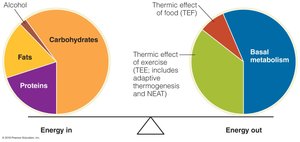
Energy intake comes from macronutrients and alcohol, while energy expenditure is divided into several components.
Energy In: Provided by carbohydrates (4 kcal/g), proteins (4 kcal/g), fats (9 kcal/g), and alcohol (7 kcal/g).
Energy Out: Includes basal metabolism, thermic effect of food (TEF), thermic effect of exercise (TEE), and adaptive thermogenesis.
Example: Nutrition analysis software or food composition tables can help estimate energy intake.
Total Daily Energy Expenditure (TDEE)
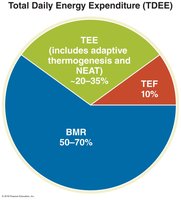
Total Daily Energy Expenditure (TDEE) is the sum of all calories used by the body in a day. It is composed of several factors:
Basal Metabolic Rate (BMR): Energy spent to meet basic physiological needs (50–70% of TDEE).
Thermic Effect of Exercise (TEE): Energy used during physical activity (20–35% of TDEE, includes adaptive thermogenesis and NEAT).
Thermic Effect of Food (TEF): Energy used to digest, absorb, and metabolize food (about 10% of TDEE).
Adaptive Thermogenesis: Regulation of heat production in response to environmental changes.
Factors Affecting Basal Metabolism
Basal metabolic rate is influenced by several factors:
Lean body mass
Age
Gender
Body size
Genes and ethnicity
Emotional and physical stress
Thyroid hormone levels
Nutritional state
Environmental temperature
Caffeine and nicotine intake
Additional info: Smoking is not a recommended weight-management strategy due to significant health risks.
Measuring Energy Expenditure
Energy expenditure can be measured directly or indirectly:
Direct Calorimetry: Measures heat loss in a metabolic chamber.
Indirect Calorimetry: Estimates energy expenditure by measuring oxygen consumption and carbon dioxide production.
Estimated Energy Requirement (EER): Calculated using equations based on age, gender, height, weight, and physical activity.
Harris–Benedict Equation: Used to estimate resting metabolic rate (RMR).
Formula Example:
Body Composition
Definition and Importance
Body composition refers to the ratio of fat tissue to lean body mass (muscle, bone, organs). It is usually expressed as percent body fat and is important for assessing health risks associated with excess body fat.
Types of Body Fat
Body fat is categorized as essential fat and stored fat:
Essential Fat: Necessary for normal body function. Women have more essential fat (12%) than men (3%).
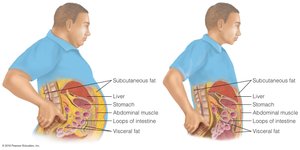
Stored Fat: Located in adipose tissue, including subcutaneous fat (under the skin) and visceral fat (around organs).
Functions: Insulates the body, protects organs, and provides energy reserves.
Adipose Tissue Types
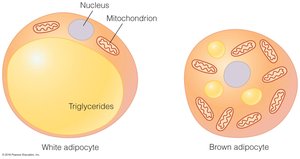
Adipose tissue includes white and brown adipocytes:
White Adipocytes: Store triglycerides and provide energy.
Brown Adipocytes: Contain more mitochondria, generate heat, and are rich in blood supply.
Body Fat Distribution and Health
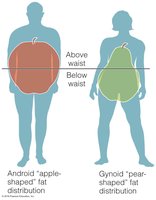
Fat distribution affects health risks:
Central (Android) Obesity: Excess visceral fat in the abdomen, increases risk for heart disease, diabetes, and hypertension.
Gynoid Obesity: Excess fat around thighs and buttocks, more common in women.
Example: Visceral fat releases fatty acids that can cause insulin resistance and increase cholesterol.
Methods to Assess Body Composition
Body composition is assessed using direct and indirect methods:
Hydrostatic Weighing: Underwater weighing, highly accurate (2–3% margin of error).
Air Displacement Plethysmography (BodPod): Measures air displacement, accurate within 3%.
Dual-energy X-ray Absorptiometry (DEXA): Most accurate, margin of error 1–4%.
Bioelectrical Impedance Analysis (BIA): Measures resistance to electrical current, less accurate.
Skinfold Caliper: Measures fat at various locations, accuracy depends on technician skill.
Waist Circumference: Quick indicator of health risk; >35 inches in women and >40 inches in men increases risk.
Estimating Healthy Body Weight
Height-Weight Tables and BMI
Healthy body weight can be estimated using height-weight tables and Body Mass Index (BMI):
Height-Weight Tables: Provide recommended weight ranges but have limitations.
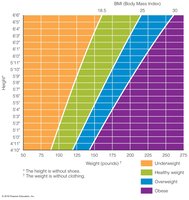
BMI: Calculates body weight in relation to height, used as a screening tool for disease risk.
Formula:
Interpretation: BMI values classify individuals as underweight, healthy weight, overweight, or obese.
Limitations of BMI
BMI is not a direct measure of body fat and may not be accurate for all individuals:
Athletes: May have high BMI due to muscle mass, not excess fat.
Older Adults: May have healthy BMI but low muscle mass.
Short Individuals: May have high BMI but not be unhealthy.
Recommendation: Combine indirect measurements for better assessment.
BMI and Waist Circumference for Health Risk
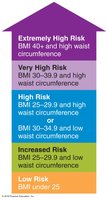
BMI and waist circumference are used together to determine health risk:
High Risk: BMI ≥ 30 and high waist circumference
Increased Risk: BMI 25–29.9 and high waist circumference
Low Risk: BMI under 25
Health Risks Associated with Body Weight and Composition
Risks of Being Underweight
Being underweight increases health risks and may be symptomatic of malnutrition, substance abuse, or disease.
Risks: Anemia, osteoporosis, heart irregularities, amenorrhea, depression, anxiety, infection, temperature regulation issues, decreased muscle strength, premature death.
Causes: Malabsorption, certain medications, smoking, substance abuse.
Risks of Being Overweight
Being overweight or obese increases health risks:
Risks: Heart disease, hypertension, stroke, gallstones, hyperlipidemia, sleep apnea, reproductive problems, certain cancers, type 2 diabetes, metabolic syndrome.
Obese individuals: Have a 50–100% higher risk of premature death than those at healthy weight.
Disordered Eating and Eating Disorders
Disordered Eating: Definition and Types
Disordered eating refers to abnormal and potentially harmful eating patterns, which may include:
Refusing to eat
Compulsive eating
Binge eating
Restrictive eating
Vomiting after eating
Abusing diet pills, laxatives, or diuretics
Eating Disorders: Diagnosis and Treatment
Eating disorders are psychological illnesses diagnosed by specific criteria. They are most common in young adults and adolescents but are increasing in other groups. Treatment requires a multidisciplinary team approach.
Team: Psychological, medical, and nutrition professionals
Monitoring: Physician supervision is essential
Types of Eating Disorders
Anorexia Nervosa: Characterized by self-starvation and excessive weight loss. Health consequences include electrolyte imbalances, heart rate and blood pressure drops, fatigue, hair loss, digestive slowing, nutrient deficiencies, and inability to regulate body temperature.
Bulimia Nervosa: Involves binge eating followed by purging. Health consequences include tears in the esophagus, tooth decay, gum disease, electrolyte imbalances, dehydration, constipation, impaired bowel function, depression, and low self-esteem.
Binge Eating Disorder: Recurrent episodes of binge eating without purging. May eat for emotional reasons, leading to physical and psychological discomfort. Health consequences include high blood pressure, high cholesterol, heart disease, type 2 diabetes, and gallbladder disease.
Orthorexia: Obsession with healthy or righteous eating, often leading to restrictive behaviors and potential development of anorexia.
Night Eating Syndrome: Consuming most daily calories after evening meal and during the night. Associated with low self-esteem, depression, and stress.
Warning Signs and Recovery
Warning signs for eating disorders include abnormal eating behaviors, emotional distress, and physical symptoms. Recovery is possible, especially when treated early. Registered Dietitian Nutritionists can help establish normal eating behaviors through meal planning, food journals, and recognizing hunger and fullness cues.
Additional info: Full recovery from eating disorders is most successful when the disorder is treated in the early stages.
