 뒤로
Energy Metabolism: Pathways and Regulation in Nutrition
스터디 가이드 - 스마트 노트
 자료에 맞춘 맞춤형 노트, 핵심 정의, 예시, 맥락을 확장해 제공합니다.
Energy Metabolism
Introduction to Metabolism
Metabolism refers to the sum of all chemical reactions occurring in the body, enabling the conversion of nutrients into energy and building blocks for growth and maintenance. These reactions follow specific metabolic pathways and are essential for sustaining life. - Metabolic Pathways: Sequences of reactions converting compounds from one form to another. - Energy Storage: Energy is stored in the chemical bonds of carbohydrates, proteins, and fats, and released when these bonds are broken. - Aerobic vs. Anaerobic: Energy release can occur with (aerobic) or without (anaerobic) oxygen.
Cellular Metabolism
Metabolic processes occur within cells, with different organelles playing distinct roles. - Mitochondria: Site of aerobic metabolism and ATP production. - Cytosol: Site of anaerobic metabolism. 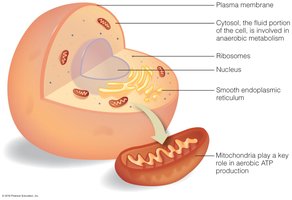
The Liver's Role in Metabolism
The liver is the most metabolically active organ, responsible for metabolizing, storing, and distributing nutrients after absorption. - Functions: Converts monosaccharides, amino acids, glycerol, and fatty acids into new compounds, energy, or storage forms (triglycerides, glycogen).
Anabolic and Catabolic Reactions
Metabolic reactions are classified as anabolic (building up) or catabolic (breaking down). - Anabolic Reactions: Absorb energy to combine simple molecules into larger ones (e.g., glucose to glycogen). - Catabolic Reactions: Release energy by breaking down large molecules into simpler ones. 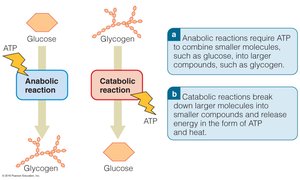
Regulation of Metabolism
Enzymes and hormones regulate metabolic pathways. - Enzymes: Catalyze reactions, allowing them to occur at rates sufficient for normal function. - Coenzymes: Assist enzymes in metabolic reactions. - Hormones: Regulate anabolic and catabolic reactions (e.g., insulin, glucagon).
ATP: The Energy Currency of Cells
Structure and Function of ATP
Adenosine triphosphate (ATP) is a high-energy molecule composed of adenine, ribose, and three phosphate groups. It is the direct energy source for cellular processes. - Energy Storage: Energy is stored in the bonds connecting phosphate groups. - ATP Regeneration: ATP can be regenerated from ADP and creatine phosphate. 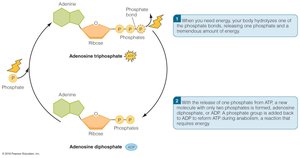
ATP Production Pathways
The body produces ATP from macronutrients through several metabolic stages: - Glycolysis (anaerobic, cytosol) - Pyruvate to Acetyl CoA (aerobic, mitochondria) - TCA Cycle (mitochondria) - Electron Transport Chain (mitochondria) 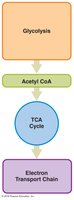
Metabolic Pathways of Macronutrients
Overview of Macronutrient Metabolism
Carbohydrates, fats, and proteins enter metabolic pathways at different stages to produce ATP. 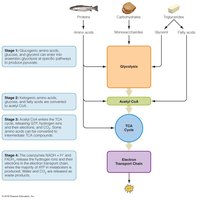
Glycolysis: Glucose to Pyruvate
Glycolysis is a 10-step anaerobic pathway in the cytosol, converting glucose to pyruvate and generating ATP and NADH. - Products: 2 ATP, 2 pyruvate, 2 NADH, 2 H+, 2 H2O.
Pyruvate to Lactate and the Cori Cycle
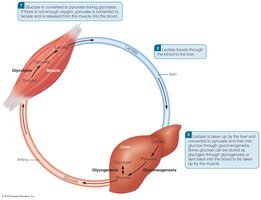
Under anaerobic conditions, pyruvate is reduced to lactate, which diffuses to the liver and is converted back to glucose via the Cori cycle. 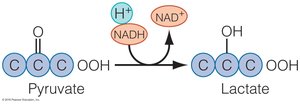
Amino Acid Metabolism
Amino acids are classified as glucogenic or ketogenic based on their metabolic fate. - Glucogenic Amino Acids: Can be converted to pyruvate or TCA cycle intermediates for gluconeogenesis. - Ketogenic Amino Acids: Converted to acetyl CoA and can form ketone bodies. 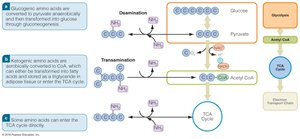
Glycerol Metabolism
Only the glycerol portion of triglycerides is glucogenic and can be used to make glucose, though it yields little energy.
Pyruvate to Acetyl CoA
In the presence of oxygen, pyruvate is converted to acetyl CoA in the mitochondria, entering the TCA cycle or being stored as fat. 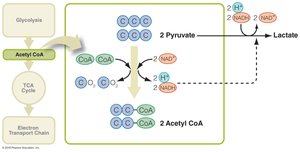
Fatty Acid Metabolism
Fatty acids are hydrolyzed from triglycerides, activated, and then disassembled by beta-oxidation in the mitochondria to form acetyl CoA. - Beta-Oxidation: Sequential removal of two-carbon units, forming acetyl CoA. - Ketogenesis: Fatty acids can be used to form ketone bodies. 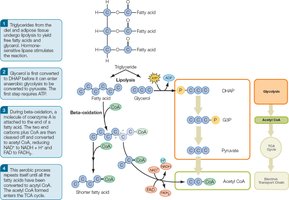
The TCA Cycle (Citric Acid/Krebs Cycle)
The TCA cycle oxidizes acetyl CoA, releasing high-energy electrons and hydrogen ions, which are transferred to coenzymes for use in the electron transport chain. 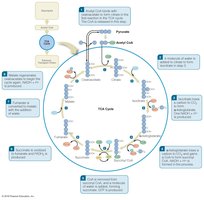
Electron Transport Chain and Oxidative Phosphorylation
The electron transport chain, located in the inner mitochondrial membrane, produces the majority of ATP by transferring electrons through protein complexes. - Flavoproteins: Contain riboflavin. - Cytochromes: Contain iron and copper. 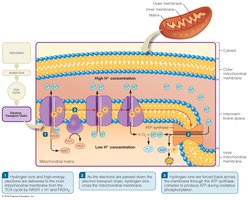
Summary of Energy Metabolism
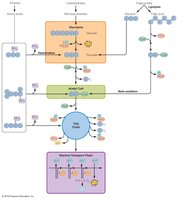
Metabolic Changes During Feeding and Fasting
Absorptive State
The absorptive state occurs within 4 hours after a meal, when anabolic processes dominate. - Carbohydrates: Stored as glycogen in liver and muscle. - Excess Carbohydrates and Amino Acids: Converted to triglycerides. - Fatty Acids: Stored as triglycerides via lipogenesis. 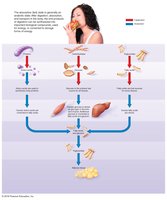
Postabsorptive State
The postabsorptive state occurs more than 4 hours after eating, when catabolic processes dominate and energy is derived from stored nutrients. - Short-term fasting: Glycogen and fatty acids provide energy. - Long-term fasting: Ketone bodies and muscle breakdown provide energy. 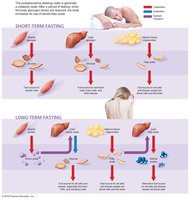
Ketogenesis
During prolonged fasting, ketogenesis produces ketone bodies from acetyl CoA, which can be used by the brain for energy. - Ketoacidosis: Excess ketone bodies can lead to dangerous acidification of the blood. 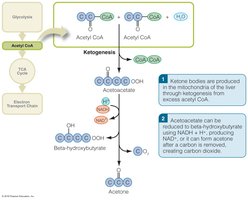
Alcohol Metabolism
Alcohol Metabolic Pathways
Alcohol is metabolized primarily in the liver via three pathways: - Alcohol Dehydrogenase (ADH): Converts alcohol to acetyl CoA. - Microsomal Ethanol Oxidizing System (MEOS): Used during chronic consumption, also metabolizes drugs. - Catalase: Oxidizes alcohol in the brain. 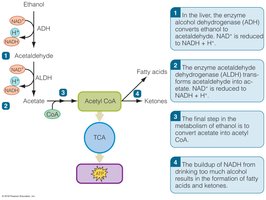
Effects of Alcohol on Fat Metabolism
After alcohol consumption, fat metabolism is favored, leading to fat storage in the liver and adipose tissue.
Inborn Errors of Metabolism
Phenylketonuria (PKU)
PKU is a genetic disorder where the body cannot metabolize phenylalanine due to a lack of phenylalanine hydroxylase. - Symptoms: Behavioral problems, mental retardation. - Treatment: Limit phenylalanine intake, maintain adequate tyrosine, avoid aspartame.
Maple Syrup Urine Disease (MSUD)
MSUD is a disorder affecting the metabolism of branched-chain amino acids (leucine, isoleucine, valine). - Symptoms: Seizures, coma, death if untreated. - Treatment: Special formulas, avoid certain protein-rich foods.
Homocystinuria
Homocystinuria is the inability to convert homocysteine to cystathione. - Treatment: Low methionine diet, B vitamin supplementation.
Galactosemia and Glycogen Storage Disease
- Galactosemia: Inability to convert galactose to glucose; treated by avoiding lactose and galactose. - Glycogen Storage Disease: Inability to break down glycogen; treated by avoiding sucrose, lactose, galactose, and fructose.
Summary Table: Metabolism during Feeding and Fasting
State | Primary Processes | Key Hormones |
|---|---|---|
Absorptive | Anabolic (storage of nutrients) | Insulin |
Postabsorptive | Catabolic (breakdown of stores) | Glucagon |
Prolonged Fasting | Ketogenesis, muscle breakdown | Glucagon, cortisol |
Key Equations
ATP Hydrolysis
Glycolysis (Net Reaction)
Beta-Oxidation (Fatty Acid to Acetyl CoA)
TCA Cycle (Acetyl CoA Oxidation)
Alcohol Metabolism (ADH Pathway)
Conclusion
Energy metabolism is a complex, regulated process essential for life, involving the conversion of macronutrients into ATP through interconnected pathways. Understanding these processes is fundamental for nutrition students, as it underpins dietary recommendations, health, and disease management.
