 뒤로
뒤로Lipids: Structure, Digestion, Physiology, and Health Effects
스터디 가이드 - 스마트 노트
 자료에 맞춘 맞춤형 노트, 핵심 정의, 예시, 맥락을 확장해 제공합니다.
Lipids: Structure and Classification
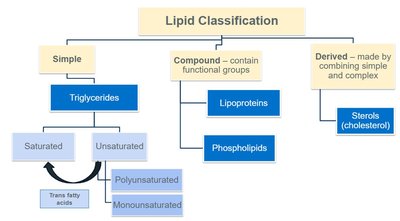
Overview of Lipid Types
Lipids are a diverse group of organic compounds essential for human health, serving as energy sources, structural components, and signaling molecules. They are classified into three main categories: simple, compound, and derived lipids.
Simple Lipids: Mainly triglycerides, composed of glycerol and fatty acids.
Compound Lipids: Include phospholipids and lipoproteins, which contain additional functional groups.
Derived Lipids: Formed from simple and compound lipids, such as sterols (cholesterol).
Structural Features of Lipids
The structure of lipids determines their function and physical properties.
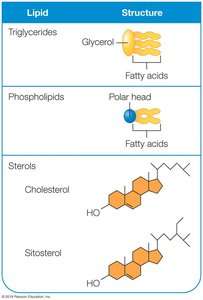
Triglycerides: Consist of a glycerol backbone and three fatty acids.
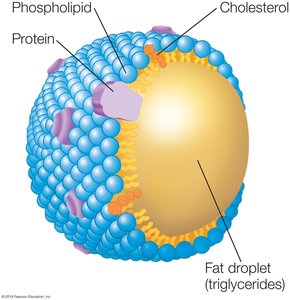
Phospholipids: Have a polar (hydrophilic) head and nonpolar (hydrophobic) fatty acid tails, crucial for cell membranes.
Sterols: Characterized by a multi-ring structure, such as cholesterol and sitosterol.
Fatty Acids: Saturated, Unsaturated, and Trans Fats
Fatty Acid Structure and Types
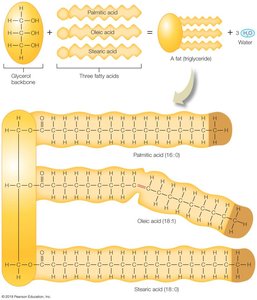
Fatty acids are classified based on the presence and number of double bonds.
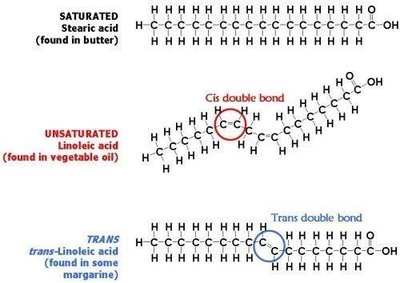
Saturated Fatty Acids: No double bonds; solid at room temperature (e.g., stearic acid).
Unsaturated Fatty Acids: One or more double bonds; liquid at room temperature.
Monounsaturated: One double bond (e.g., oleic acid).
Polyunsaturated: Two or more double bonds (e.g., linoleic and linolenic acids).
Trans Fatty Acids: Produced by partial hydrogenation; hydrogens are on opposite sides of the double bond, associated with increased cardiovascular risk.
Essential Fatty Acids: Omega-3 and Omega-6
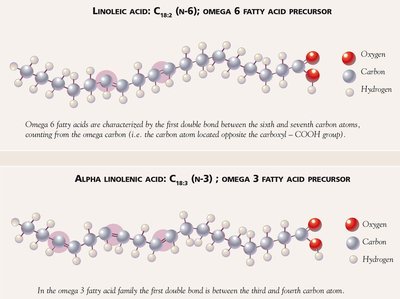
Omega-3 (α-linolenic acid): Found in flaxseed, walnuts, and fish; important for anti-inflammatory processes and cardiovascular health.
Omega-6 (linoleic acid): Found in vegetable oils; involved in cell signaling and inflammation regulation.
Both are essential fatty acids—the body cannot synthesize them and must obtain them from the diet.
Phospholipids and Sterols
Phospholipids
Phospholipids are amphipathic molecules, meaning they have both hydrophilic and hydrophobic regions.
Major component of cell membranes.
Act as emulsifiers in food and biological systems (e.g., lecithin).
Assist in transport of fat-soluble vitamins and molecules across membranes.
Sterols
Sterols, such as cholesterol, are vital for cell membrane structure and serve as precursors for hormones and vitamin D.
Cholesterol: Synthesized by the liver and obtained from diet; transported by lipoproteins.
Excess LDL cholesterol can lead to plaque formation and atherosclerosis.
Lipid Digestion, Absorption, and Transport
Digestion of Lipids
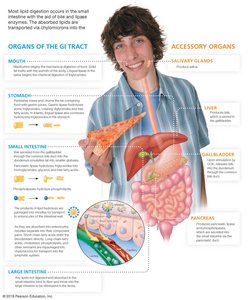
Lipid digestion begins in the mouth and continues in the stomach and small intestine.
Mouth: Mechanical digestion and some enzymatic activity (lingual lipase).
Stomach: Gastric lipase breaks down triglycerides.
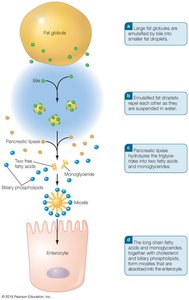
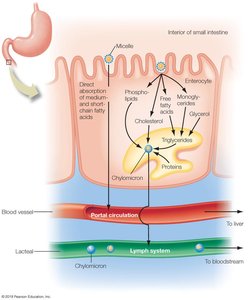
Small Intestine: Cholecystokinin (CCK) stimulates bile release from the gallbladder and lipase secretion from the pancreas. Bile emulsifies fats, allowing lipase to hydrolyze triglycerides into monoglycerides and free fatty acids.
Fate of Bile: Enterohepatic Circulation
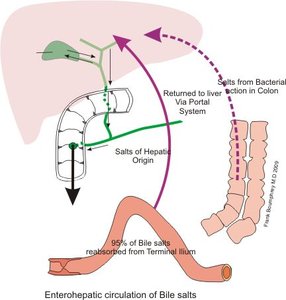
Most bile salts are reabsorbed and recycled by the liver, but some are excreted with fiber, reducing cholesterol levels.
Recycling of bile is called enterohepatic circulation.
Excretion of bile salts with fiber helps lower blood cholesterol.
Lipid Absorption and Transport
Absorption:
Glycerol and short-chain fatty acids are absorbed directly into the bloodstream.
Monoglycerides and long-chain fatty acids form micelles, are absorbed into intestinal cells, and reassembled into triglycerides.
Triglycerides, sterols, and phospholipids are packaged into chylomicrons and enter the lymphatic system.
Transport:
Chylomicrons transport dietary lipids via lymph to the bloodstream.
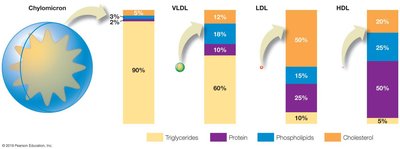
Lipoproteins (VLDL, LDL, HDL) transport lipids throughout the body.
Physiology: Roles of Lipids in the Body
Functions of Triglycerides and Fatty Acids
Lipids serve multiple physiological roles:
Energy storage and supply (especially during fasting or exercise).
Hormone production and cell signaling.
Insulation and protection of organs.
Adipose tissue secretes hormones (adipokines) that regulate energy balance, inflammation, and insulin sensitivity.
Lipid Transport via Lipoproteins
Lipoproteins are complexes that transport lipids in the blood.
Chylomicrons: Transport dietary triglycerides from intestine to tissues.
VLDL: Carry triglycerides and cholesterol from liver to tissues.
LDL: Deliver cholesterol to cells; high levels are associated with atherosclerosis.
HDL: Collect cholesterol from tissues and return it to the liver for disposal; high levels are protective.
Pathophysiology: Cardiovascular Disease
Mechanisms and Risk Factors
Cardiovascular disease (CVD) includes coronary heart disease, stroke, and peripheral artery disease.
Atherosclerosis: Plaque formation in arteries due to LDL cholesterol, inflammation, and immune response.
Risk Factors:
Non-modifiable: Age, gender, family history.
Modifiable: High LDL, low HDL, hypertension, diabetes, obesity, inactivity, smoking, atherogenic diet.
High LDL (>160 mg/dL) and low HDL (<40 mg/dL) increase risk.
Treatment and Prevention
Adopt Mediterranean, DASH, or Therapeutic Lifestyle Change diets.
Increase physical activity and dietary fiber.
Reduce saturated fat (<7% of daily kcal), cholesterol (<200 mg/day).
Health Effects and Dietary Recommendations
Saturated Fats, Trans Fats, and Cholesterol
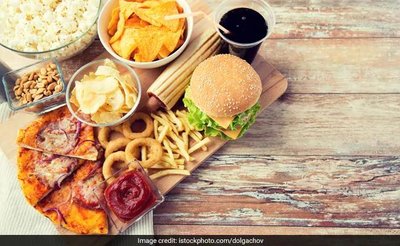
Excessive intake of saturated and trans fats is linked to increased risk of heart disease and some cancers.
AMDR for fat: 20–35% of daily energy.
Less than 10% (preferably <5%) of daily kcal from saturated fats.
Blood lipid profile (VLDL:LDL:HDL) is used to assess risk.
Mono- and Polyunsaturated Fats
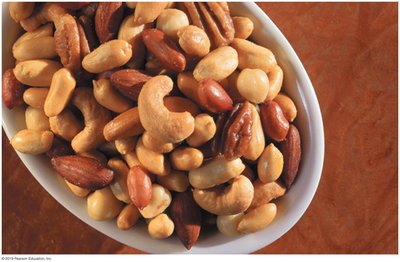
Consuming mono- and polyunsaturated fats, especially omega-3s, lowers LDL and cholesterol, reducing heart disease risk.
Sources: Vegetable oils, nuts, seeds, fish.
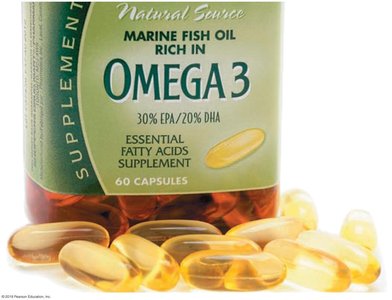
Omega-3 supplements may help reduce inflammation and protect against some cancers.
Essential Fatty Acids and Food Sources
Linoleic acid (Omega-6): Vegetable oils, seeds, nuts.
Linolenic acid (Omega-3): Walnuts, flaxseed, canola oil, fish.
Fatty Acid Composition of Common Foods
Food Sources of Different Fatty Acids
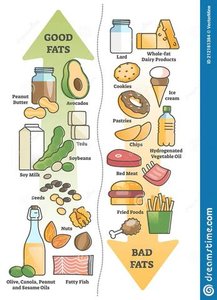
Saturated: Animal fats, butter, coconut oil, palm oil, lard.
Monounsaturated: Olive oil, canola oil, peanut oil, avocado.
Polyunsaturated:
Omega-6: Safflower, sunflower, corn, soybean oils.
Omega-3: Flaxseed oil, fish oil (salmon).
Application Example: Fat Accumulation in Bears
Fat Storage and Survival
Brown bears accumulate fat reserves by consuming high-fat foods (e.g., salmon) to survive hibernation.
Salmon is rich in calories and fat, especially in skin, brain, and eggs.
Bears may eat over 30 salmon per day, consuming up to 135,000 calories.
Fat reserves are critical for winter survival during hibernation.
Additional info: This example illustrates the importance of dietary fat for energy storage and survival in animals.
