 뒤로
뒤로Aldehydes and Ketones: Structure, Nomenclature, Synthesis, and Reactions
스터디 가이드 - 스마트 노트
 자료에 맞춘 맞춤형 노트, 핵심 정의, 예시, 맥락을 확장해 제공합니다.
Aldehydes and Ketones: Structure and Properties
Structural Features of Aldehydes and Ketones
Aldehydes and ketones are organic compounds containing a carbonyl group (C=O). The carbonyl group is central to their reactivity and properties.
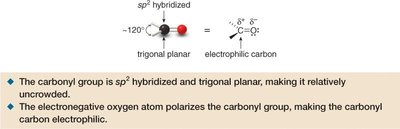
sp2 Hybridization: The carbonyl carbon is sp2 hybridized, resulting in a trigonal planar geometry with bond angles of approximately 120°.
Electrophilic Carbon: The electronegative oxygen atom polarizes the carbonyl group, making the carbonyl carbon electrophilic and susceptible to nucleophilic attack.
Nomenclature of Aldehydes and Ketones
Naming Aldehydes
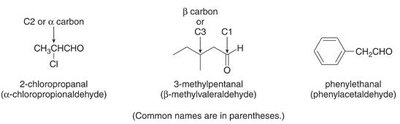
Aldehydes are named based on the longest carbon chain containing the carbonyl group, with the suffix -al replacing the parent alkane's ending. The carbonyl carbon is always C1, and its number is omitted in the name.
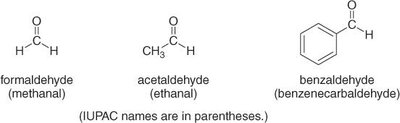
If the CHO group is attached to a ring, the ring is named with the suffix -carbaldehyde.
Common names are often used for simple aldehydes, formed by adding -aldehyde to the parent name.
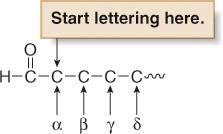
Greek letters (α, β, γ, δ) are used to indicate the position of substituents relative to the carbonyl group.
Naming Ketones
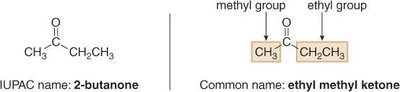
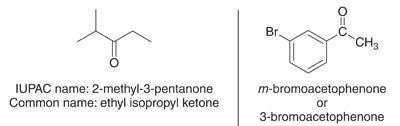
Ketones are named by identifying the longest chain containing the carbonyl group and replacing the -e ending with -one. The chain is numbered to give the carbonyl carbon the lowest possible number.
Cyclic ketones are named by numbering the ring starting at the carbonyl carbon.
Common names are formed by naming the alkyl groups attached to the carbonyl carbon, listed alphabetically, followed by "ketone".
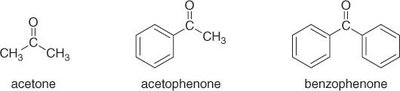
Some ketones have widely used common names that do not follow this convention.
Acyl and Benzyl Groups
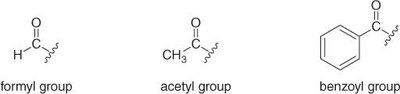
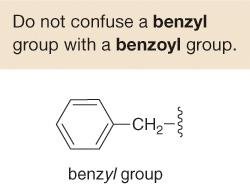
Acyl groups are often named as substituents. The most common acyl groups are formyl, acetyl, and benzoyl. It is important not to confuse the benzyl group (PhCH2-) with the benzoyl group (PhCO-).
Interesting Aldehydes and Ketones in Nature
Characteristic Odors and Industrial Uses
Many aldehydes and ketones have distinctive odors and are important in industry and nature.
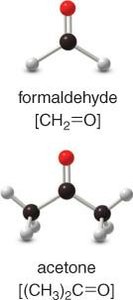
Formaldehyde: Produced from methanol oxidation, used as formalin (preservative).
Acetone: Industrial solvent, produced in vivo during fatty acid breakdown.
Natural compounds such as citral (lemon odor), cinnamaldehyde (cinnamon), benzaldehyde (almonds), and 2-heptanone (bleu cheese) are examples of aldehydes and ketones with strong odors.
Preparation of Aldehydes and Ketones
Synthesis of Aldehydes
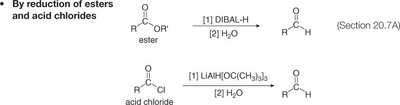
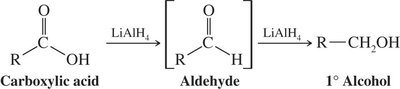
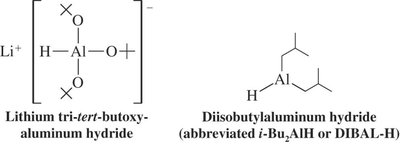
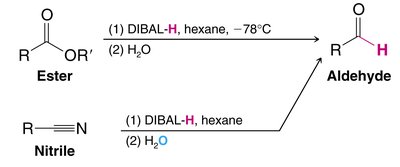
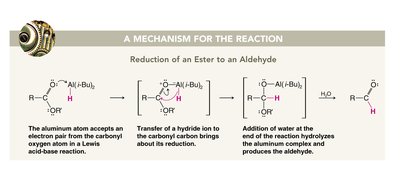
Aldehydes can be synthesized by reduction of acyl chlorides, esters, and nitriles using selective hydride reagents. Direct reduction of carboxylic acids to aldehydes is not feasible due to over-reduction.
DIBAL-H (Diisobutylaluminum hydride) and LiAlH(OtBu)3 are used to selectively reduce esters and acid chlorides to aldehydes.
Reduction of carboxylic acids with LiAlH4 leads to primary alcohols, not aldehydes.

Synthesis of Ketones
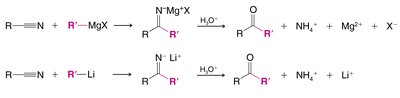
Ketones are commonly prepared by oxidation of secondary alcohols, Friedel-Crafts acylation, and by reaction of nitriles with Grignard or organolithium reagents.
Oxidation: Secondary alcohols are oxidized using Cr(VI) reagents (e.g., PCC, CrO3).
Friedel-Crafts Acylation: Aromatic rings react with acid chlorides in the presence of AlCl3 to form aryl ketones.
Nitrile Addition: Nitriles react with Grignard or organolithium reagents, followed by hydrolysis, to yield ketones.


Reactivity and General Reactions of Aldehydes and Ketones
Nucleophilic Addition Mechanism
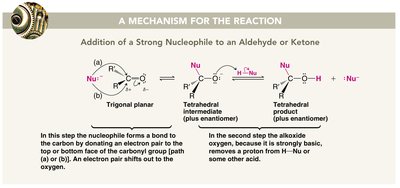
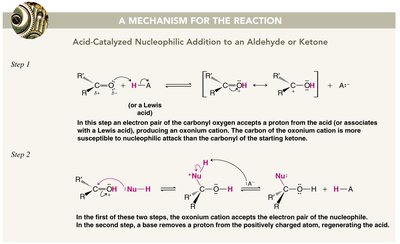
The carbonyl carbon in aldehydes and ketones is electrophilic, making these compounds susceptible to nucleophilic addition. The mechanism involves nucleophilic attack followed by protonation.
Strong nucleophiles attack directly, forming a tetrahedral intermediate.
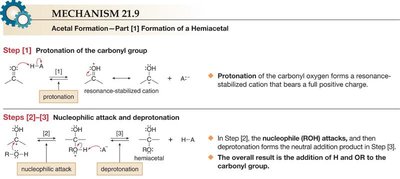
With neutral nucleophiles, acid catalysis is often required; protonation of the carbonyl oxygen increases electrophilicity.
Relative Reactivity of Aldehydes and Ketones
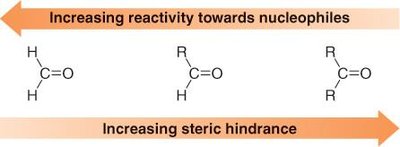
Aldehydes are generally more reactive than ketones due to less steric hindrance and fewer electron-donating groups.
Reactivity order: formaldehyde > other aldehydes > ketones.
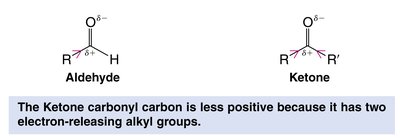
Ketones are less electrophilic because they have two electron-releasing alkyl groups.
Important Nucleophilic Addition Reactions
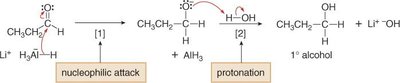
Hydride Addition: Reduction to Alcohols
Aldehydes and ketones can be reduced to alcohols by hydride donors such as NaBH4 or LiAlH4. The nucleophile is H-.
Reduction of aldehydes yields primary alcohols; reduction of ketones yields secondary alcohols.
The reaction proceeds via nucleophilic attack and subsequent protonation.

Grignard and Organolithium Addition: Formation of Alcohols
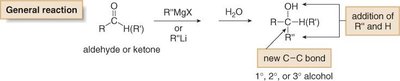
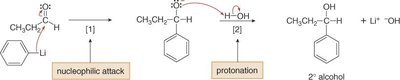
Grignard reagents (R-MgX) and organolithium reagents (R-Li) add to aldehydes and ketones, forming alcohols with new C–C bonds.
Addition to aldehydes yields secondary alcohols; addition to ketones yields tertiary alcohols.
The reaction involves nucleophilic attack and protonation.
Addition of Alcohols: Hemiacetals and Acetals
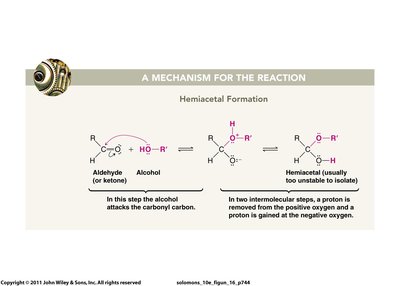
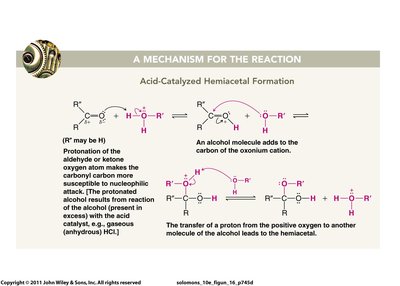
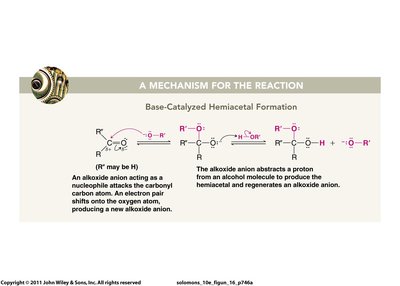
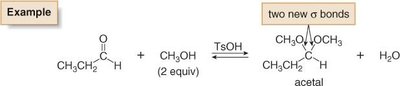
Aldehydes and ketones react with alcohols to form hemiacetals and acetals. Hemiacetals are formed by addition of one equivalent of alcohol; acetals are formed by addition of two equivalents.
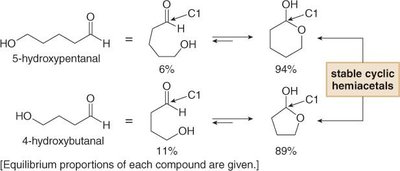
Cyclic hemiacetals are formed by intramolecular cyclization of hydroxy aldehydes, especially in five- and six-membered rings.
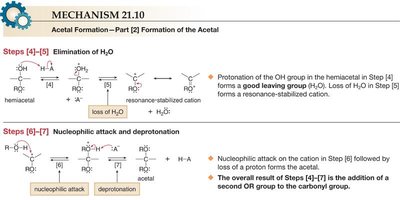
Acetal formation is acid-catalyzed and reversible; acetals are stable in basic conditions.
Hydration: Formation of Gem-Diols
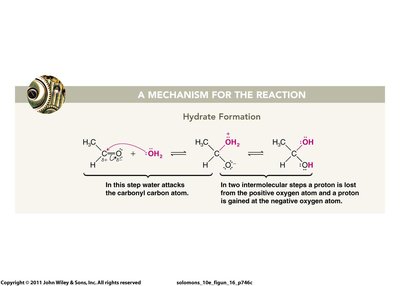
Water adds to aldehydes and ketones to form gem-diols (hydrates). The reaction is catalyzed by acid or base and is reversible.
Gem-diol formation is favored for unhindered aldehydes or those with electron-withdrawing groups.


Acetal Formation: Mechanism and Use as Protecting Groups
Acetals are formed from aldehydes or ketones and alcohols in the presence of acid. Acetals are used as protecting groups for carbonyl compounds during multi-step synthesis.
Acetal formation involves two steps: hemiacetal formation and conversion to acetal.
Acetals can be hydrolyzed back to carbonyl compounds in acidic conditions.
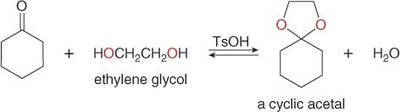
Cyclic acetals are formed using diols such as ethylene glycol.
Reactions with Amines: Imines and Enamines
Imine Formation (Schiff Bases)
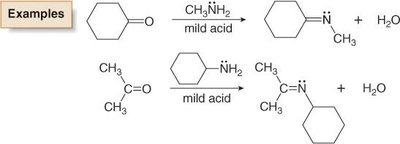
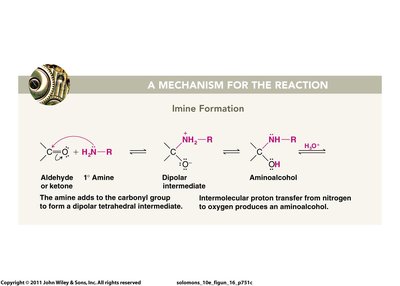
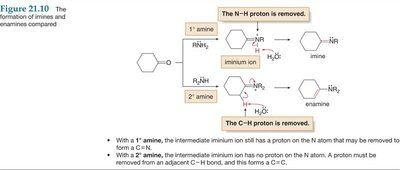
Primary amines react with aldehydes and ketones to form imines. The reaction is fastest in weakly acidic conditions.
Imines are useful for identification and further reactions.
Hydroxylamine and hydrazine derivatives form oximes and hydrazones, respectively.

Enamine Formation
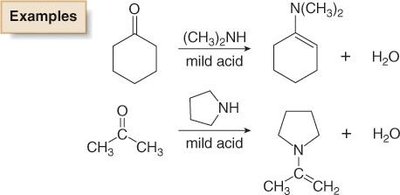
Secondary amines react with aldehydes and ketones to form enamines, which contain a nitrogen atom bonded to a C=C double bond.
Enamines are important intermediates in organic synthesis.

Nucleophilic Addition of Cyanide: Cyanohydrin Formation
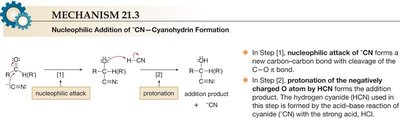
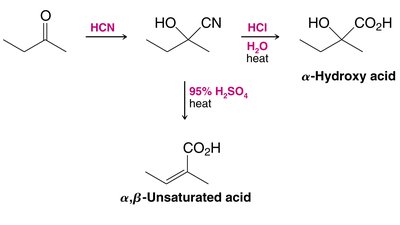
Aldehydes and ketones react with HCN to form cyanohydrins. The cyano group can be hydrolyzed to a carboxylic acid.
The mechanism involves nucleophilic attack by CN- and protonation.
The Wittig Reaction: Alkene Formation
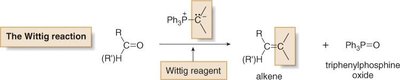
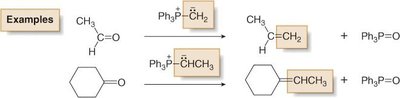
The Wittig reaction uses a phosphorus ylide (Wittig reagent) to convert aldehydes and ketones to alkenes. This reaction is highly useful for constructing carbon-carbon double bonds with precise control over the location.
The Wittig reagent is synthesized from alkyl halides and triphenylphosphine.
The reaction proceeds via an addition-elimination mechanism.
Mixtures of E and Z isomers may form, but the constitutional isomer is always known.
Analysis and Spectroscopic Properties
Chemical Tests for Aldehydes and Ketones
Tollens' Test: Silver mirror test specific for aldehydes.
Permanganate Oxidation: Decolorization indicates aldehyde presence.
IR and NMR Spectroscopy
IR: Strong C=O stretch at ~1700 cm-1; aldehyde C-H at 2700–2830 cm-1.
NMR: Aldehyde proton absorbs at 9–10 ppm; α-carbon protons at 2–2.5 ppm.
Summary Table: Nomenclature of Aldehydes and Ketones
Compound | IUPAC Name | Common Name |
|---|---|---|
CH2O | methanal | formaldehyde |
CH3CHO | ethanal | acetaldehyde |
PhCHO | benzene carbaldehyde | benzaldehyde |
CH3COCH3 | propanone | acetone |
PhCOCH3 | acetophenone | acetophenone |
PhCOPh | benzophenone | benzophenone |
Additional info: This guide covers the structure, nomenclature, synthesis, and key reactions of aldehydes and ketones, including their use in organic synthesis and analysis. Mechanisms and examples are provided for major reactions, and spectroscopic properties are summarized for identification purposes.
