뒤로
뒤로Organic Chemistry Study Notes: Natural Products, Stereochemistry, and Structure-Activity Relationships
스터디 가이드 - 스마트 노트
 자료에 맞춘 맞춤형 노트, 핵심 정의, 예시, 맥락을 확장해 제공합니다.
Natural Products in Organic Chemistry
Crude Drugs and Phytochemicals
Natural products are a cornerstone of organic chemistry, especially in drug discovery and medicinal chemistry. Crude drugs are unmodified natural preparations from plants, animals, fungi, or minerals used for therapeutic purposes. They are classified based on their source, morphology, pharmacological action, chemical constituents, and taxonomy.
Organized Crude Drugs: Derived directly from plant parts containing cellular tissues (e.g., leaves, roots, bark).
Unorganized Crude Drugs: Obtained by physical processes and lack cellular structure (e.g., plant exudates like aloe juice, opium latex).
Phytochemicals: Active constituents such as glycosides, alkaloids, tannins, and terpenoids.
Example: Glycosides, alkaloids, and tannins are secondary metabolites with limited distribution in nature, often providing defense or signaling functions in plants.
Biosynthesis of Natural Products
Primary and Secondary Metabolites
Primary metabolites (e.g., carbohydrates, proteins, fats, nucleic acids) are essential for life and are synthesized via universal pathways like glycolysis and the citric acid cycle. Secondary metabolites (e.g., glycosides, alkaloids, tannins) are species-specific and often pharmacologically active.
Building Blocks: Derived from intermediates such as acetyl-CoA, shikimic acid, mevalonic acid, and amino acids.
Example: Alkaloids and antibiotics are synthesized from amino acids.
Glycosides
Structure and Classification
Glycosides are compounds that yield one or more sugars upon hydrolysis. They consist of a sugar portion (glycone) and a non-sugar portion (aglycone or genin). The linkage can be via oxygen (O-glycoside), carbon (C-glycoside), nitrogen (N-glycoside), or sulfur (S-glycoside).
Classification:
By sugar component (e.g., glucoside, fructoside)
By aglycone type (e.g., anthraquinone, flavonoid, steroid glycosides)
By function (e.g., saponins, cyanogenic glycosides, cardiac glycosides)
Isolation: Extraction with alcohol, precipitation of impurities, purification by chromatography, and characterization by IR, NMR, and mass spectrometry.
Cardiac Glycosides
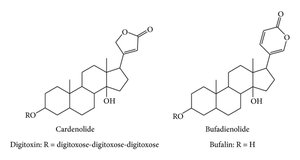
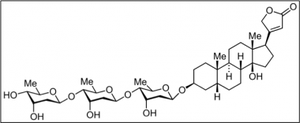
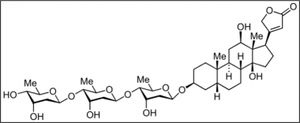
Cardiac glycosides affect myocardial contraction by modulating intracellular Ca2+. They have a steroid nucleus, hydroxyl groups, and a lactone moiety at C-17. The sugar moiety is in β-conformation.
Biological Sources: Digitalis purpurea (digoxin, digitoxine), Digitalis lanata (lanatoside A, B, C).
Medicinal Uses: Treatment of atrial fibrillation and congestive heart failure.
Alkaloids
Structure and Classification
Alkaloids are nitrogen-containing secondary metabolites, often derived from amino acids. They are basic, usually crystalline solids, and often bitter.
Classification:
True alkaloids: Nitrogen in a heterocyclic ring (e.g., morphine)
Protoalkaloids: Nitrogen not in a heterocyclic ring (e.g., mescaline)
Pseudoalkaloids: Not derived from amino acids (e.g., caffeine)
Extraction: Alkaline treatment, organic solvent extraction, separation of alkaloid salts.
Isoprene Derivatives (Terpenoids)
Classification and Structure
Terpenoids are compounds derived from isoprene units (2-methyl-1,3-butadiene). They are classified by the number of isoprene units:
Monoterpene: 2 units, 10 carbons (e.g., limonene)
Sesquiterpene: 3 units, 15 carbons (e.g., artemisinin)
Diterpene: 4 units, 20 carbons (e.g., forskolin)
Triterpene: 6 units, 30 carbons (e.g., α-amyrin)
Tetraterpene: 8 units, 40 carbons (e.g., β-carotene)
Stereochemistry
Chirality and Drug Activity
Stereochemistry is crucial in organic chemistry, especially for drug activity. Many drugs are chiral and only one enantiomer is biologically active. Laboratory synthesis often produces racemic mixtures.
Conformations: Rotation around σ bonds leads to conformational isomers (e.g., ethane, cyclohexane chair and twist-boat conformations).
Axial and Equatorial Positions: Substituents on cyclohexane rings can be axial (parallel to ring axis) or equatorial (around ring equator).
Cis-Trans Isomerism: Substituents on the same side (cis) or opposite sides (trans) of the ring.
Chirality Centers and Optical Activity
A tetrahedral carbon bonded to four different substituents is a chirality center. Molecules not identical to their mirror images are chiral and exhibit optical activity.
R/S Configuration: Assigned by sequence rules based on atomic number.
Enantiomers: Mirror images, same physical properties, different chemical properties.
Diastereomers: Not mirror images, multiple chiral centers.
Meso Compounds: Achiral molecules with chiral centers due to symmetry.
Structure-Activity Relationships (SAR)
Functional Groups and Drug Optimization
SAR studies identify which parts of a molecule are essential for biological activity. Functional groups such as alcohols, phenols, aromatic rings, amines, amides, carboxylic acids, esters, and halides play specific roles in binding interactions.
Optimization Strategies:
Variation of substituents (alkyl, aromatic)
Extension of structure
Ring expansion/contraction
Simplification of structure
Optimizing hydrophilic/hydrophobic properties
Making drugs more resistant to hydrolysis
Quantitative Structure–Activity Relationship (QSAR)
Physicochemical Properties and Biological Activity
QSAR quantifies the relationship between physicochemical properties (hydrophobicity, electronic effects, steric factors) and biological activity. The partition coefficient (P) measures hydrophobicity, Hammett constant (σ) measures electronic effects, and Taft’s steric factor (Es) measures steric effects.
Hansch Equation: Relates biological activity to log P, σ, and Es.
Craig Plot: Visualizes substituent effects (π and σ).
Antibacterial Agents: Mechanisms and SAR
Sulphonamides
Sulphonamides act as antimetabolites by inhibiting dihydropteroate synthetase and blocking tetrahydrofolate biosynthesis in bacteria. SAR studies show the importance of the para-amino group, aromatic ring, and sulphonamide group for activity.
Applications: Treatment of urinary tract infections, eye lotions, gut infections.
Analogues: Variation at the R position provides different pharmacokinetic properties.
Fixed Oils, Fats, and Waxes
Chemistry and Biological Sources
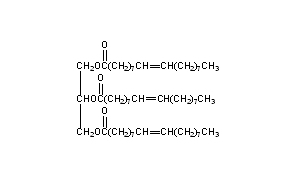
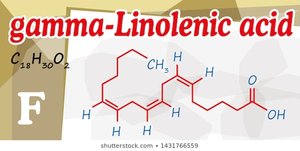
Fats are esters of fatty acids with glycerol, solid at room temperature. Fixed oils are liquid fats, mostly from plants, and contain unsaturated fatty acids. Waxes are esters of long-chain fatty acids and alcohols, not suitable as food.
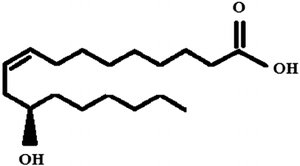
Examples: Arachis oil (groundnut oil), castor oil, sesame oil, cocoa butter, kokum butter, carnauba wax.
Medicinal Uses: Edible oils, ointment bases, emollients, cosmetic products.
Antibiotics: Mechanisms of Action
Classes of Antibacterial Agents
Antibacterial agents act by inhibiting cell metabolism, cell wall synthesis, plasma membrane interactions, protein synthesis, or nucleic acid transcription and replication.
Sulphonamides: Antimetabolites
Penicillins: Inhibit cell wall synthesis
Cephalosporins: Inhibit cell wall synthesis
Tetracyclines: Inhibit protein synthesis
Quinolones: Inhibit nucleic acid synthesis
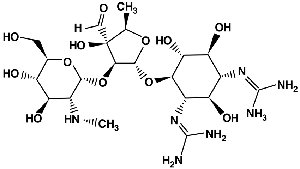
Aminoglycosides: Inhibit protein synthesis
Chloramphenicol: Inhibit protein synthesis