 뒤로
뒤로Shapes and Bonding Theories: VSEPR, Molecular Geometry, and Valence Bond Theory
스터디 가이드 - 스마트 노트
 자료에 맞춘 맞춤형 노트, 핵심 정의, 예시, 맥락을 확장해 제공합니다.
Shapes and Bonding Theories
Valence Shell Electron Pair Repulsion (VSEPR) Theory
The VSEPR theory is fundamental for predicting the three-dimensional shapes of molecules based on the repulsion between electron groups around a central atom. The arrangement of these groups determines the molecular geometry and bond angles.
Electron Groups: Regions of electron density (bonds or lone pairs) around a central atom.
Repulsions: Electron groups repel each other, maximizing their separation for stability.
Bond Angles: Characteristic angles depend on the number and arrangement of electron groups.
Key Principle: Electron groups are most stable when as far apart as possible.
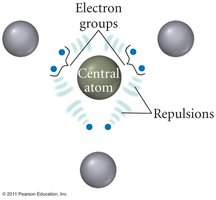
Electron Group and Molecular Geometry
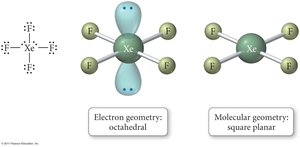
Electron group geometry describes the spatial arrangement of all electron groups (bonding and lone pairs) around a central atom, while molecular geometry considers only the arrangement of atoms.
Linear Geometry: Two electron groups, bond angle 180°.
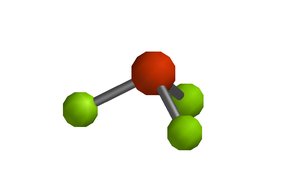
Trigonal Planar Geometry: Three electron groups, bond angle 120°.
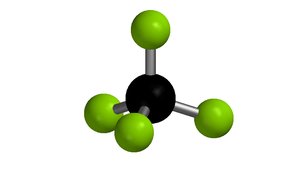
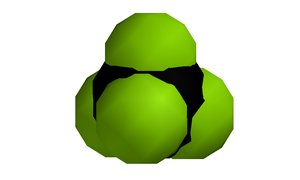
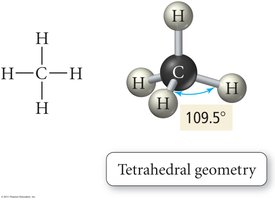
Tetrahedral Geometry: Four electron groups, bond angle 109.5°.
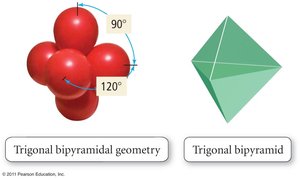
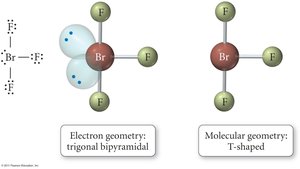
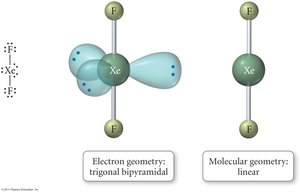
Trigonal Bipyramidal Geometry: Five electron groups, bond angles (axial-equatorial)90°, 120°(Equatorial, equatorial), 180°(axial - axial)
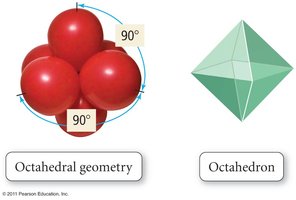
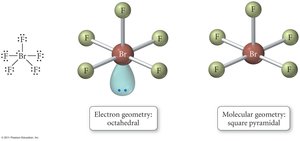
Octahedral Geometry: Six electron groups, bond angle 90°.
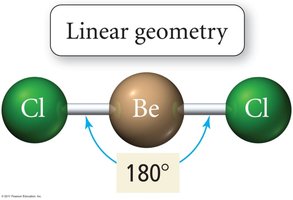
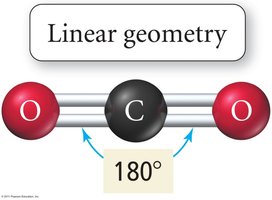
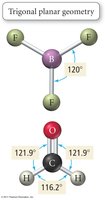
Effect of Lone Pair Electrons
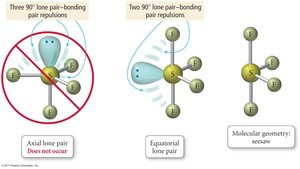
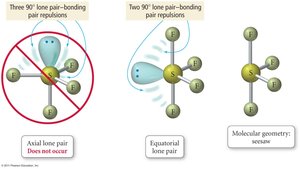
Lone pairs occupy more space than bonding pairs, causing bond angle distortions and affecting molecular geometry. The repulsive force hierarchy is:
Lone Pair–Lone Pair > Lone Pair–Bonding Pair > Bonding Pair–Bonding Pair
Bond Angles: Lone pairs reduce bond angles between bonding pairs.
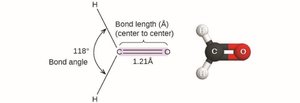
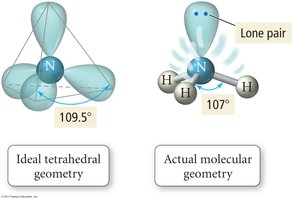
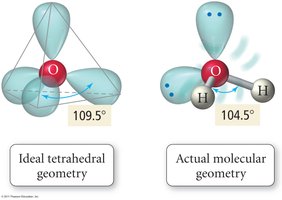
Common Molecular Geometries and Their Derivatives
When lone pairs are present, the molecular geometry deviates from the ideal electron geometry:
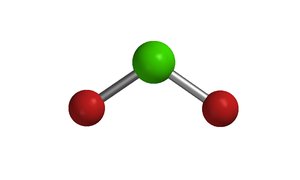
Bent (Trigonal Planar Derivative): Three electron groups, one lone pair, bond angle < 120°.
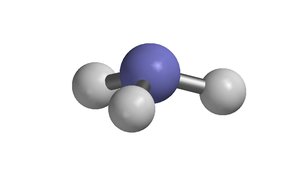
Trigonal Pyramidal (Tetrahedral Derivative): Four electron groups, one lone pair, bond angle < 109.5°.
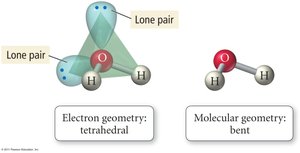
Tetrahedral Bent: Four electron groups, two lone pairs, bond angle < 109.5°.
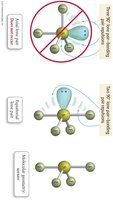
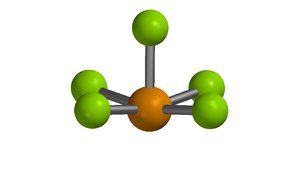
Seesaw, T-shaped, Linear (Trigonal Bipyramidal Derivatives): Five electron groups, varying lone pairs.
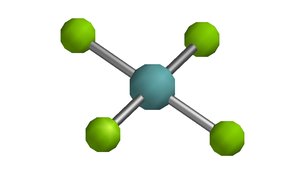
Square Pyramidal, Square Planar (Octahedral Derivatives): Six electron groups, one or two lone pairs.
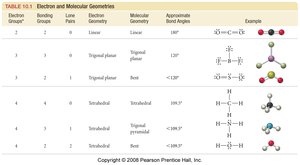
VSEPR Geometries Table
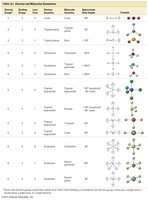
The following table summarizes electron group and molecular geometries, bond angles, and examples:
Electron Groups | Bonding Groups | Lone Pairs | Electron Geometry | Molecular Geometry | Bond Angles | Example |
|---|---|---|---|---|---|---|
2 | 2 | 0 | Linear | Linear | 180° | CO2 |
3 | 3 | 0 | Trigonal Planar | Trigonal Planar | 120° | BF3 |
3 | 2 | 1 | Trigonal Planar | Bent | <120° | SO2 |
4 | 4 | 0 | Tetrahedral | Tetrahedral | 109.5° | CH4 |
4 | 3 | 1 | Tetrahedral | Trigonal Pyramidal | <109.5° | NH3 |
4 | 2 | 2 | Tetrahedral | Bent | <109.5° | H2O |
Multiple Central Atoms
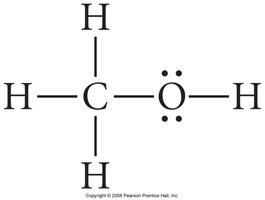
Many organic molecules contain multiple central atoms, each with its own geometry. The overall shape is described by considering the geometry around each central atom sequentially.
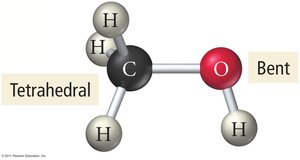
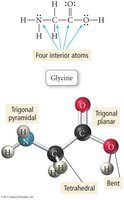
Example: Methanol and glycine have regions with tetrahedral, trigonal planar, and bent geometries.
Polarity of Molecules
Molecular polarity depends on the presence of polar bonds and the overall shape of the molecule. Polarity affects physical properties such as boiling point and solubility.
Polar Bonds: Arise from differences in electronegativity.
Net Dipole Moment: Determined by vector addition of bond dipoles.
Symmetry: Symmetrical molecules may be nonpolar even if they contain polar bonds.
Valence Bond Theory and Hybridization
Valence Bond Theory explains how atomic orbitals combine to form bonds. Hybridization is the mixing of atomic orbitals to create new orbitals suitable for bonding.
Hybrid Orbitals: sp, sp2, sp3, sp3d, sp3d2
Bond Formation: Sigma (σ) bonds form by direct overlap; Pi (π) bonds form by side-to-side overlap of p orbitals.
Hybridization Table: Number of electron domains determines hybridization:
Electron Domains | Geometry | Hybrid Orbitals |
|---|---|---|
2 | Linear | sp |
3 | Trigonal Planar | sp2 |
4 | Tetrahedral | sp3 |
5 | Trigonal Bipyramidal | sp3d |
6 | Octahedral | sp3d2 |
Summary
VSEPR theory predicts molecular shapes and bond angles based on electron group repulsions.
Molecular geometry is influenced by lone pairs and the types of bonds present.
Valence Bond Theory and hybridization explain the formation and orientation of chemical bonds.
Polarity and hybridization are key to understanding molecular properties and reactivity.
