Ch. 15 - Reactions of Carboxylic Acids and Carboxylic Acid Derivatives
Bruice - Organic Chemistry 8th Edition
Bruice8th EditionOrganic ChemistryISBN: 9780135213711당신이 사용하는 게 아니라요?교과서 변경
15장, 문제 47b

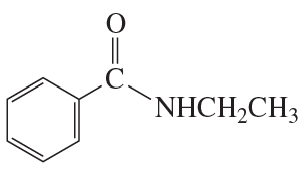
How could you synthesize the following compounds starting with a carboxylic acid?
b. Chemical structure of an acid chloride with a phenyl group and an amine side chain.

검증된 단계별 안내
1
Step 1: Begin with a carboxylic acid that has the aromatic ring structure with a nitro group (-NO2) in the para position. This will serve as the starting material for the synthesis.
Step 2: Convert the carboxylic acid group (-COOH) into an acid chloride (-COCl) using a reagent such as thionyl chloride (SOCl2). This step activates the carboxylic acid for further reactions.
Step 3: Perform an amide formation reaction by reacting the acid chloride with cyclopentylamine (C5H9NH2). This will result in the formation of the desired amide bond (-CONH-). Use a base like pyridine to neutralize the HCl byproduct.
Step 4: Ensure the reaction conditions are mild to avoid any side reactions, such as reduction of the nitro group (-NO2) or overreaction of the amine.
Step 5: Purify the final product using techniques such as recrystallization or column chromatography to isolate the desired compound with the nitro group intact and the amide bond formed.

비슷한 문제에 대한 검증된 영상 답변:

이 영상 해법은 위 문제에 도움이 된다고 튜터들이 추천한 것입니다.
영상 길이:
7m

주요 개념

질문에 올바르게 답하기 위해 반드시 이해해야 하는 핵심 개념들은 다음과 같습니다.

Carboxylic Acids

Carboxylic acids are organic compounds characterized by the presence of a carboxyl group (-COOH). They are important in organic synthesis as they can be converted into various derivatives, such as acid chlorides, esters, and amides. Understanding their reactivity and functional group transformations is crucial for synthesizing more complex molecules.
추천 영상:
04:20
Carboxylic Acids Nomenclature

Acid Chlorides

Acid chlorides, also known as acyl chlorides, are derived from carboxylic acids by replacing the hydroxyl group (-OH) with a chlorine atom. They are highly reactive intermediates in organic synthesis, often used to form esters and amides. Their ability to react with nucleophiles makes them valuable in constructing various organic compounds.
추천 영상:
03:13
Acid Chloride Nomenclature

Nucleophilic Acyl Substitution

Nucleophilic acyl substitution is a fundamental reaction mechanism in organic chemistry where a nucleophile attacks the carbonyl carbon of an acyl compound, leading to the substitution of a leaving group. This mechanism is key in the transformation of acid chlorides into other functional groups, such as amides or esters, and is essential for understanding the synthesis of complex organic molecules.
추천 영상:
01:47
Nucleophiles and Electrophiles can react in Substitution Reactions.