Ch. 11 - Properties and Synthesis of Alkyl Halides: Radical Reactions
Mullins - Organic Chemistry: A Learner Centered Approach 1st Edition
Mullins1st EditionOrganic Chemistry: A Learner Centered ApproachISBN: 9780137566471당신이 사용하는 게 아니라요?교과서 변경
10장, 문제 62c

A halogenation intended to make compound A formed B instead.

(c) Given the two mechanisms you drew, why might B have formed selectively?

검증된 단계별 안내
1
Step 1: Begin by reviewing the mechanisms you have drawn for the halogenation reactions of compound A. Ensure you understand the pathway for both the intended product (compound A) and the actual product (compound B).
Step 2: Consider the stability of the intermediates formed in each mechanism. Often, the formation of a more stable intermediate can lead to the selective formation of a particular product. Compare the stability of intermediates in the pathways leading to compounds A and B.
Step 3: Analyze the regioselectivity and stereoselectivity of the reaction. These factors can influence which product is formed preferentially. Look for any steric or electronic effects that might favor the formation of compound B over compound A.
Step 4: Evaluate the reaction conditions, such as temperature, solvent, and concentration of reagents. These can affect the rate and selectivity of the reaction, potentially favoring the formation of compound B.
Step 5: Consider any kinetic versus thermodynamic control in the reaction. Sometimes, the product formed is the result of kinetic control (faster formation) rather than thermodynamic control (more stable product). Determine if this is the case for compound B.

비슷한 문제에 대한 검증된 영상 답변:

이 영상 해법은 위 문제에 도움이 된다고 튜터들이 추천한 것입니다.

주요 개념

질문에 올바르게 답하기 위해 반드시 이해해야 하는 핵심 개념들은 다음과 같습니다.

Halogenation Reaction

Halogenation is a chemical reaction that involves the addition of halogens to a compound, typically an alkane or alkene. This process can occur via radical or electrophilic mechanisms, depending on the substrate and conditions. Understanding the specific mechanism is crucial for predicting the product formed during halogenation.
추천 영상:
03:45
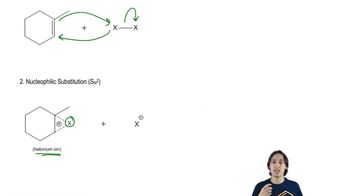
Halogenation Mechanism

Reaction Mechanism

A reaction mechanism outlines the step-by-step sequence of elementary reactions by which overall chemical change occurs. It includes the formation and breaking of bonds, intermediates, and transition states. Analyzing mechanisms helps in understanding why certain products are favored over others, as seen in the selective formation of compound B.
추천 영상:
02:16
Heck Reaction Mechanism

Selectivity in Chemical Reactions

Selectivity refers to the preference of a chemical reaction to yield one product over others. Factors influencing selectivity include steric effects, electronic effects, and the stability of intermediates. In the context of halogenation, selectivity might arise from the stability of the radical or carbocation intermediates formed during the reaction.
추천 영상:
가이드 코스
3:11
Chemical Reactions of Phosphate Anhydrides Concept 1