Ch. 11 - Properties and Synthesis of Alkyl Halides: Radical Reactions
Mullins - Organic Chemistry: A Learner Centered Approach 1st Edition
Mullins1st EditionOrganic Chemistry: A Learner Centered ApproachISBN: 9780137566471당신이 사용하는 게 아니라요?교과서 변경
10장, 문제 37c

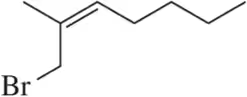
Name the following halogenated compounds according to the IUPAC rules of nomenclature.
(c) Structural formula of a halogenated compound with a bromine atom attached, illustrating cis and trans isomerism.

검증된 단계별 안내
1
Step 1: Identify the longest continuous carbon chain in the compound. This chain will serve as the parent chain, and its name will be based on the number of carbon atoms it contains (e.g., methane, ethane, propane, etc.).
Step 2: Determine the functional groups attached to the parent chain. In this case, focus on the halogen substituents (e.g., fluorine, chlorine, bromine, iodine). Assign their positions based on the carbon atoms they are attached to, ensuring the numbering starts from the end of the chain closest to a substituent.
Step 3: Assign locants (numbers) to the substituents to indicate their positions on the parent chain. If there are multiple substituents, use the lowest possible set of numbers when numbering the chain.
Step 4: Arrange the substituents in alphabetical order when writing the name. Prefixes such as 'di-', 'tri-', etc., used for multiple identical substituents, are not considered in alphabetical ordering.
Step 5: Combine the elements of the name: start with the substituents (including their locants), followed by the name of the parent chain. Ensure the name is written as a single word with no spaces, and use hyphens to separate numbers from words.

비슷한 문제에 대한 검증된 영상 답변:

이 영상 해법은 위 문제에 도움이 된다고 튜터들이 추천한 것입니다.
영상 길이:
4m

주요 개념

질문에 올바르게 답하기 위해 반드시 이해해야 하는 핵심 개념들은 다음과 같습니다.

IUPAC Nomenclature

The International Union of Pure and Applied Chemistry (IUPAC) nomenclature provides a systematic method for naming chemical compounds. It involves identifying the longest carbon chain, determining the functional groups, and assigning locants to indicate the position of substituents. Understanding these rules is essential for accurately naming organic compounds, including halogenated ones.
추천 영상:
03:43
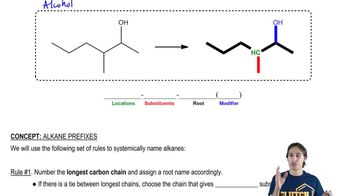
The different parts of an IUPAC name

Halogenated Compounds

Halogenated compounds are organic molecules that contain one or more halogen atoms (fluorine, chlorine, bromine, or iodine) as substituents. The presence of halogens can significantly influence the chemical properties and reactivity of the compound. Recognizing the type and position of halogens is crucial for proper nomenclature according to IUPAC rules.
추천 영상:
03:45
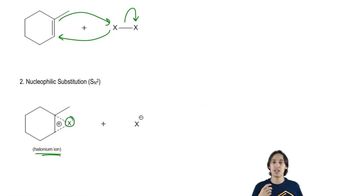
Halogenation Mechanism

Substituent Positioning

In IUPAC nomenclature, the position of substituents, including halogens, is indicated by numbers assigned to the carbon atoms in the main chain. The numbering starts from the end of the chain closest to the first substituent. Correctly identifying and numbering these positions is vital for providing an unambiguous name for the compound.
추천 영상:
가이드 코스
4:06
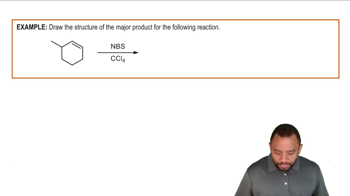
Reactions at the Allylic Position Example 3