Ch. 22 - Conjugated Systems 2: Pericyclic Reactions
Mullins - Organic Chemistry: A Learner Centered Approach 1st Edition
Mullins1st EditionOrganic Chemistry: A Learner Centered ApproachISBN: 9780137566471당신이 사용하는 게 아니라요?교과서 변경
21장, 문제 7a

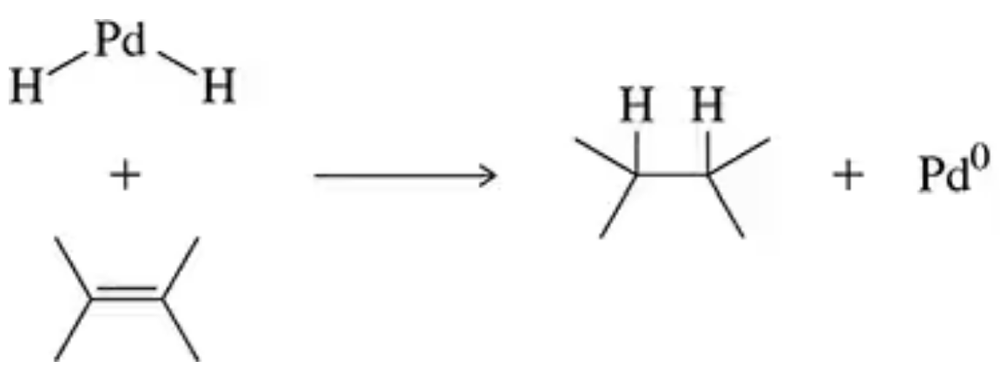
We have studied a number of pericyclic reactions previously. Draw the mechanism of the steps shown. The section number where this material was first studied is given for your review.
(a) Chemical reaction diagram showing hydrogenation of an alkyne with palladium catalyst, producing an alkene and Pd zero.

검증된 단계별 안내
1
Step 1: Identify the type of pericyclic reaction involved. Pericyclic reactions include cycloadditions, electrocyclic reactions, sigmatropic rearrangements, and cheletropic reactions. Determine which category the reaction falls into based on the provided mechanism.
Step 2: Analyze the molecular orbitals involved in the reaction. For example, in a cycloaddition reaction, consider the interaction between the π orbitals of the reactants. Use the Woodward-Hoffmann rules to determine whether the reaction is thermally or photochemically allowed.
Step 3: Draw the transition state of the reaction. Pericyclic reactions proceed through a concerted mechanism, meaning all bond-making and bond-breaking events occur simultaneously. Represent the cyclic flow of electrons using curved arrows to show how bonds are formed and broken.
Step 4: Verify the stereochemistry of the product. Pericyclic reactions often exhibit stereospecificity. For example, in an electrocyclic reaction, the stereochemistry of the product depends on whether the reaction is thermal or photochemical.
Step 5: Review the section number provided in the problem to revisit the theoretical concepts and examples studied earlier. This will help reinforce your understanding of the mechanism and ensure accuracy in your drawing.

비슷한 문제에 대한 검증된 영상 답변:

이 영상 해법은 위 문제에 도움이 된다고 튜터들이 추천한 것입니다.
영상 길이:
2m

주요 개념

질문에 올바르게 답하기 위해 반드시 이해해야 하는 핵심 개념들은 다음과 같습니다.

Pericyclic Reactions

Pericyclic reactions are a class of organic reactions that occur through a concerted mechanism, involving the cyclic rearrangement of electrons. These reactions typically involve the overlap of orbitals in a cyclic transition state, leading to the formation of new bonds without the need for intermediates. Common types include cycloadditions, electrocyclic reactions, and sigmatropic rearrangements, each governed by specific selection rules.
추천 영상:
07:37
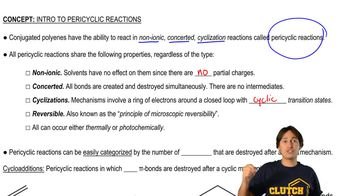
Properties and Types of Pericyclic Reactions

Mechanism of Reactions

The mechanism of a reaction describes the step-by-step process by which reactants are converted into products. It includes the identification of intermediates, transition states, and the movement of electrons, often illustrated using curved arrows. Understanding the mechanism is crucial for predicting the outcome of reactions and for designing synthetic pathways in organic chemistry.
추천 영상:
02:16
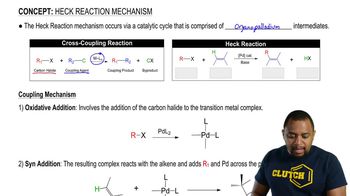
Heck Reaction Mechanism

Orbital Overlap and Hybridization

Orbital overlap refers to the interaction between atomic orbitals that leads to the formation of chemical bonds. In pericyclic reactions, the overlap of p-orbitals is essential for the concerted nature of the reaction. Hybridization, the mixing of atomic orbitals to form new hybrid orbitals, also plays a role in determining the geometry and reactivity of the molecules involved, influencing the reaction pathway.
추천 영상:
04:58
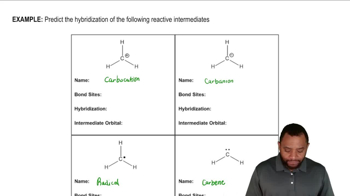
Bond sites, hybridization, and intermediate orbitals