교과서 질문
Given the line-angle drawings shown, answer the following questions:
(i) How many carbons are in each molecule?
(ii) How many hydrogens are at the circled carbon?
(iii) Is the indicated (→) carbon or 1° , 2°, 3°, or 4°?
(e)
1255
views

 Mullins 1st EditionCh. 3 - Alkanes and Cycloalkanes: Properties and Conformational Analysis문제 45b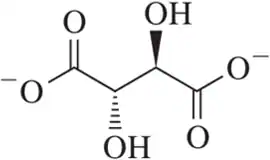
 검증된 단계별 안내
 02:04
02:04
 02:46
02:46 07:44
07:44Given the line-angle drawings shown, answer the following questions:
(i) How many carbons are in each molecule?
(ii) How many hydrogens are at the circled carbon?
(iii) Is the indicated (→) carbon or 1° , 2°, 3°, or 4°?
(e)
Given the line-angle drawings shown, answer the following questions:
(i) How many carbons are in each molecule?
(ii) How many hydrogens are at the circled carbon?
(iii) Is the indicated (→) carbon or 1° , 2°, 3°, or 4°?
(c)
Draw the most stable chair conformation for the following trisubstituted cyclohexane.
Modify the following line-angle drawings to show all lone pairs.
(a)
Based on the formal charge, determine how many lone pairs are on each indicated atom.
(a)
Given the line-angle drawings shown, answer the following questions:
(i) How many carbons are in each molecule?
(ii) How many hydrogens are at the circled carbon?
(iii) Is the indicated (→) carbon or 1° , 2°, 3°, or 4°?
(f)