

Ch. 5 - Chemical Reaction Analysis: Thermodynamics and Kinetics
Mullins - Organic Chemistry: A Learner Centered Approach 1st Edition
Mullins1st EditionOrganic Chemistry: A Learner Centered ApproachISBN: 9780137566471당신이 사용하는 게 아니라요?교과서 변경
4장, 문제 49e

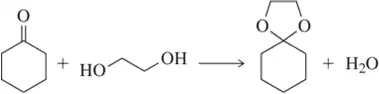
For each of the following reactions, identify the bonds that are broken and formed. Be sure to indicate whether the bond that is broken is a σ bond or a π bond.
(e)

검증된 단계별 안내
1
Examine the given reaction and identify the reactants and products. Look for changes in the connectivity of atoms to determine which bonds are broken and which are formed.
For each bond broken, determine whether it is a σ (sigma) bond or a π (pi) bond. Recall that σ bonds are single bonds formed by head-on overlap of orbitals, while π bonds are formed by the side-by-side overlap of p orbitals in double or triple bonds.
For each bond formed, similarly determine whether it is a σ bond or a π bond. New single bonds are σ bonds, while additional bonds in double or triple bonds are π bonds.
Write down the specific bonds broken and formed, including the atoms involved. For example, if a C=C double bond is converted to a C-C single bond, note that one π bond is broken and one σ bond remains.
Summarize the changes in bonding, clearly indicating the type of bonds (σ or π) that are broken and formed during the reaction.

비슷한 문제에 대한 검증된 영상 답변:

이 영상 해법은 위 문제에 도움이 된다고 튜터들이 추천한 것입니다.
영상 길이:
13m

주요 개념

질문에 올바르게 답하기 위해 반드시 이해해야 하는 핵심 개념들은 다음과 같습니다.

Types of Chemical Bonds

Chemical bonds can be classified into sigma (σ) and pi (π) bonds. Sigma bonds are formed by the head-on overlap of atomic orbitals, allowing for free rotation around the bond axis. In contrast, pi bonds result from the side-to-side overlap of p orbitals and restrict rotation. Understanding these bond types is crucial for analyzing reaction mechanisms and predicting the stability of intermediates.
추천 영상:
가이드 코스
3:11
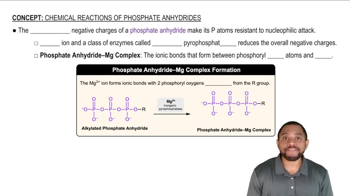
Chemical Reactions of Phosphate Anhydrides Concept 1

Bond Breaking and Formation

In a chemical reaction, bonds in the reactants must break to allow for the formation of new bonds in the products. The process of bond breaking requires energy input, while bond formation releases energy. Identifying which bonds are broken and formed helps in understanding the overall energy changes and the reaction's feasibility.
추천 영상:
02:31
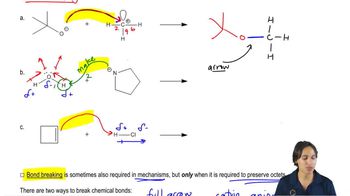
Identifying Bond Breaking

Reaction Mechanisms

A reaction mechanism describes the step-by-step sequence of elementary reactions that occur during a chemical transformation. Each step involves specific bonds being broken and formed, which can be influenced by factors such as sterics and electronics. Analyzing the mechanism provides insight into the rate and outcome of the reaction, making it essential for predicting product formation.
추천 영상:
02:16
Heck Reaction Mechanism
관련 실천
교과서 질문

The A value of a substituent on a cyclohexane ring is essentially the ∆G° for a substituent going from the equatorial to the axial position in a chair–chair interconversion. Because most substituents prefer to be in the equatorial position, A values are, by definition, positive numbers. Use the table of A values to calculate ∆G° and Keq for the chair–chair interconversions shown.

(c)

1262
views
교과서 질문

For each of the following reactions, identify the bonds that are broken and formed. Be sure to indicate whether the bond that is broken is a σ bond or a π bond.

(a)

1086
views
교과서 질문

The A value of a substituent on a cyclohexane ring is essentially the ∆G° for a substituent going from the equatorial to the axial position in a chair–chair interconversion. Because most substituents prefer to be in the equatorial position, A values are, by definition, positive numbers. Use the table of A values to calculate ∆G° and Keq for the chair–chair interconversions shown.

(b)

1330
views
교과서 질문

For each of the following acid–base reactions, (iii) calculate ∆G°. If a pKa is not one of the ten common ones we learned in Chapter 4, it will be given to you.

(a)

1154
views
교과서 질문

For each of the following reactions, identify the bonds that are broken and formed. Be sure to indicate whether the bond that is broken is a σ bond or a π bond.

(c)

1150
views
교과서 질문

The A value of a substituent on a cyclohexane ring is essentially the ∆G° for a substituent going from the equatorial to the axial position in a chair–chair interconversion. Because most substituents prefer to be in the equatorial position, A values are, by definition, positive numbers. Use the table of A values to calculate ∆G° and Keq for the chair–chair interconversions shown.

(a)

888
views