
교과서 질문
A chronic alcoholic requires a much larger dose of ethanol as an antidote to methanol poisoning than does a nonalcoholic patient. Suggest a reason why a larger dose of the competitive inhibitor is required for an alcoholic.
935
views

 검증된 단계별 안내
 03:20
03:20
 06:50 06:50
A chronic alcoholic requires a much larger dose of ethanol as an antidote to methanol poisoning than does a nonalcoholic patient. Suggest a reason why a larger dose of the competitive inhibitor is required for an alcoholic.
Give the structure of the principal product(s) when each of the following alcohols reacts with (1) Na2Cr2O7/H2SO4, (2) PCC
d. 1-methylcyclohexan-1,4-diol
Suggest the most appropriate method for each of the following laboratory syntheses. In each case, suggest both a chromium reagent and a chromium-free reagent.
(f) 1-methylcyclohexanol → 2-methylcyclohexanone (several steps)
Predict the products you expect when the following starting material undergoes oxidation with an excess of each of the reagents shown below.
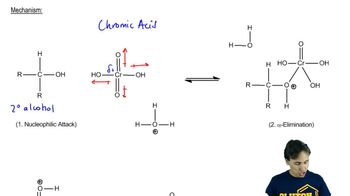
a. chromic acid
b. PCC (pyridinium chlorochromate)
c. sodium hypochlorite/acetic acid
Suggest the most appropriate method for each of the following laboratory syntheses. In each case, suggest both a chromium reagent and a chromium-free reagent.
(d) cyclopentanol → 1-ethylcyclopentanol (two steps)
(e) cyclopentylmethanol → 1-cyclopentylpropan-1-ol (two steps)
Predict the products you expect when the following starting material undergoes oxidation with an excess of each of the reagents shown below.
d. DMSO and oxalyl chloride
e. DMP (periodinane) reagent