

In the mechanism for acetal hydrolysis shown, the ring oxygen atom was protonated first, the ring was cleaved, and then the methoxy group was lost. The mechanism could also be written to show the methoxy oxygen protonating and cleaving first, followed by ring cleavage. Draw this alternative mechanism.
Ch. 18 - Ketones and Aldehydes
18장, 문제 28d
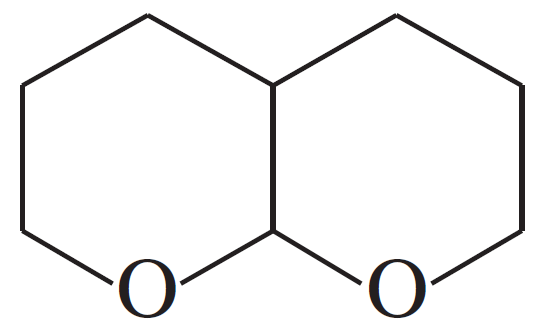
Propose a mechanism for the acid-catalyzed hydrolysis of the acetal given in Problem 18-26(f).

검증된 단계별 안내1
Step 1: Protonation of one of the oxygen atoms in the acetal structure occurs under acidic conditions. This increases the electrophilicity of the carbon atom attached to the protonated oxygen.
Step 2: The bond between the protonated oxygen and the carbon breaks, leading to the formation of a carbocation intermediate and a neutral alcohol molecule.
Step 3: Water, acting as a nucleophile, attacks the carbocation intermediate, forming a protonated hemiacetal intermediate.
Step 4: Deprotonation of the protonated hemiacetal occurs, resulting in the formation of a neutral hemiacetal.
Step 5: The process repeats for the second oxygen atom in the acetal structure, ultimately leading to the formation of two molecules of alcohol and one molecule of aldehyde or ketone, depending on the original acetal structure.

비슷한 문제에 대한 검증된 영상 답변:
이 영상 해법은 위 문제에 도움이 된다고 튜터들이 추천한 것입니다.
영상 길이:
12m주요 개념
질문에 올바르게 답하기 위해 반드시 이해해야 하는 핵심 개념들은 다음과 같습니다.
Acetal Structure and Formation
Acetals are organic compounds formed from the reaction of an aldehyde or ketone with an alcohol in the presence of an acid catalyst. They consist of a carbon atom bonded to two alkoxy groups (–OR) and one hydrogen atom. Understanding the structure of acetals is crucial for predicting their reactivity, particularly in hydrolysis reactions.
추천 영상:
Acetal Protecting Group
Acid-Catalyzed Hydrolysis
Acid-catalyzed hydrolysis is a reaction where an acetal reacts with water in the presence of an acid, leading to the regeneration of the original aldehyde or ketone and alcohol. The acid protonates the acetal oxygen, making it more susceptible to nucleophilic attack by water, facilitating the cleavage of the C–O bond. This mechanism is essential for understanding how acetals can revert to their parent carbonyl compounds.
추천 영상:
Acid Catalyzed
Mechanistic Steps in Organic Reactions
Understanding the mechanistic steps in organic reactions involves identifying the sequence of bond-breaking and bond-forming events. In the case of acid-catalyzed hydrolysis of acetals, the mechanism typically includes protonation of the acetal, nucleophilic attack by water, and subsequent deprotonation. Familiarity with these steps is vital for accurately proposing a detailed mechanism for the reaction.
추천 영상:
가이드 코스
Step-Growth Polymers Concept 2
관련 실천
교과서 질문
672
views
교과서 질문
Propose a mechanism for the acid-catalyzed reaction of cyclohexanone with ethylene glycol to give cyclohexanone ethylene acetal.
1732
views
교과서 질문
Show how you would accomplish the following syntheses. You may use whatever additional reagents you need.
(c)
1238
views
교과서 질문
Show how you would accomplish the following syntheses. You may use whatever additional reagents you need.
(b)
609
views
교과서 질문
Propose a mechanism for the acid-catalyzed hydrolysis of cyclohexanone ethylene acetal.
1067
views
교과서 질문
Show how you would accomplish the following syntheses. You may use whatever additional reagents you need.
(a)
1358
views
