Ch. 22 - Condensations and Alpha Substitutions of Carbonyl Compounds
Wade - Organic Chemistry 9th Edition
Wade9th EditionOrganic ChemistryISBN: 9780135213728당신이 사용하는 게 아니라요?교과서 변경
22장, 문제 25b

Propose mechanisms for the following base-catalyzed condensations, with dehydration.
(b) benzaldehyde with propionaldehyde

검증된 단계별 안내
1
Identify the reaction type: This is a base-catalyzed aldol condensation reaction, which involves the formation of a β-hydroxy aldehyde or ketone followed by dehydration to form an α,β-unsaturated carbonyl compound.
Deprotonation of the α-hydrogen: The base (e.g., hydroxide ion, OH⁻) abstracts an α-hydrogen from propionaldehyde, generating an enolate ion. The enolate ion is stabilized by resonance, with the negative charge delocalized between the oxygen and the α-carbon.
Nucleophilic attack: The enolate ion acts as a nucleophile and attacks the carbonyl carbon of benzaldehyde. This forms a new carbon-carbon bond, resulting in an alkoxide intermediate.
Protonation of the alkoxide: The alkoxide intermediate is protonated by water (or another proton source), forming a β-hydroxy aldehyde. This is the aldol addition product.
Dehydration step: Under basic conditions, the β-hydroxy aldehyde undergoes elimination of water. The base abstracts a proton from the β-carbon, and the hydroxide group leaves, forming a double bond between the α and β carbons. The final product is an α,β-unsaturated aldehyde.

비슷한 문제에 대한 검증된 영상 답변:

이 영상 해법은 위 문제에 도움이 된다고 튜터들이 추천한 것입니다.
영상 길이:
4m

주요 개념

질문에 올바르게 답하기 위해 반드시 이해해야 하는 핵심 개념들은 다음과 같습니다.

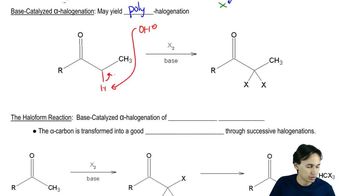
Base-Catalyzed Condensation

Base-catalyzed condensation reactions involve the formation of a new bond between two carbonyl compounds, facilitated by a base. The base deprotonates an alpha hydrogen, generating an enolate ion that can attack the carbonyl carbon of another aldehyde or ketone. This process typically leads to the formation of a β-hydroxy carbonyl compound, which can subsequently undergo dehydration to yield an α,β-unsaturated carbonyl compound.
추천 영상:
01:57
Base Catalyzed

Mechanism of Aldol Condensation

The aldol condensation mechanism consists of two main steps: the formation of an aldol (β-hydroxy carbonyl) and its subsequent dehydration. Initially, the enolate ion formed from one carbonyl compound attacks the carbonyl carbon of another, resulting in a β-hydroxy carbonyl. The dehydration step involves the elimination of a water molecule, leading to the formation of a double bond and yielding an α,β-unsaturated carbonyl compound, which is often more stable and reactive.
추천 영상:
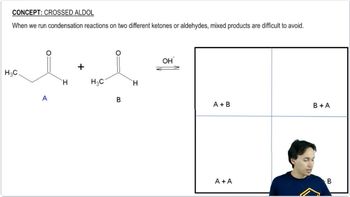
09:51
Crossed Aldol

Dehydration in Organic Reactions

Dehydration in organic chemistry refers to the removal of a water molecule from a compound, often occurring in condensation reactions. In the context of aldol condensation, dehydration typically follows the formation of a β-hydroxy carbonyl compound, resulting in the formation of a double bond. This step is crucial as it enhances the stability of the product and increases its reactivity, making it a key feature in many organic synthesis pathways.
추천 영상:
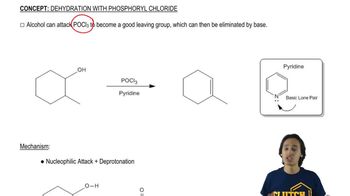
01:23
General Reaction of Dehydration with POCl3