Ch. 24 - Amino Acids, Peptides, and Proteins
Wade - Organic Chemistry 9th Edition
Wade9th EditionOrganic ChemistryISBN: 9780135213728당신이 사용하는 게 아니라요?교과서 변경
24장, 문제 19c

Draw the structure of the phenylthiohydantoin derivatives of
(c) lysine.

검증된 단계별 안내
1
Understand the context: Phenylthiohydantoin (PTH) derivatives are formed during Edman degradation, a method used to sequence amino acids in peptides. The process involves reacting the amino group of an amino acid with phenyl isothiocyanate (PITC) to form a PTH derivative.
Identify the structure of lysine: Lysine is an amino acid with the structure H₂N-(CH₂)₄-CH(NH₂)-COOH. It has two amino groups: one on the α-carbon (α-amino group) and one on the side chain (ε-amino group).
Determine which amino group reacts: In the context of forming a PTH derivative, the α-amino group reacts with phenyl isothiocyanate (PITC) to form the PTH derivative. The ε-amino group on the side chain remains unreacted.
Draw the reaction: The α-amino group of lysine reacts with PITC to form a cyclic structure. The reaction involves the nucleophilic attack of the α-amino group on the carbon of the isothiocyanate group (-N=C=S) in PITC, followed by cyclization to form the PTH derivative.
Complete the structure: The final structure of the PTH derivative of lysine will include the phenylthiohydantoin ring attached to the α-carbon of lysine, with the side chain (CH₂)₄-NH₂ intact. Ensure the stereochemistry at the α-carbon is preserved if specified.

비슷한 문제에 대한 검증된 영상 답변:

이 영상 해법은 위 문제에 도움이 된다고 튜터들이 추천한 것입니다.
영상 길이:
3m

주요 개념

질문에 올바르게 답하기 위해 반드시 이해해야 하는 핵심 개념들은 다음과 같습니다.

Phenylthiohydantoin (PTH) Derivatives

Phenylthiohydantoin derivatives are compounds formed by the reaction of phenylthiohydantoin with amino acids. This reaction typically involves the formation of a stable derivative that can be used for amino acid analysis, particularly in sequencing. The PTH group allows for the identification of the amino acid by chromatographic methods.
추천 영상:
02:49
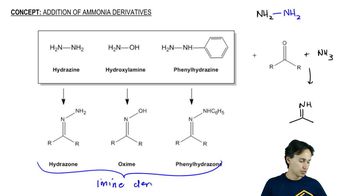
Ammonia Derivatives

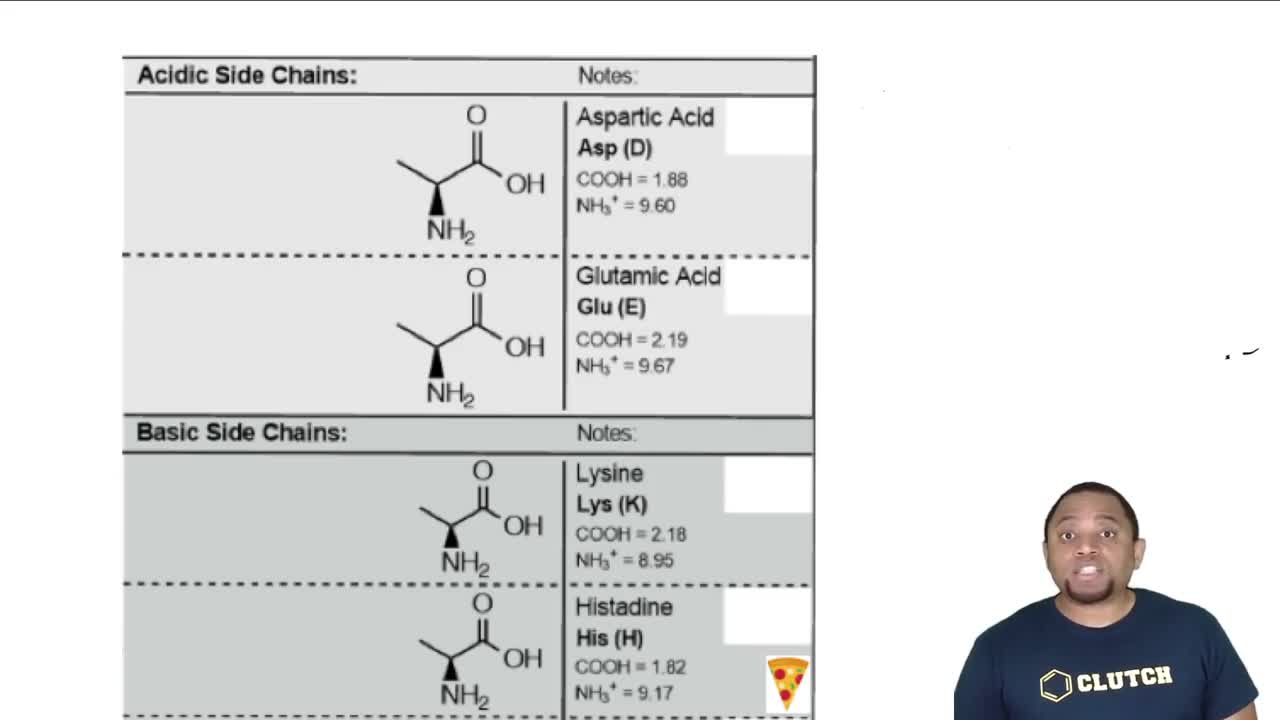
Amino Acid Structure

Amino acids are organic compounds that serve as the building blocks of proteins. Each amino acid consists of a central carbon atom bonded to an amino group, a carboxyl group, a hydrogen atom, and a variable side chain (R group). The side chain determines the specific properties and identity of the amino acid, such as lysine, which has a positively charged side chain at physiological pH.
추천 영상:
7:19
Charged Amino Acids

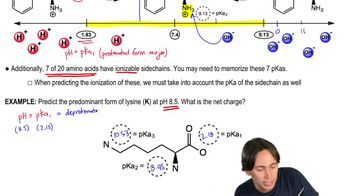
Lysine

Lysine is an essential amino acid characterized by its aliphatic side chain containing an amino group, making it positively charged at physiological pH. It plays a crucial role in protein synthesis and is involved in various biological processes, including enzyme function and hormone production. Understanding lysine's structure is vital for drawing its PTH derivative accurately.
추천 영상:
03:57
Predicting Predominant Form of Lysine