
교과서 질문
Predict the products, including stereochemistry where appropriate, for the m-chloroperoxybenzoic acid epoxidations of the following alkenes.
c. cis-cyclodecene
d. trans-cyclodecene
1366
views

 검증된 단계별 안내

 01:47
01:47
 01:01
01:01 1:38
1:38Predict the products, including stereochemistry where appropriate, for the m-chloroperoxybenzoic acid epoxidations of the following alkenes.
c. cis-cyclodecene
d. trans-cyclodecene
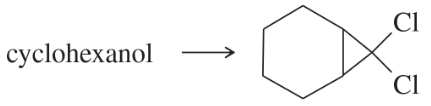
Show how you would accomplish each of the following synthetic conversions.
a. trans-but-2-ene → trans-1,2-dimethylcyclopropane
a. Propose a mechanism for the conversion of cis-hex-3-ene to the epoxide (3,4-epoxyhexane) and the ring-opening reaction to give the glycol, hexane-3,4-diol. In your mechanism, pay particular attention to the stereochemistry of the intermediates and products.
b. Repeat part (a) for trans-hex-3-ene. Compare the products obtained from cis- and trans-hex-3-ene. Is this reaction sequence stereospecific?
Show how you would accomplish each of the following synthetic conversions.
(b)
Predict the products, including stereochemistry where appropriate, for the m-chloroperoxybenzoic acid epoxidations of the following alkenes.
a. cis-hex-2-ene
b. trans-hex-2-ene
What are the products of the following reactions, assuming that one equivalent of each reagent is used in each reaction?
a.