 뒤로
뒤로Chapter 47: Management of Patients with Diabetes
스터디 가이드 - 스마트 노트
 자료에 맞춘 맞춤형 노트, 핵심 정의, 예시, 맥락을 확장해 제공합니다.
Chapter 47: Management of Patients with Diabetes
Prevalence and Impact
Diabetes mellitus is a chronic metabolic disorder characterized by elevated blood glucose levels due to defects in insulin secretion, insulin action, or both. It is a major public health concern in the United States, affecting millions and contributing to significant morbidity, mortality, and economic burden.
Prevalence: Over 37 million Americans have diabetes, with a substantial proportion undiagnosed.
Prediabetes: Affects approximately 38% of adults, indicating a high risk for progression to diabetes.
Economic Impact: Annual costs exceed $327 billion, including medical expenses and lost productivity.
Disparities: Higher prevalence among certain ethnic and racial groups, including Black Americans, Native Americans, Hispanic/Latino, Asian Americans, and Pacific Islanders.
Classification of Diabetes
Major Types
Diabetes is classified based on etiology and clinical presentation:
Type 1 Diabetes: Autoimmune destruction of pancreatic beta cells, leading to absolute insulin deficiency. Typically presents in childhood or adolescence but can occur at any age.
Type 2 Diabetes: Progressive loss of insulin secretion on the background of insulin resistance. Most common in adults but increasingly seen in youth due to obesity.
Gestational Diabetes: Glucose intolerance first recognized during pregnancy, usually in the second or third trimester.
Other Specific Types: Result from genetic defects, diseases of the exocrine pancreas, or drug-induced diabetes.
Prediabetes: Intermediate state with impaired fasting glucose (IFG) or impaired glucose tolerance (IGT).
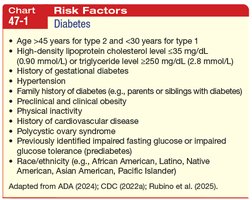
Risk Factors for Diabetes
Key Risk Factors
Multiple factors increase the risk of developing diabetes, particularly type 2 diabetes.
Age >45 years for type 2; <30 years for type 1
Low HDL cholesterol or high triglycerides
History of gestational diabetes
Hypertension
Family history of diabetes
Obesity (preclinical and clinical)
Physical inactivity
History of cardiovascular disease
Polycystic ovary syndrome
Previously identified impaired fasting glucose or glucose tolerance
Race/ethnicity (e.g., African American, Latino, Native American, Asian American, Pacific Islander)
Pathophysiology of Diabetes
Role of Insulin
Insulin is an anabolic hormone produced by pancreatic beta cells. It facilitates glucose uptake into muscle, liver, and adipose tissue, promotes glycogen synthesis, and inhibits the breakdown of fat and protein.
Stimulates glucose transport and metabolism for energy
Signals the liver to stop glucose production
Enhances fat storage and amino acid uptake
Suppresses breakdown of glycogen, protein, and fat
Clinical Manifestations of Diabetes
Classic Symptoms
Diabetes presents with a range of symptoms, often related to hyperglycemia and metabolic disturbances.
Polyuria: Increased urination
Polydipsia: Increased thirst
Polyphagia: Increased appetite
Fatigue, weakness, vision changes, tingling/numbness, slow-healing wounds, recurrent infections
Type 1 specific: Sudden weight loss, nausea, vomiting, abdominal pain
Assessment and Diagnostic Findings
Diagnostic Criteria
Diagnosis is based on blood glucose measurements and clinical assessment.
Fasting plasma glucose (FPG) ≥ 126 mg/dL
Random plasma glucose ≥ 200 mg/dL
A1C ≥ 6.5%
2-hour postload glucose ≥ 200 mg/dL during an oral glucose tolerance test
Medical Management of Diabetes
Goals and Components
The primary goal is to normalize blood glucose and insulin activity to prevent complications. Management includes:
Nutritional therapy
Physical activity
Blood glucose monitoring
Pharmacologic therapy (insulin and/or oral agents)
Patient education and self-management
Nutritional Therapy and Meal Planning
Principles of Nutrition Management
Nutrition is foundational in diabetes care. Individualized meal planning considers preferences, lifestyle, and cultural background. Consistency in carbohydrate intake and meal timing is important for glycemic control.
Control caloric intake and achieve/maintain healthy weight
Normalize blood glucose, lipid, and blood pressure levels
Promote healthy eating patterns and provide practical meal planning tools
Pharmacologic Management of Diabetes
Insulin Therapy
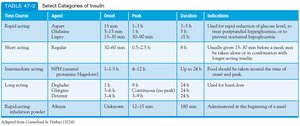
Insulin is essential for type 1 diabetes and may be required for type 2 diabetes. Various formulations differ in onset, peak, and duration of action.
Type | Agent | Onset | Peak | Duration | Indications |
|---|---|---|---|---|---|
Rapid-acting | Aspart, Lispro | 5–15 min | 1–2 h | 3–5 h | Used for rapid reduction of glucose, before meals |
Short-acting | Regular | 30–60 min | 2–3 h | 6–8 h | Usually given 15–30 min before a meal |
Intermediate-acting | NPH | 1–1.5 h | 4–12 h | Up to 24 h | Food should be taken around the onset of action |
Long-acting | Glargine, Detemir | 1–2 h | None | 24 h | Used for basal dose |
Pre-mixed | Lispro mix, Aspart mix | 12–15 min | 1–2 h | 18–20 h | Administered at the beginning of a meal |
Insulin Administration
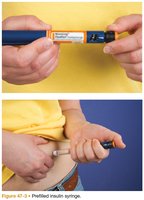
Insulin can be administered via syringes, pens, or pumps. Prefilled insulin syringes and pens are commonly used for convenience and accuracy.
Oral and Noninsulin Injectable Antidiabetic Medications
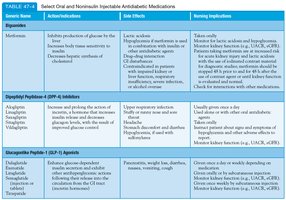
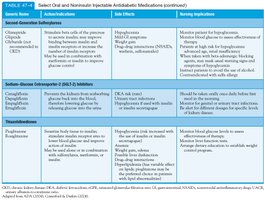
Several classes of oral and injectable agents are used in type 2 diabetes management. Selection depends on patient characteristics, efficacy, side effects, and comorbidities.
Class | Action/Indications | Side Effects | Nursing Implications |
|---|---|---|---|
Biguanides (Metformin) | Inhibits hepatic glucose production, increases insulin sensitivity | GI upset, lactic acidosis (rare) | Take with meals, monitor renal function |
DPP-4 Inhibitors | Enhance incretin effect, increase insulin release | Upper respiratory symptoms, headache | Usually once daily, adjust for renal function |
GLP-1 Agonists | Enhance glucose-dependent insulin secretion | GI symptoms, weight loss | Subcutaneous injection, may be weekly or daily |
SGLT2 Inhibitors | Increase urinary glucose excretion | UTIs, dehydration, DKA (rare) | Monitor for infections, maintain hydration |
Sulfonylureas | Stimulate insulin secretion from beta cells | Hypoglycemia, weight gain | Take with meals, monitor for hypoglycemia |
Thiazolidinediones | Increase insulin sensitivity | Edema, weight gain, heart failure risk | Monitor for fluid retention, avoid in heart failure |
Acute Complications of Diabetes
Hypoglycemia
Defined as blood glucose <70 mg/dL. Symptoms range from adrenergic (sweating, tremor, tachycardia) to neuroglycopenic (confusion, seizures, loss of consciousness). Immediate treatment with 15 g of fast-acting carbohydrates is essential.
Diabetic Ketoacidosis (DKA)
A life-threatening complication of insulin deficiency, primarily in type 1 diabetes. Characterized by hyperglycemia, ketosis, acidosis, and dehydration. Management includes IV fluids, insulin, and electrolyte replacement.
Hyperglycemic Hyperosmolar Syndrome (HHS)
Occurs mainly in type 2 diabetes. Marked by severe hyperglycemia, dehydration, and altered mental status, but minimal ketosis. Management is similar to DKA but with less emphasis on acidosis correction.
Long-Term Complications of Diabetes
Macrovascular Complications
Involve large blood vessels and include coronary artery disease, cerebrovascular disease, and peripheral vascular disease. Risk factors include hypertension, dyslipidemia, and smoking. Aggressive risk factor modification is essential.
Microvascular Complications
Affect small blood vessels, leading to retinopathy (eye), nephropathy (kidney), and neuropathy (nerves). Chronic hyperglycemia is a major contributing factor.
Diabetic Retinopathy
Leading cause of blindness in adults
Nonproliferative and proliferative stages
Diagnosis by retinal examination and fluorescein angiography
Prevention: Glycemic, blood pressure, and lipid control; regular eye exams
Diabetic Nephropathy
Chronic kidney disease due to glomerular damage
Screening: Annual urinary albumin and eGFR
Management: Glycemic and blood pressure control, ACE inhibitors/ARBs, dietary modifications
Diabetic Neuropathy
Peripheral neuropathy: Paresthesias, loss of sensation, risk of foot ulcers
Autonomic neuropathy: Affects cardiovascular, gastrointestinal, and genitourinary systems
Management: Optimize glucose control, manage symptoms, prevent complications
Foot and Leg Problems in Diabetes
Diabetic Foot Ulcers
Neuropathy and peripheral vascular disease increase the risk of foot ulcers, infections, and amputations. Daily foot inspection and proper foot care are essential for prevention.
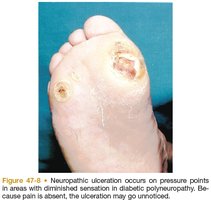
High-risk features: Poor glycemic control, neuropathy, arterial disease, foot deformities, history of ulcers or amputation
Routine foot exams and multidisciplinary care are recommended for high-risk patients
Diabetes Management in Special Situations
Hospitalization and Surgery
Stress, illness, and surgery can destabilize glucose control. Frequent monitoring, adjustment of insulin, and prevention of hypo- and hyperglycemia are critical. Hospitalization is an opportunity for patient education and self-care skill reinforcement.
Older Adults with Diabetes
Older adults may have unique challenges, including comorbidities, cognitive impairment, and functional limitations. Treatment goals should prioritize quality of life and independence. Education should be tailored to individual needs and abilities.
