 뒤로
Chapter 1: Concepts of Motion – Physics with Calculus Study Notes
스터디 가이드 - 스마트 노트
 자료에 맞춘 맞춤형 노트, 핵심 정의, 예시, 맥락을 확장해 제공합니다.
Concepts of Motion
Introduction to Motion
Motion is a fundamental concept in physics, describing how objects change their position over time. Understanding motion is essential for analyzing a wide range of physical phenomena, from everyday experiences to advanced scientific applications.
Four Basic Types of Motion
Linear Motion: Movement along a straight path.
Circular Motion: Movement along a circular path.
Projectile Motion: Curved motion under the influence of gravity.
Rotational Motion: Spinning around an axis.
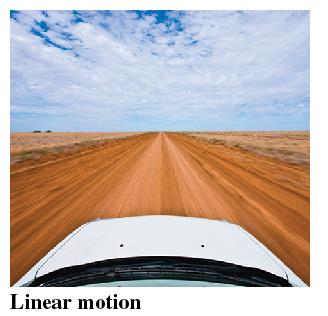
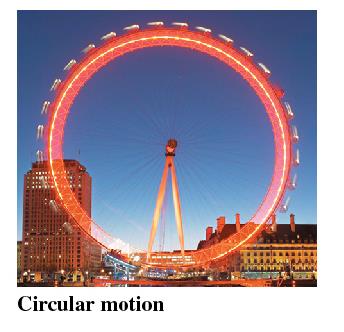
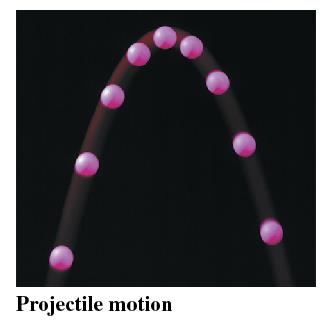
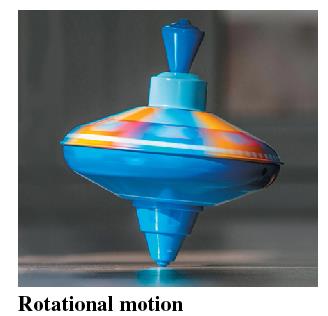
Example: A car driving down a straight road demonstrates linear motion, while a spinning top exhibits rotational motion.
Motion Diagrams
Making a Motion Diagram
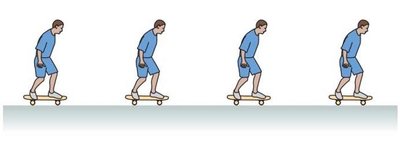
A motion diagram is a visual tool for analyzing motion by showing an object's position at successive, equally spaced time intervals. This is often constructed by layering video frames or drawing the object's position at each time step.
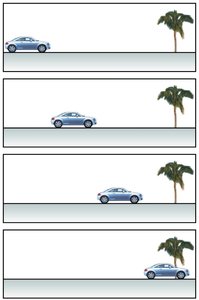
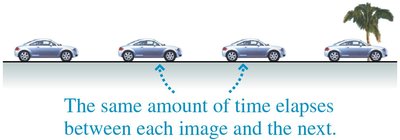
Each dot represents the object's position at a specific time.
Equally spaced dots indicate constant speed.
Increasing distance between dots shows speeding up; decreasing distance shows slowing down.


The Particle Model
In many cases, an object can be modeled as a particle, meaning all its mass is concentrated at a single point. This simplifies analysis, especially when the object's size and shape are not important for the motion being studied.
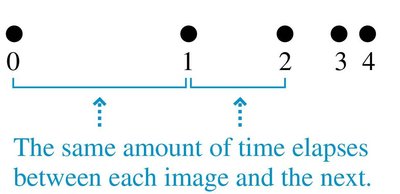
Example: A car slowing down can be represented as a series of dots (particles) in a motion diagram.
Position and Time
To analyze motion, we need to know both where an object is (position) and when it is there (time). Position is often measured using a coordinate system, such as an x-y grid.
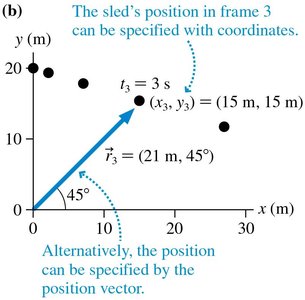
Position Vector: The position of an object can be specified by a vector from the origin to the object's location.
Coordinates: Alternatively, position can be given as (x, y) values.
Displacement
Displacement is a vector that represents the change in position of an object. It is drawn from the initial position to the final position and is denoted as .
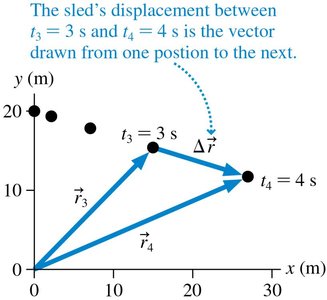
Formula:
Displacement has both magnitude and direction.
Vector Addition and Subtraction
Vector Addition
Vectors are added by placing the tail of one vector at the tip of another. The resultant vector is drawn from the tail of the first to the tip of the last.
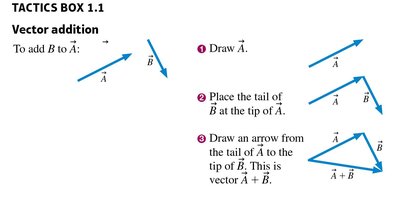
Formula:
Vector Subtraction
To subtract vectors, reverse the direction of the vector to be subtracted and then add.
Formula:
Time Interval
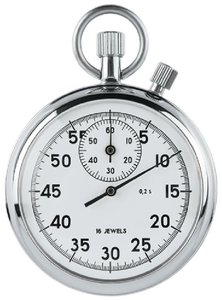
The time interval is the difference between the final and initial times. It is a scalar quantity and is essential for calculating speed, velocity, and acceleration.
Formula:
All observers agree on the values of displacement and time interval, regardless of their coordinate system or clock choice.
Average Speed and Average Velocity
Average speed is the total distance traveled divided by the time interval. Average velocity is the displacement divided by the time interval and is a vector.

Average Speed:
Average Velocity:
Motion Diagrams with Velocity Vectors
Velocity vectors are drawn in the same direction as displacement vectors. The length of the velocity vector is proportional to the magnitude of the displacement over the time interval.
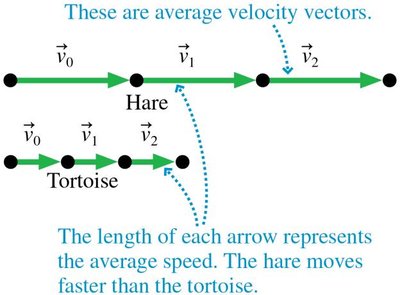
Longer velocity vectors indicate higher speeds.
Velocity vectors can be labeled on motion diagrams to show how speed and direction change over time.
Example: Accelerating Up a Hill
When a car accelerates up a hill, its velocity increases along the slope. The motion diagram should show velocity vectors increasing in length and oriented at the angle of the hill.
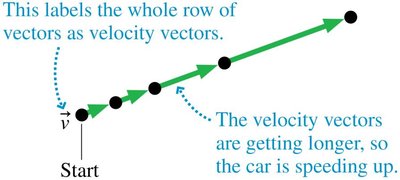
Start with a short velocity vector (starting from rest).
Each subsequent vector is longer, showing acceleration.
Linear Acceleration
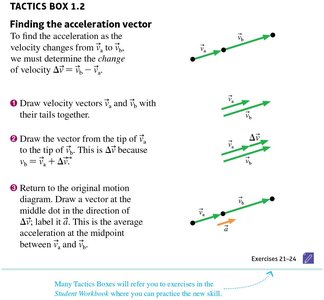
Acceleration describes the rate of change of velocity. It is a vector quantity and can be calculated as the change in velocity divided by the time interval.

Formula:
Acceleration occurs when an object speeds up, slows down, or changes direction.
Finding the Acceleration Vector
To find the acceleration vector, determine the change in velocity between two points and divide by the time interval. The acceleration vector is drawn at the midpoint between the two velocity vectors.
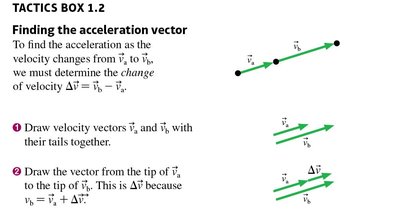
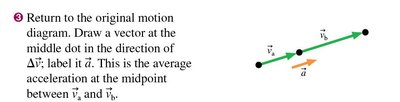
Acceleration vectors are not drawn beside velocity vectors but at the midpoint between them.
The Complete Motion Diagram
A complete motion diagram includes position dots, velocity vectors, and acceleration vectors. This provides a comprehensive picture of how an object's motion evolves over time.
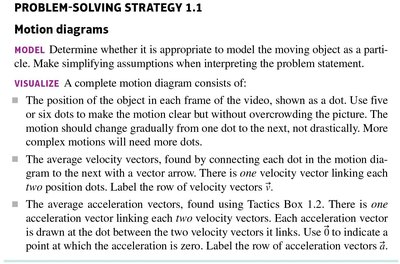
Example: Skiing Through the Woods
A skier moves at constant speed on flat ground, then accelerates down a hill. The motion diagram shows equally spaced dots on the flat section (constant speed) and increasing spacing on the slope (acceleration). Acceleration vectors are zero on the flat and nonzero on the slope.
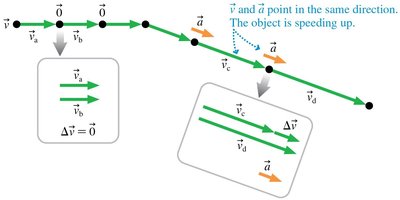
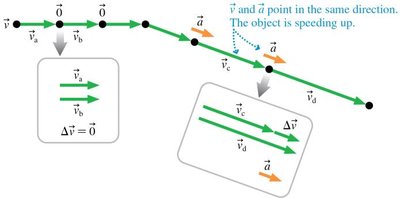
Acceleration is zero where velocity is constant.
Acceleration vectors point in the direction of increasing velocity.
Speeding Up or Slowing Down?
When an object is speeding up, the acceleration and velocity vectors point in the same direction. When slowing down, they point in opposite directions. If acceleration is zero, velocity is constant.
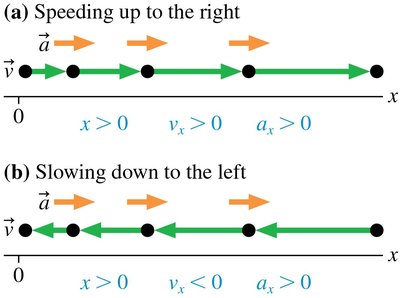
Both speeding up and slowing down can have acceleration vectors in the same direction, but the effect depends on the direction of velocity.
Additional info: These foundational concepts are essential for further study in kinematics and dynamics, forming the basis for analyzing more complex motions in later chapters.
