 뒤로
Chapter 19: Electric Charges, Forces, and Fields – Study Notes
스터디 가이드 - 스마트 노트
 자료에 맞춘 맞춤형 노트, 핵심 정의, 예시, 맥락을 확장해 제공합니다.
Electric Charge
Static Electricity and Types of Charge
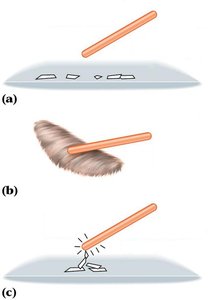
Electric charge is a fundamental property of matter, first observed as static electricity. When certain materials, such as amber, are rubbed with fur, they acquire a charge and can attract small objects. This phenomenon demonstrates the existence of electric charge.
Two Types of Electric Charge: Like charges repel, and opposite charges attract.
Charge Quantization: All electrons have the same charge magnitude, and protons have the same magnitude but opposite sign.
SI Unit: The unit of charge is the coulomb (C).
Magnitude of Electron's Charge:
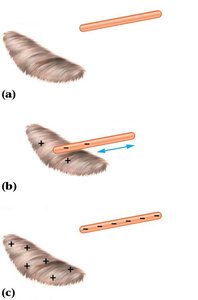
Example: When an amber rod is rubbed with fur, electrons transfer from the fur to the amber, making the amber negatively charged.
Atomic Structure and Charge Conservation
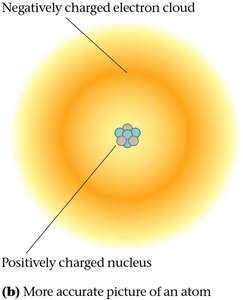
Electrons are found in a cloud surrounding the atomic nucleus and can be separated from the atom with relative ease. The atom that loses an electron becomes a positive ion, while the atom that gains an electron becomes a negative ion.
Charge Conservation: The total electric charge of the universe is constant.
Charge Quantization: Electric charge exists in discrete units of .
Polarization
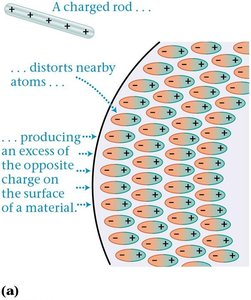
Some materials can become polarized, meaning their atoms rotate in response to an external charge. This allows a charged object to attract a neutral one by inducing a separation of charge within the material.
Insulators and Conductors
Properties of Conductors and Insulators
Materials are classified based on their ability to allow electrons to move:
Conductors: Materials whose conduction electrons are free to move throughout (e.g., metals).
Insulators: Materials whose electrons seldom move from atom to atom (e.g., nonmetals).
Semiconductors: Intermediate properties; their conductivity changes with chemical composition.
Photoconductors: Become conductive when exposed to light.
Charge Distribution in Conductors
If a conductor carries excess charge, the charge is distributed over its surface. There is no excess charge inside the conductor.
Coulomb’s Law
Force Between Point Charges
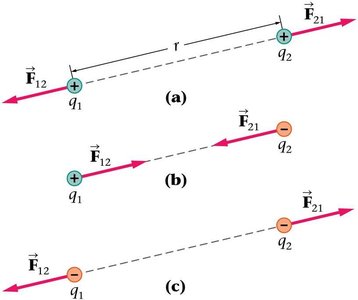
Coulomb’s law describes the force between two point charges:
Formula:
Constant:
Direction: The force acts along the line connecting the charges; attractive for opposite charges, repulsive for like charges.
Superposition Principle
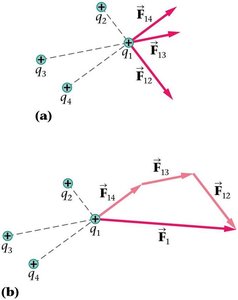
If there are multiple point charges, the forces add by superposition. The net force is the vector sum of individual forces.
Spherical Charge Distributions
Coulomb’s law is valid for spherically symmetric charge distributions, analogous to gravitational forces for spherical masses.
The Electric Field
Definition and Calculation
The electric field is defined as the force per unit charge:
Formula:
SI Unit: Newton per coulomb (N/C)
Test Charge: is a small charge used to measure the field without disturbing other charges.
Force from Electric Field
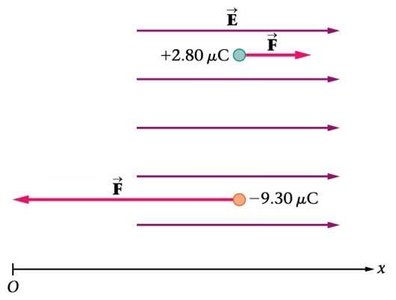
The force on a charge in an electric field is:
Formula:
Direction: For positive charges, force is in the direction of the field; for negative charges, it is opposite.
Electric Field of a Point Charge
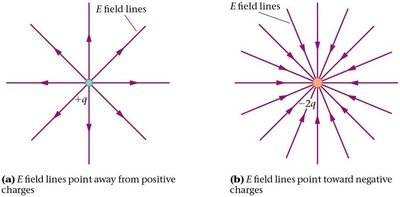
The electric field of a point charge points radially away from a positive charge and toward a negative charge.
Superposition of Electric Fields
Electric fields from multiple charges add as vectors, similar to forces.
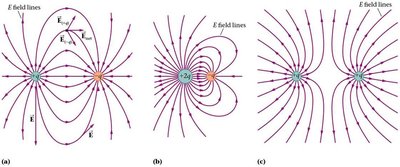
Electric Field Lines
Visualizing the Electric Field
Electric field lines are a graphical tool for visualizing the electric field:
Point in the direction of the field vector at every point.
Start at positive charges or infinity; end at negative charges or infinity.
Are denser where the field is stronger.
Field Lines for Different Charge Configurations
The number and direction of field lines reflect the magnitude and sign of the charges.
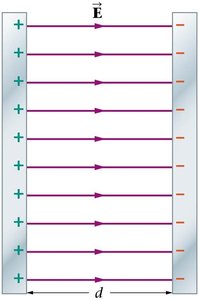
Parallel-Plate Capacitor
A parallel-plate capacitor consists of two conducting plates with equal and opposite charges. The electric field between the plates is uniform.
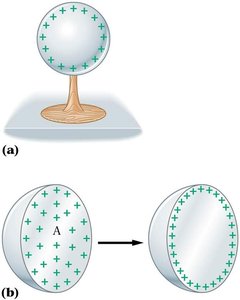
Shielding and Charging by Induction
Charge Distribution and Shielding
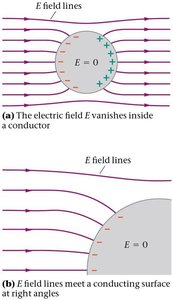
Extra charge on a conductor moves to the surface, and there is no excess charge inside. When charges are at rest, the electric field inside a conductor is zero (electrostatic equilibrium).
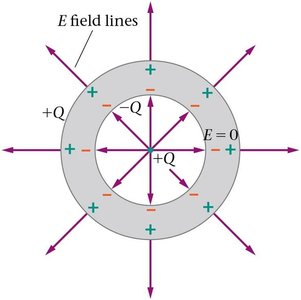
Electrical Shielding
External electric fields cause charges to rearrange on a conductor, inducing opposite charges on opposite sides. Their field cancels the external field inside, resulting in electrical shielding. Electric field lines meet the surface at right angles.
Charge Concentration at Sharp Points
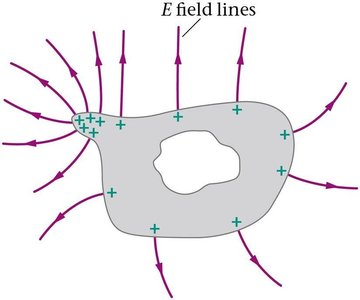
The electric field is stronger where the surface is more sharply curved, causing charge to concentrate at sharp or pointed parts of a conductor.

Charging by Induction
A conductor can be charged without direct contact with a charged object. Grounding allows like charges to leave, and disconnecting the ground before removing the charged object leaves the conductor with excess charge.
Electric Flux and Gauss’s Law
Electric Flux
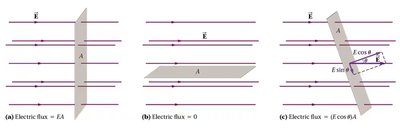
Electric flux measures the electric field perpendicular to a surface:
Formula:
SI Unit:
Gauss’s Law
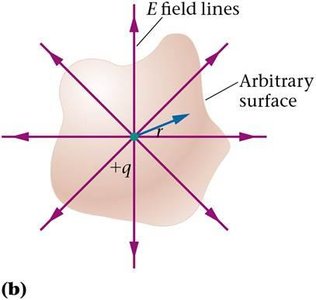
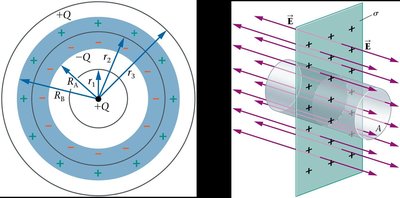
Gauss’s law relates the electric flux through a closed surface to the charge enclosed:
Formula:
Permittivity of Free Space:
Applications of Gauss’s Law
Gauss’s law is useful for finding the electric field in systems with simple symmetry, such as spheres, cylinders, and planes.
Summary Table: Key Concepts of Chapter 19
Concept | Definition/Formula | SI Unit |
|---|---|---|
Electric Charge | Quantized, conserved; | Coulomb (C) |
Coulomb's Law | Newton (N) | |
Electric Field | N/C | |
Electric Flux | ||
Gauss's Law |
Additional info:
Semiconductors and photoconductors are important in modern electronics.
Gauss’s law is foundational for understanding electric fields in advanced physics and engineering.
