 뒤로
뒤로Chapter 2: Motion in One Dimension – Physics with Calculus Study Notes
스터디 가이드 - 스마트 노트
 자료에 맞춘 맞춤형 노트, 핵심 정의, 예시, 맥락을 확장해 제공합니다.
Motion in One Dimension
Introduction to Linear Motion
Motion in one dimension refers to the movement of objects along a straight line, either horizontally or vertically. This chapter focuses on describing, analyzing, and solving problems related to linear motion using calculus-based methods.
Describing Motion
Position and Coordinate Systems
Position is the location of an object relative to a chosen origin and coordinate axis. For horizontal motion, the x-axis is used; for vertical motion, the y-axis is used. Positive and negative values indicate direction relative to the origin.
Position (x or y): The distance and direction from the origin.
Coordinate System: Defines the origin and axes for analysis.
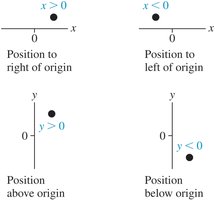
Motion Diagrams
Motion diagrams visually represent an object's position at successive times, helping to analyze its movement.
Uniform Motion: Equal displacements in equal time intervals.
Accelerated Motion: Changing displacements, indicating changing velocity.

Position, Velocity, and Acceleration
Position-Versus-Time Graphs
Position-versus-time graphs plot an object's position on the vertical axis and time on the horizontal axis. The slope of the graph at any point gives the object's velocity.
Instantaneous Velocity: The slope at a specific point on the position graph.
Average Velocity: The slope between two points.
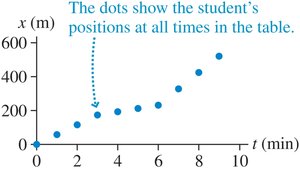
Velocity-Versus-Time Graphs
Velocity-versus-time graphs show how an object's velocity changes over time. The area under the curve represents displacement.
Constant Velocity: Horizontal line.
Changing Velocity: Sloped or curved line.
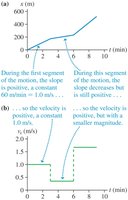
Acceleration
Acceleration is the rate of change of velocity. It is the slope of the velocity-versus-time graph and is measured in meters per second squared (m/s2).
Positive Acceleration: Velocity increases in the positive direction.
Negative Acceleration: Velocity decreases or increases in the negative direction.
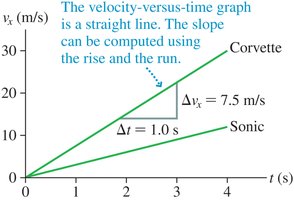
Uniform Motion
Definition and Characteristics
Uniform motion occurs when an object moves in a straight line at constant velocity. The position-versus-time graph is a straight line, and the velocity is constant.
Equation:
Displacement:
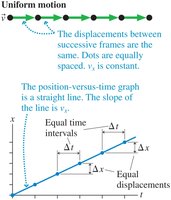
Proportional Relationships
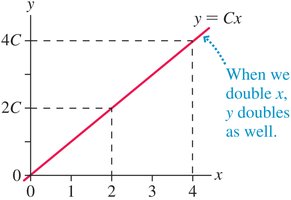
In uniform motion, displacement is proportional to time. If you double the time, the displacement doubles.
Proportionality Constant (C):
Ratio Reasoning: Useful for solving problems without knowing C.
Instantaneous Velocity
Definition and Calculation
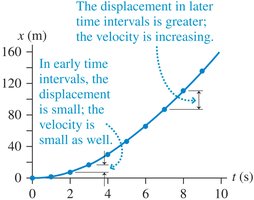
Instantaneous velocity is the velocity at a specific instant. It is found by calculating the slope of the tangent to the position-versus-time curve at that point.
Graphical Method: Draw a tangent line and calculate rise/run.
Equation:
Motion with Constant Acceleration
Kinematic Equations
For motion with constant acceleration, the following equations apply:
Velocity:
Position:
Velocity-Displacement:
Quadratic Relationships
Displacement in constant acceleration motion is proportional to the square of the time interval.
Equation:
Graph: Parabolic curve.
Free Fall
Definition and Properties
Free fall occurs when an object moves under the influence of gravity alone. All objects in free fall have the same acceleration, regardless of mass.
Free-Fall Acceleration: (downward)
Kinematic Equations: Use for vertical motion.
Problem-Solving Strategies
Four-Step Approach
Solving physics problems involves four steps: strategize, prepare, solve, and assess.
Strategize: Identify the type of problem and relevant principles.
Prepare: Draw diagrams, collect information, and do preliminary calculations.
Solve: Apply equations and reasoning to find the answer.
Assess: Check units, reasonableness, and completeness of the answer.
Pictorial Representation and Visual Overview
Draw a sketch, establish a coordinate system, define symbols, and list knowns and unknowns. Combine these elements for a comprehensive visual overview.
Summary of Key Concepts
Velocity: Rate of change of position ()
Acceleration: Rate of change of velocity ()
Uniform Motion: Constant velocity, linear position graph
Constant Acceleration: Linear velocity graph, parabolic position graph
Free Fall: Constant downward acceleration ()
Table: Summary of Motion Types
Type of Motion | Position Graph | Velocity Graph | Acceleration Graph |
|---|---|---|---|
Uniform Motion | Straight line | Horizontal line | Zero |
Constant Acceleration | Parabola | Straight line | Constant (nonzero) |
Free Fall | Parabola (vertical) | Straight line (downward) | Constant () |
Additional info: These notes expand on the original slides and lecture materials, providing definitions, equations, and academic context for each topic. Images included are directly relevant to the explanation and reinforce key concepts.
