 뒤로
뒤로Electric Charge and Coulomb’s Law: Foundations of Electrostatics
스터디 가이드 - 스마트 노트
 자료에 맞춘 맞춤형 노트, 핵심 정의, 예시, 맥락을 확장해 제공합니다.
Units, Physical Quantities, and Vectors
Scalars and Vectors
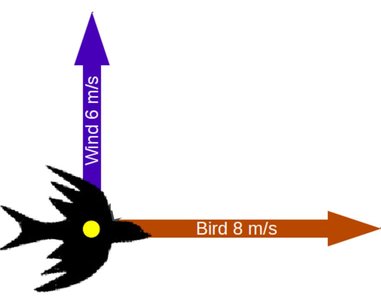
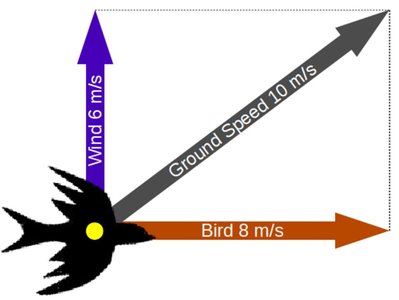
In physics, quantities are classified as either scalars or vectors. Scalars have only magnitude, while vectors possess both magnitude and direction. Understanding the distinction is essential for analyzing physical phenomena, especially in electricity and magnetism.
Scalar: Examples include mass, temperature, and charge.
Vector: Examples include displacement, velocity, and force.
Vector Representation and Operations
Vectors can be represented in Cartesian coordinates as \( \vec{d} = d_x \mathbf{i} + d_y \mathbf{j} \), where \( d_x \) and \( d_y \) are the components along the x and y axes, respectively. The magnitude and direction of a vector are given by:
Magnitude:
Direction (angle):
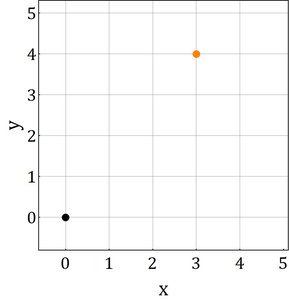
Vector operations include addition, subtraction, dot product, and cross product, which are foundational for analyzing forces in electrostatics.
Electric Charge
Nature and Properties of Electric Charge
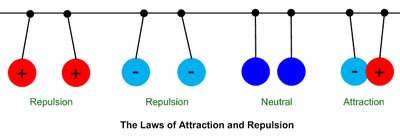
Electric charge is a fundamental property of matter that enables it to experience electromagnetic interactions. Charges are either positive or negative, and their interactions are governed by the following rules:
Like charges repel; unlike charges attract.
Charge is quantized and conserved (Law of Charge Conservation).
The SI unit of charge is the coulomb (C).
Conservation and Transfer of Charge
Charge can be transferred between objects but cannot be created or destroyed. The net charge in an isolated system remains constant. The conventional symbols for charge are ±Q or ±q.
Historical Context
Charles-Augustin de Coulomb made significant contributions to the understanding of electric charge and formulated Coulomb's Law.

Charging by Friction: Experimental Examples
Rubbing Materials
When two different materials are rubbed together, electrons may be transferred from one to the other, resulting in one object becoming negatively charged and the other positively charged. For example:
Rubbing fur and plastic: Plastic becomes negatively charged, fur becomes positively charged.
Rubbing silk and glass: Glass becomes positively charged, silk becomes negatively charged.
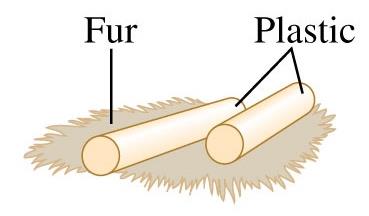
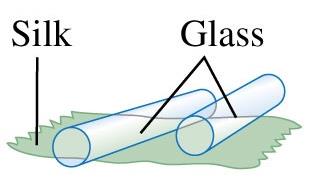
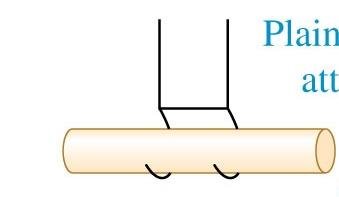
Repeating the experiment with two rods of the same material demonstrates that like charges repel.
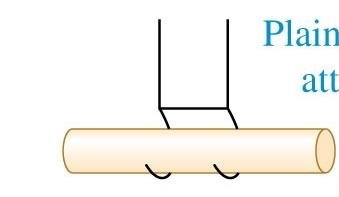
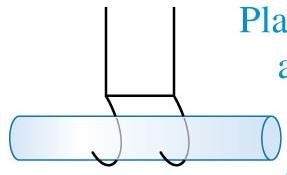
Microscopic Origin of Charge
Atomic Structure
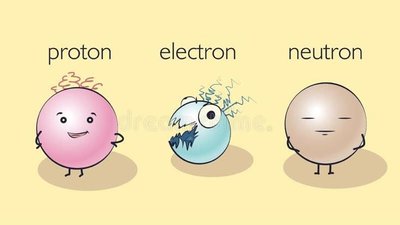
All matter is composed of atoms, which consist of a nucleus (protons and neutrons) surrounded by electrons. Atoms are electrically neutral when the number of protons equals the number of electrons.
Proton: Positive charge, mass kg, charge C
Electron: Negative charge, mass kg, charge C
Neutron: No charge, similar mass to proton
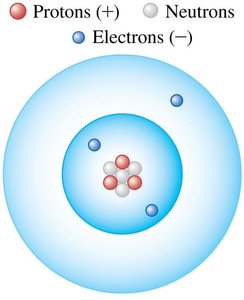
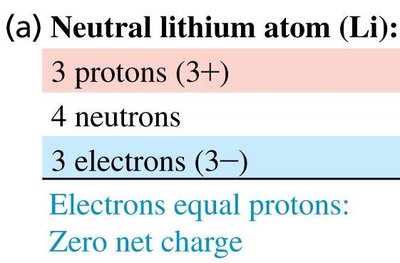
When an atom gains electrons, it becomes a negative ion; when it loses electrons, it becomes a positive ion.
Conductors and Insulators
Definitions and Examples
Materials are classified based on their ability to allow charge movement:
Conductors: Allow easy movement of charge (e.g., metals).
Insulators: Do not allow easy movement of charge (e.g., rubber, glass).


Charging by Conduction and Induction
Conduction
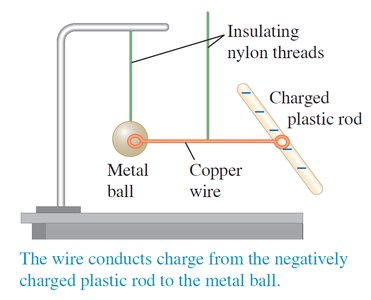
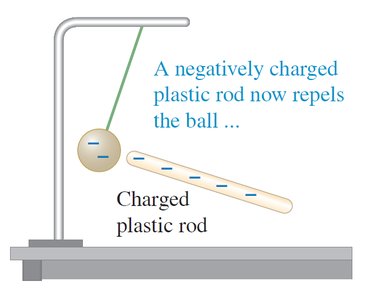
Charging by conduction involves direct contact between a charged object and a neutral conductor, resulting in the transfer of charge.
Induction
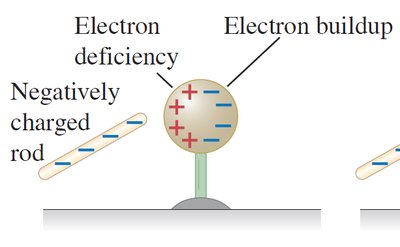
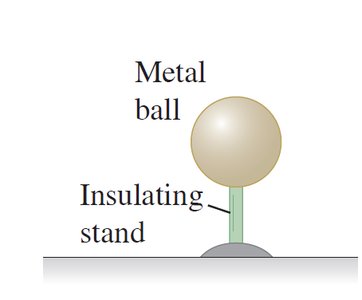
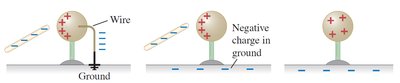
Charging by induction involves bringing a charged object near a conductor, causing a redistribution of charges within the conductor without direct contact. This process can induce a net charge on the conductor if it is grounded.
Coulomb’s Law
Quantifying Electric Force
Coulomb’s Law describes the force between two point charges. The magnitude of the force is given by:
Where N·m2/C2 and
is the electric constant (permittivity of free space)
The direction is along the line joining the charges, repulsive if charges are alike, attractive if opposite.
The vector form is:
is the unit vector from to
Steps for Calculating Coulomb Force
Identify and
Calculate the magnitude:
Determine the direction: if (repulsive), if (attractive)
Example Problem: Superposition Principle
For multiple charges, the net force on a charge is the vector sum of the forces from all other charges (superposition principle).
Given: C at (0,0), C at (0, 0.5), C at (-1.2, 0)
Calculate and using the steps above, then sum to find .
Result: N,
Additional info: The superposition principle is fundamental in electrostatics and applies to all vector forces.
