 뒤로
뒤로Electric Current, Resistance, and Capacitance: Study Notes for Physics with Calculus
스터디 가이드 - 스마트 노트
 자료에 맞춘 맞춤형 노트, 핵심 정의, 예시, 맥락을 확장해 제공합니다.
Electric Current, Resistance, and Electromotive Force
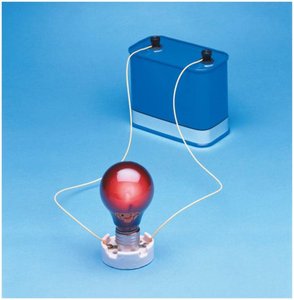
Introduction to Electric Current
Electric current is the net flow of electric charge through a conductor or circuit. It is a fundamental concept in understanding how electrical devices operate and is central to the study of electricity and magnetism.
Definition: Electric current (I) is the rate at which charge (Q) passes through a given surface area per unit time:
Unit: The SI unit of current is the ampere (A), where (coulomb per second).
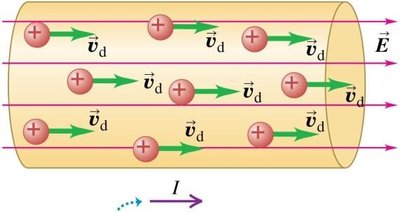
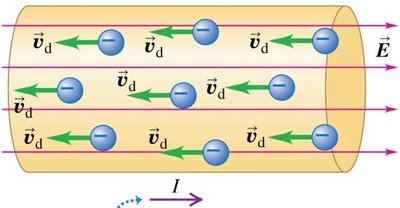
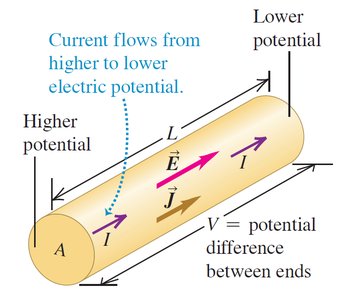
Direction: By convention, current direction is the direction positive charges would move. For negative charge carriers (like electrons), current direction is opposite to their motion.
Microscopic View of Current
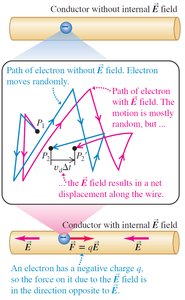
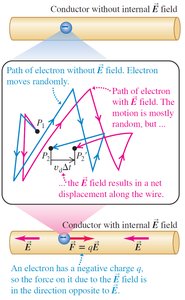
On the microscopic level, current arises from the drift of charge carriers (such as electrons in metals) under the influence of an electric field.
In the absence of an electric field, electrons move randomly and there is no net current.
When an electric field is applied, electrons acquire a small average drift velocity opposite to the field, resulting in a net current.
Current Density
Current density (J) is the current per unit cross-sectional area of a conductor.
Scalar form:
Microscopic expression: , where is the number density of charge carriers, is the charge of each carrier, and is the drift velocity.
Vector form:
Drift Velocity and Collisions
Electrons in a conductor experience frequent collisions with atoms, which limit their acceleration and result in a steady drift velocity.
The net motion of electrons is analogous to people moving slowly through a crowded street.

Resistivity and Conductivity
Resistivity (ρ) is a material property that quantifies how strongly a material opposes the flow of electric current. Conductivity (σ) is its reciprocal.
Resistivity: , where is the electric field and is the current density.
Unit: Ohm-meter ().
Conductivity:
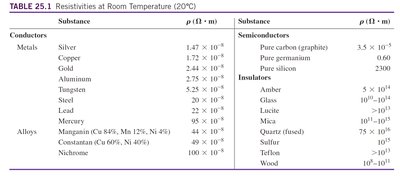
Materials are classified as conductors ( small), insulators ($\rho$ large), or semiconductors (intermediate $\rho$).
Substance | Resistivity () |
|---|---|
Silver | |
Copper | |
Glass | |
Pure silicon | 2300 |
Wood |
Temperature Dependence of Resistivity
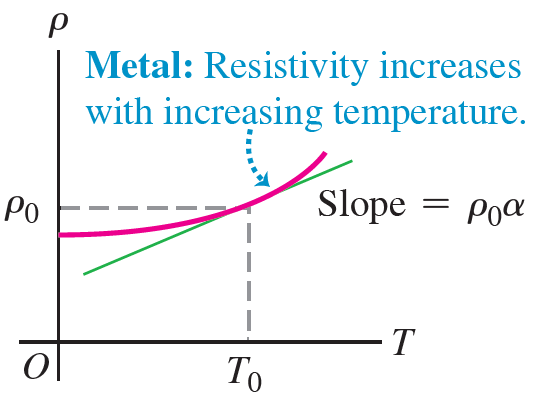
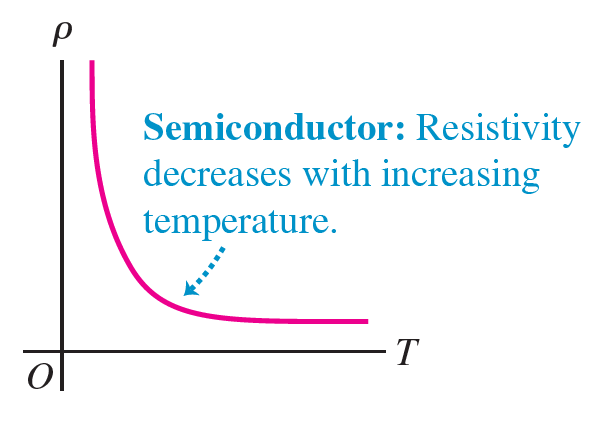
The resistivity of materials changes with temperature, but the effect depends on the type of material.
Metals: Resistivity increases with temperature:
Semiconductors: Resistivity decreases with temperature.
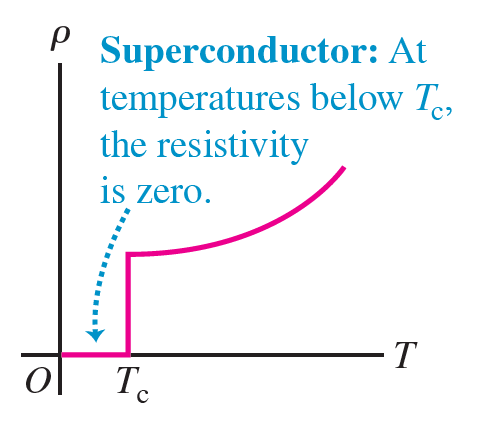
Superconductors: Resistivity drops to zero below a critical temperature .

Resistance and Ohm's Law
Resistance (R) is a property of an object that quantifies how much it resists current flow. Ohm's Law relates voltage, current, and resistance.
Ohm's Law:
Resistance of a uniform wire: , where is length and is cross-sectional area.
Unit: Ohm ()
Resistance increases with length and decreases with area.
Capacitance and Dielectrics
Capacitors and Capacitance
A capacitor is a device that stores electric charge and energy. Capacitance (C) is a measure of a capacitor's ability to store charge per unit voltage.
Definition:
Unit: Farad (F), where
Common types: parallel-plate, spherical, cylindrical capacitors.
Parallel-Plate Capacitor
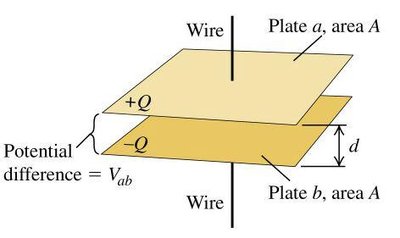
The parallel-plate capacitor consists of two plates of area separated by distance .
Capacitance: (in vacuum)
Increasing plate area or decreasing separation increases capacitance.
Energy Stored in a Capacitor
The energy stored in a charged capacitor is given by:

Dielectrics and Capacitance Enhancement
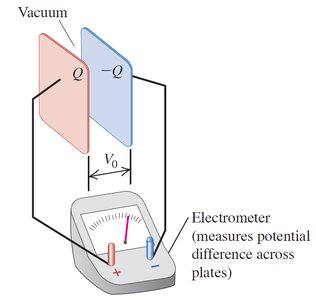
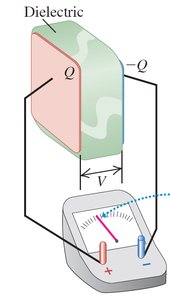
Inserting a dielectric material (an insulator) between the plates of a capacitor increases its capacitance by a factor called the dielectric constant ().
With dielectric:
Dielectric constant (vacuum: ; typical insulators: )
Dielectrics reduce the effective electric field inside the capacitor, allowing more charge to be stored for the same voltage.
Capacitors in Series and Parallel
Capacitors can be combined to achieve desired capacitance values.
Series:
Parallel:
Series combination results in lower equivalent capacitance; parallel results in higher.
Summary Table: Key Equations
Quantity | Equation | Unit |
|---|---|---|
Current | A (ampere) | |
Current Density | A/m2 | |
Ohm's Law | V (volt) | |
Resistance | (ohm) | |
Capacitance (parallel-plate) | F (farad) | |
Energy in Capacitor | J (joule) |
Additional info: This guide covers the core concepts of electric current, resistance, and capacitance, including microscopic and macroscopic perspectives, material properties, and the effects of temperature and dielectrics. It is suitable for college-level Physics with Calculus students preparing for exams.
