 뒤로
뒤로Forces and Newton's Laws: Normal Force, Gravity, and Friction
스터디 가이드 - 스마트 노트
 자료에 맞춘 맞춤형 노트, 핵심 정의, 예시, 맥락을 확장해 제공합니다.
Forces and Newton's Laws
Introduction to Forces
In classical mechanics, a force is any interaction that, when unopposed, will change the motion of an object. Forces are vector quantities, meaning they have both magnitude and direction. Newton's laws of motion describe the relationship between the forces acting on an object and its motion.
Normal Force
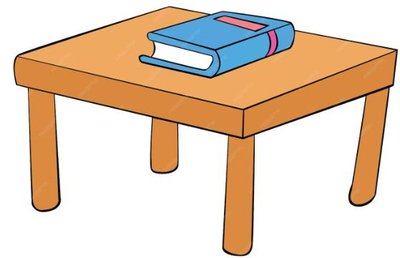
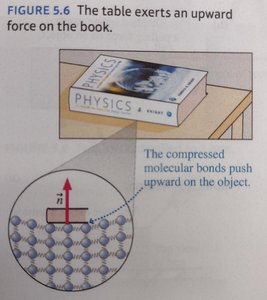
The normal force is the support force exerted upon an object that is in contact with another stable object. For example, when a book rests on a table, the table exerts an upward force on the book. This force is always perpendicular ("normal") to the surface.
Definition: The normal force is the component of contact force that is perpendicular to the surface.
Notation: Denoted as N or F_N.
Direction: Always acts perpendicular to the surface of contact.
Physical Model: The table can be modeled as a network of tiny springs that compress under the weight of the book, pushing back up.
Important Note: In physics, "normal" means perpendicular, not "ordinary".
Equilibrium and Net Force
When an object is at rest on a surface and not accelerating, the net force acting on it is zero. This is a direct application of Newton's first and second laws.
Newton's First Law: An object at rest remains at rest unless acted upon by a net external force.
Newton's Second Law:
Equilibrium Condition:
For a book on a table:
Upward normal force: N
Downward gravitational force (weight): F_g or w
At equilibrium:
Gravity and Weight
The force of gravity (weight) acts downward on all objects near Earth's surface. It is proportional to the object's mass.
Formula:
g: Acceleration due to gravity, on Earth
Direction: Always points toward the center of the Earth (downward)
Units of Force
The SI unit of force is the Newton (N):
Vector Addition of Forces
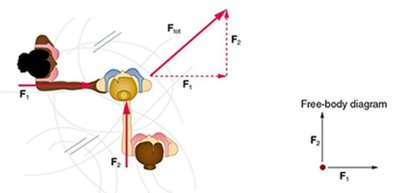
When multiple forces act on an object, the net force is the vector sum of all individual forces:
Removing the Support Surface
If the table is removed, only gravity acts on the book, causing it to accelerate downward:
(downward)
Inertia and Newton's First Law
Inertia is the tendency of an object to resist changes in its state of motion. If no net force acts on an object, it will maintain its velocity (including remaining at rest).
When a box is pushed and released, it continues moving due to inertia.
If the net force is zero, velocity is constant.
Friction
Friction is a force that opposes the relative motion of two surfaces in contact. It arises from microscopic interactions and surface roughness.
Static Friction: Prevents motion up to a threshold.
Kinetic Friction: Acts during sliding.
and are the coefficients of static and kinetic friction, respectively.
Type of Friction | Formula | Description |
|---|---|---|
Static | Prevents motion up to a maximum value | |
Kinetic | Opposes motion when sliding occurs |
Friction is essential for walking, driving, and many everyday activities, but it also causes objects to eventually stop moving if no other force acts.
Summary Table: Forces on a Book on a Table
Force | Direction | Formula | Physical Meaning |
|---|---|---|---|
Normal Force (N) | Upward (perpendicular to table) | (at equilibrium) | Support force from table |
Weight (w) | Downward (toward Earth) | Gravitational pull |
Key Equations
Newton's Second Law:
Weight:
Static Friction:
Kinetic Friction:
Example: Book on a Table
Consider a book of mass 2 kg resting on a horizontal table. The forces acting are:
Weight: (downward)
Normal force: (upward, at equilibrium)
If the table is removed, the book accelerates downward at due to gravity alone.
Additional info: The spring network model helps visualize how the normal force arises from molecular interactions in the table's surface.
