 뒤로
Vectors and Motion in Two Dimensions: Physics with Calculus Study Notes
스터디 가이드 - 스마트 노트
 자료에 맞춘 맞춤형 노트, 핵심 정의, 예시, 맥락을 확장해 제공합니다.
Vectors and Motion in Two Dimensions
Introduction
This chapter explores the use of vectors to analyze motion in two dimensions, a foundational concept in Physics with Calculus. Topics include vector operations, coordinate systems, motion on ramps, projectile motion, and the decomposition of motion into components.
Recap: One-Dimensional Motion
Velocity and Acceleration
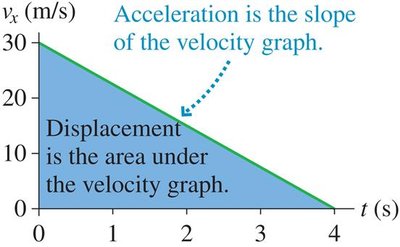
Velocity is the rate of change of position: (units: m/s).
Acceleration is the rate of change of velocity: (units: m/s2).
An object is speeding up if velocity and acceleration have the same sign; slowing down if they have opposite signs.
Free Fall
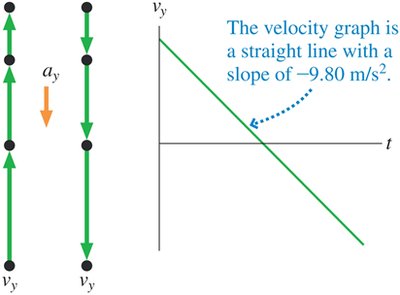
Free fall is a special case of constant acceleration, with (downward, ).
Vectors: Definitions and Properties
What is a Vector?
A vector is a quantity with both magnitude and direction (e.g., displacement, velocity, acceleration).
A scalar has only magnitude (e.g., mass, temperature).
Vector Addition
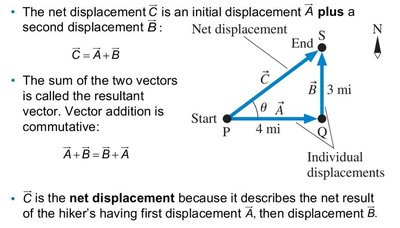
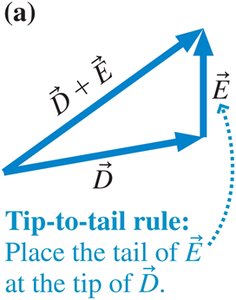
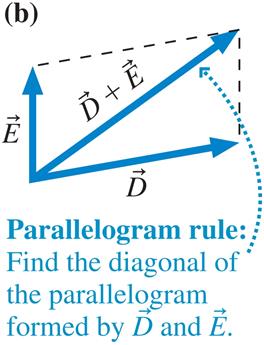
Vectors are added using the tip-to-tail rule or the parallelogram rule.
The resultant vector is the sum of two or more vectors.
Vector addition is commutative: .
Multiplication by a Scalar
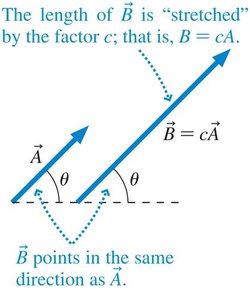
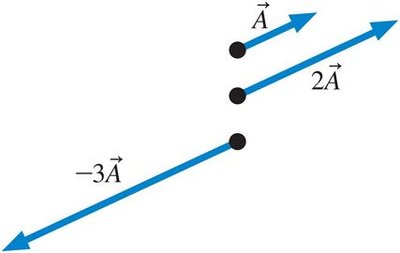
Multiplying a vector by a positive scalar changes its magnitude but not its direction: .
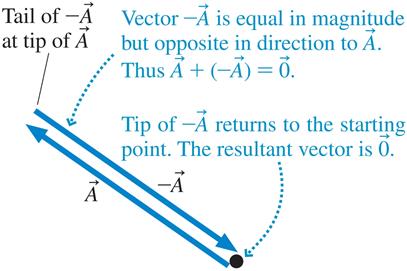
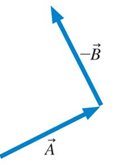
Multiplying by a negative scalar reverses the direction: points opposite to .
The zero vector has zero magnitude and no direction.
Vector Subtraction
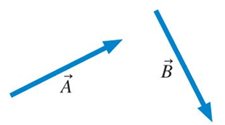
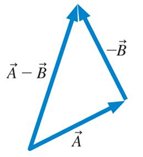
Subtracting vectors: .
Graphically, reverse the direction of and add to .
Coordinate Systems and Vector Components
Cartesian Coordinate System
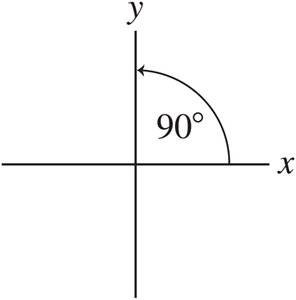
A coordinate system is a grid used to specify positions and directions.
Most problems use Cartesian coordinates (x, y axes at right angles).
Component Vectors
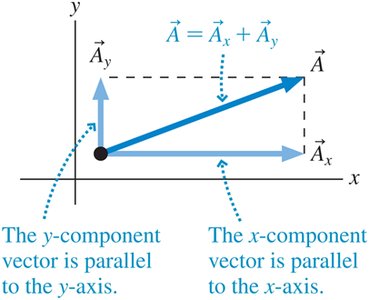
Any vector can be decomposed into x- and y-components: .
The x-component is parallel to the x-axis; the y-component is parallel to the y-axis.
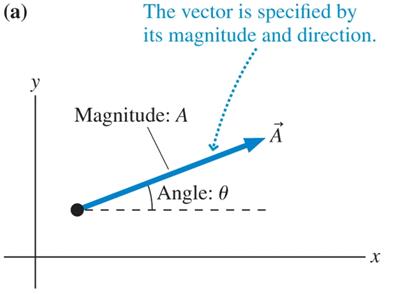
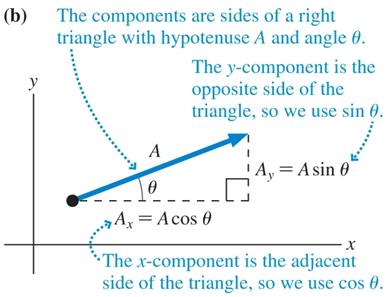
Finding Components from Magnitude and Angle
Given and angle from the x-axis:
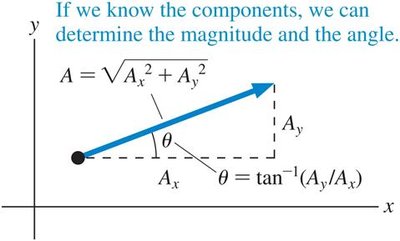
Finding Magnitude and Direction from Components
Given and :
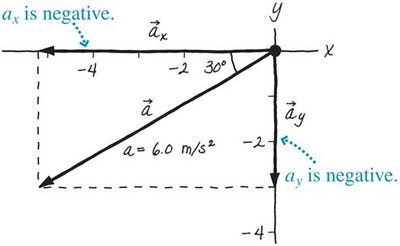
Example: Acceleration Vector Components
For a vector of magnitude 6.0 m/s2 at 30° below the negative x-axis:
Both and are negative.
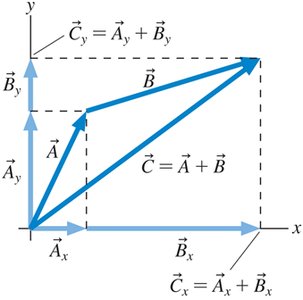
Adding Vectors Using Components
To add vectors and , add their components:
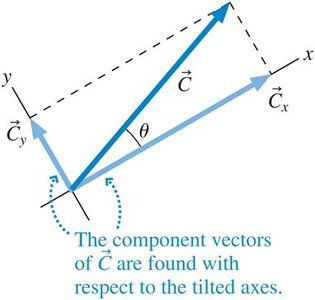
Tilted Axes
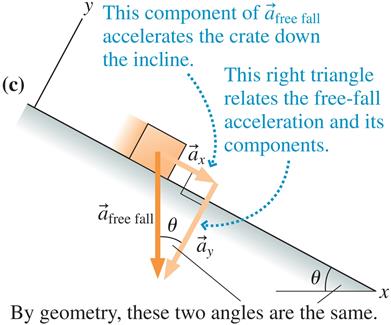
For motion on a slope, align the x-axis with the slope for easier analysis.
Decompose vectors relative to the tilted axes.
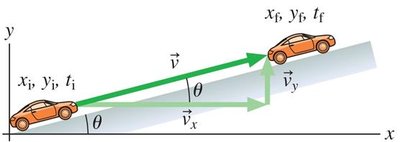
Motion on a Ramp
Constant-Velocity Motion on a Ramp
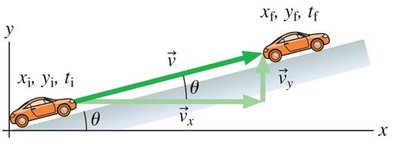
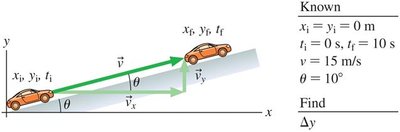
When an object moves up a ramp at constant speed, the vertical height gained is determined by the vertical component of velocity.
Accelerated Motion on a Ramp
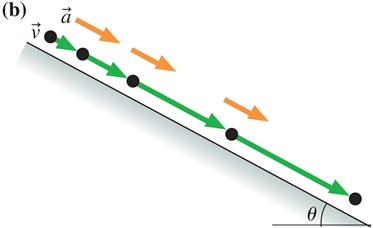
For a frictionless ramp, acceleration is parallel to the ramp and is a component of gravity:
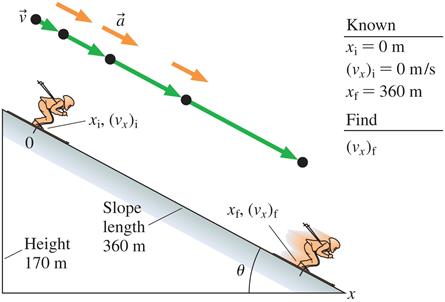
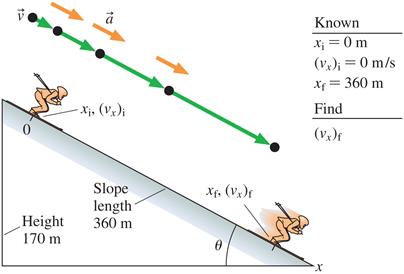
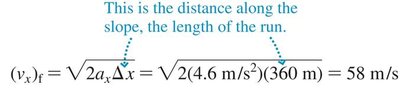
Example: Maximum Speed for a Skier
Given a slope of length 360 m and vertical drop 170 m, the maximum speed is found using kinematics and trigonometry.
Motion in Two Dimensions
General Two-Dimensional Motion
Objects can move in a plane, with displacement, velocity, and acceleration as vectors.
Examples: skating, Ferris wheel, car rounding a curve.
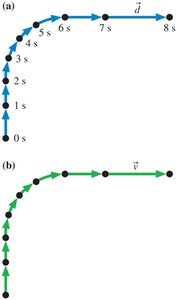
Motion Diagrams and Vectors
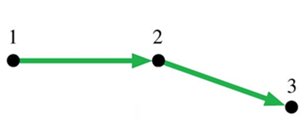
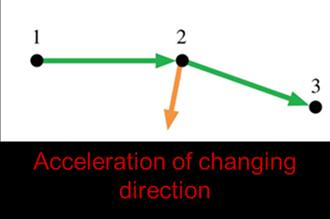
Displacement and velocity vectors can be drawn between successive positions in a motion diagram.
Acceleration in Two Dimensions
Acceleration occurs when velocity changes in magnitude or direction.
Vector definition:
Projectile Motion
Definition and Characteristics
A projectile moves in two dimensions under gravity alone (neglecting air resistance).
The path is a parabola.
Horizontal and vertical motions are independent.
Kinematic Equations for Projectile Motion
Horizontal motion: (constant velocity, )
Vertical motion: (constant acceleration, )
Problem-Solving Approach
Separate the problem into horizontal and vertical components.
Draw a diagram, define variables, and apply the appropriate kinematic equations.
Time of flight is the same for both components.
Example: Dock Jumping Dog
A dog runs off a dock at 8.5 m/s from a height of 0.61 m. Find the horizontal distance traveled before hitting the water.
Solution involves finding the time to fall vertically, then using horizontal velocity to find range.
Range of a Projectile
The range is the horizontal distance traveled.
Maximum range occurs at a launch angle of 45° (without air resistance).
Flight time depends on the vertical component of velocity.
Summary Table: Key Equations and Concepts
Concept | Equation | Description |
|---|---|---|
Vector Addition | Tip-to-tail or parallelogram rule | |
Components | , | From magnitude and angle |
Magnitude | From components | |
Projectile Motion (horizontal) | Constant velocity | |
Projectile Motion (vertical) | Constant acceleration | |
Ramp Acceleration | Component of gravity along ramp |
Study Tips
Practice decomposing vectors into components and recombining them.
Draw diagrams for all two-dimensional motion problems.
Always separate horizontal and vertical motions in projectile problems.
Check units and reasonableness of answers.
