 뒤로
Functions and Their Graphs: Foundations of Precalculus
스터디 가이드 - 스마트 노트
 자료에 맞춘 맞춤형 노트, 핵심 정의, 예시, 맥락을 확장해 제공합니다.
Section 2.1 Functions
Objectives
Describe a relation
Determine whether a relation represents a function
Use function notation and find the value of a function
Find the difference quotient of a function
Find the domain of a function defined by an equation
Form the sum, difference, product, and quotient of two functions
Relations
Definition and Representation
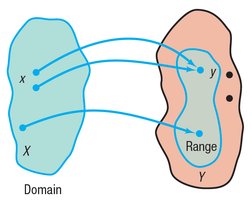
A relation is a correspondence between two sets: a set X (the domain) and a set Y (the range). In a relation, each element from the domain corresponds to at least one element from the range. The notation x → y indicates that y depends on x, where x is the input and y is the output.
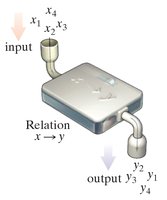
Relations can be expressed in several ways:
Verbally (describing the relationship in words)
Numerically (using tables or sets of ordered pairs)
Graphically (plotting points on a coordinate plane)
As a mapping (drawing arrows from domain elements to range elements)
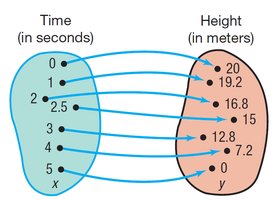
Example: Describing a Relation
Consider the average retail price of gasoline in the U.S. over several years:
Domain: {2010, 2012, 2014, 2016, 2018}
Range: {$2.78, $3.62, $3.36, $2.14, $2.72}
Ordered pairs: {(2010, $2.78), (2012, $3.62), (2014, $3.36), (2016, $2.14), (2018, $2.72)}
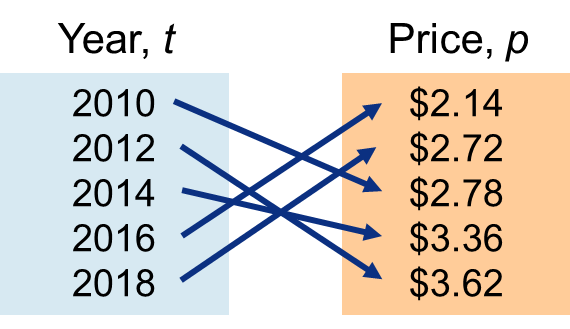
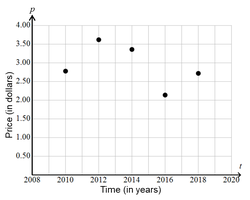
Functions
Definition and Properties
A function from set X into set Y is a relation that associates with each element of X exactly one element of Y. The set X is called the domain, and the set of all images (outputs) is called the range. The range may be a proper subset of Y.
Examples: Determining Functions from Mappings
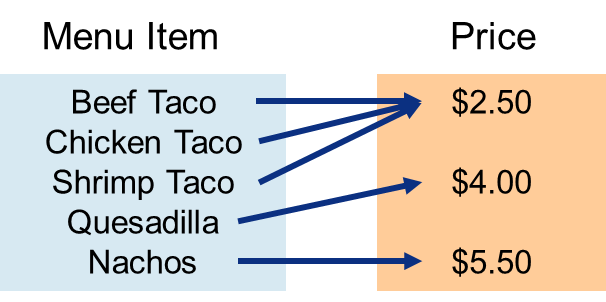
Example a: Menu items and their prices. Each item has exactly one price, so this is a function.
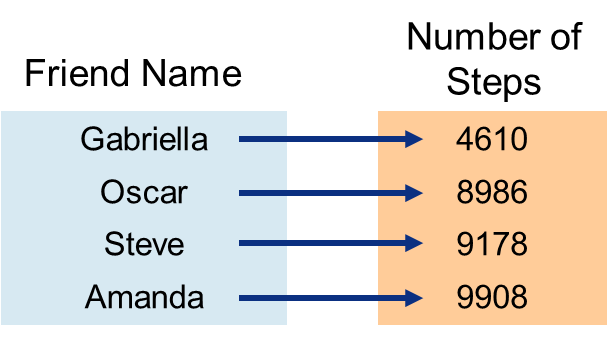
Example b: Friends and their step counts. Each friend has exactly one step count, so this is a function.
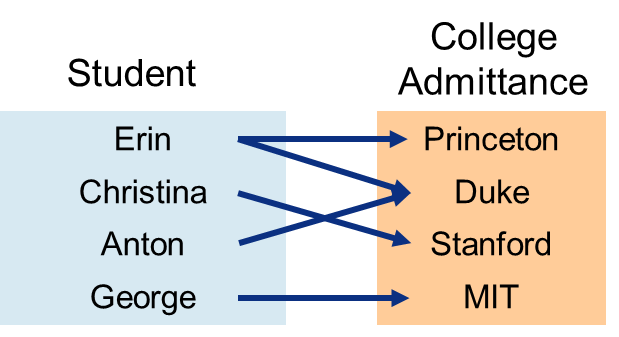
Example c: Students and college admittances. If a student is admitted to more than one college, the relation is not a function.
Examples: Ordered Pairs and Functions
If no two ordered pairs have the same first element with different second elements, the relation is a function.
If any first element is paired with more than one second element, the relation is not a function.
Examples: Equations as Functions
The equation $y = 3x + 7$ defines a function because each input $x$ yields exactly one output $y$.
Equations that yield more than one output for a single input (e.g., $x^2 + y^2 = 1$) do not define functions.
Function Notation and Evaluation
Function Notation
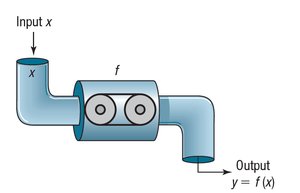
If $f$ is a function, then for each $x$ in the domain, $f(x)$ denotes the value of the function at $x$. The variable $x$ is called the independent variable (or argument), and $y = f(x)$ is the dependent variable.
Evaluating Functions
To evaluate $f(a)$, substitute $a$ for $x$ in the function's formula.
Examples include substituting values, expressions, or variables for $x$.
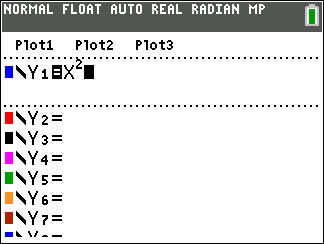
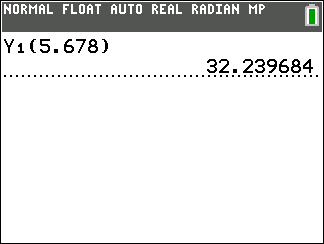
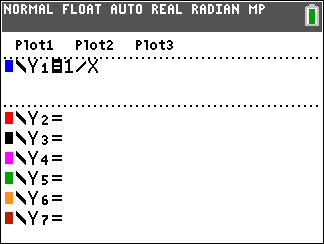
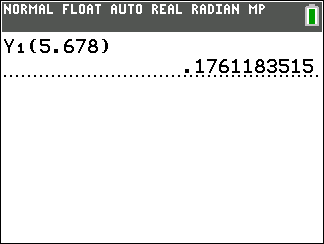
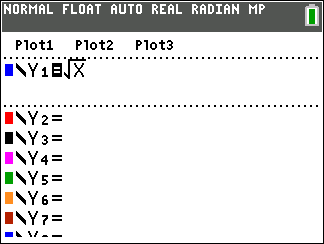
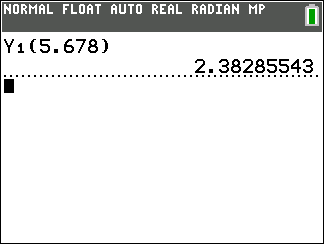
Calculator Examples
Graphing and evaluating functions using a calculator can verify results.
Implicit and Explicit Forms of Functions
A function is given implicitly if defined by an equation involving $x$ and $y$. If it is possible to solve for $y$ in terms of $x$, the function is given explicitly as $y = f(x)$.
Difference Quotient
Definition
The difference quotient of a function $f$ at $x$ is given by:
$ \frac{f(x+h) - f(x)}{h} $
This expression is foundational for calculus, representing the average rate of change of the function over an interval of length $h$.
Domain of a Function
Finding the Domain
Start with all real numbers.
Exclude values that make denominators zero.
Exclude values that make even-indexed radicals negative.
Express the domain using interval notation, set notation, or words as appropriate.
Examples: Finding the Domain
For $f(x) = x^2 + 1$, the domain is all real numbers.
For $g(x) = \frac{x}{x^2 - 25}$, exclude $x = 5$ and $x = -5$.
For $h(t) = \sqrt{5 - 5t}$, require $5 - 5t \geq 0$.
For $F(x) = \frac{\sqrt{2x + 6}}{x - 2}$, require $2x + 6 \geq 0$ and $x \neq 2$.
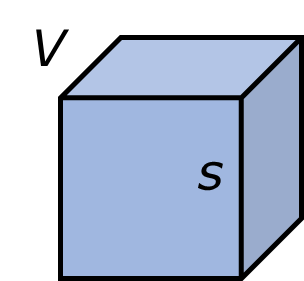
Application Example: Volume of a Cube
The volume $V$ of a cube with side length $s$ is given by:
$ V = s^3 $
The domain is $s > 0$ (since side length must be positive).
Operations on Functions
Definitions
Sum: $(f + g)(x) = f(x) + g(x)$
Difference: $(f - g)(x) = f(x) - g(x)$
Product: $(fg)(x) = f(x)g(x)$
Quotient: $\left(\frac{f}{g}\right)(x) = \frac{f(x)}{g(x)}$, $g(x) \neq 0$
The domain of each operation is the intersection of the domains of $f$ and $g$, with additional restrictions for division (where $g(x) \neq 0$).
Summary Table: Function Operations and Domains
Operation | Definition | Domain |
|---|---|---|
Sum | $(f + g)(x) = f(x) + g(x)$ | All $x$ in the domains of both $f$ and $g$ |
Difference | $(f - g)(x) = f(x) - g(x)$ | All $x$ in the domains of both $f$ and $g$ |
Product | $(fg)(x) = f(x)g(x)$ | All $x$ in the domains of both $f$ and $g$ |
Quotient | $\left(\frac{f}{g}\right)(x) = \frac{f(x)}{g(x)}$ | All $x$ in the domains of both $f$ and $g$, $g(x) \neq 0$ |
