 뒤로
뒤로Chapter 1: Introducing Psychological Science – combined
스터디 가이드 - 스마트 노트
 자료에 맞춘 맞춤형 노트, 핵심 정의, 예시, 맥락을 확장해 제공합니다.
Establishing and Sharing Psychological Knowledge
How Psychologists Establish and Share Knowledge
Psychologists use systematic methods to establish and share knowledge about human behavior and mental processes. This process is foundational to the scientific study of psychology.
Scientific Method: Psychologists use observation, hypothesis formation, experimentation, and analysis to build reliable knowledge.
Peer Review and Publication: Research findings are shared through peer-reviewed journals, conferences, and textbooks.
Replication: Studies are replicated to confirm findings and ensure reliability.
Example: A psychologist studying memory might conduct experiments, analyze data, and publish results in a scientific journal for others to evaluate and build upon.
Chapter 1: Introducing Psychological Science
What is Psychological Science?
Psychological science is the systematic study of behavior and mental processes. It seeks to understand individuals and groups by establishing general principles and researching specific cases.
Psychology is both a natural and social science, integrating biological, cognitive, and social perspectives.
It explores how humans think, feel, and act, and the factors that influence these processes.
Humanistic Psychology
Humanistic psychology emphasizes the unique qualities of humans, including free will, personal growth, and self-actualization.
Key Figures: Abraham Maslow and Carl Rogers.
Focuses on the individual's potential and stresses the importance of growth and self-fulfillment.
Humans are seen as fundamentally different from other animals due to their capacity for rational thought and self-determination.
Self-actualization: The process of realizing and fulfilling one's potential.
The Brain and Behaviour
The relationship between the brain and behavior is a central focus in psychology. Researchers study how brain activity is linked to thoughts, feelings, and actions.
Hebb’s Law: "Cells that fire together, wire together." This principle explains how learning and memory occur at the cellular level in the brain.
Donald Hebb: Demonstrated the cellular basis of behavior, especially memory.
Wilder Penfield: Mapped brain functions and showed how subjective experiences are represented in the brain.
Emerging Themes in Psychology
Modern psychology is diverse, with several emerging themes and subfields:
Psychology of Women: Examines gender differences and the experiences of women.
Comparing Cultures: Cross-cultural psychology studies how culture influences behavior and mental processes.
Cognitive Neuroscience: Uses neuroimaging (e.g., fMRI) to study the brain's role in cognition.
Positive Psychology: Focuses on strengths, well-being, and optimal human functioning.
Applied Psychology: Includes industrial/organizational, human factors, and environmental psychology.
Critical Psychology: Analyzes the social and political context of psychological research and practice.
Chapter 1: Introducing Psychological Science
Overview of Psychological Science
Psychological science is the systematic study of behaviour, thought, and experience, and how these are influenced by physical, mental, social, and environmental factors. This chapter introduces the foundations of psychology as a scientific discipline, its historical roots, and the core principles that guide psychological research and practice.
What is Science?
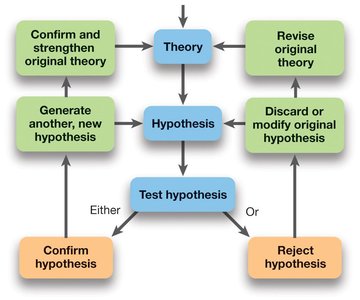
Science is a method of acquiring knowledge about the natural world through systematic observation, experimentation, and reasoning. In psychology, the scientific method is used to establish and share knowledge, ensuring that findings are reliable and valid.
Scientific Method: A structured process for investigating phenomena, acquiring new knowledge, or correcting previous knowledge.
Theory: An explanation for a broad range of observations, integrating numerous findings into a coherent whole. In science, a theory is not merely an opinion.
What Makes Psychology Scientific?
Psychology is scientific because it applies the scientific method to study behaviour and mental processes. Psychologists use empirical evidence, critical thinking, and skepticism to evaluate claims and theories.
Empirical Evidence: Information acquired by observation or experimentation.
Determinism: The belief that all events, including behaviour, are determined by specific causal factors.
Materialism vs. Dualism: Materialism posits that behaviour and mental processes have a physical basis, while dualism suggests a separation between mind and body.
Scientific Literacy
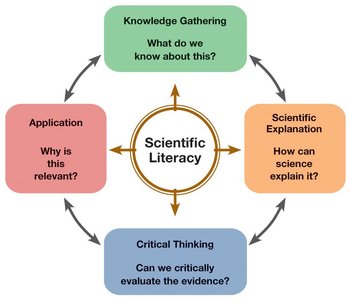
Scientific literacy involves understanding scientific concepts and processes, enabling individuals to evaluate evidence, apply knowledge, and make informed decisions.
Knowledge Gathering: What do we know about this?
Scientific Explanation: How can science explain it?
Critical Thinking: Can we critically evaluate the evidence?
Application: Why is this relevant?
Critical Thinking in Psychology
Critical thinking is essential for evaluating psychological research and claims. It involves a set of habits and skills that help individuals assess the quality of evidence and reasoning.
Be curious and open-minded.
Recognize that not all research is of equal quality.
Examine assumptions and biases.
Keep emotions out of the evaluation process.
Tolerate ambiguity and uncertainty.
Consider alternative viewpoints and interpretations.
Philosophical and Scientific Origins of Psychology
Psychology has roots in philosophy, physics, evolutionary theory, medicine, and social sciences. Key concepts include empiricism (knowledge through experience) and determinism (causal laws govern behaviour).
Ancient Philosophers: Explored personality traits and the nature of the mind.
Physics: Influenced the study of perception.
Evolutionary Theory: Charles Darwin’s natural selection shaped understanding of behaviour.
Medicine: Contributed to diagnoses and treatments.
Social Sciences: Introduced measurement and comparison of human behaviour.
Notable Figures: Franz Mesmer (placebo effects, hypnosis), Sigmund Freud (psychoanalysis, the unconscious), Sir Frances Galton (nature vs. nurture).
Structuralism and Functionalism
These were the first major schools of thought in psychology, each with a distinct focus.
Structuralism: Analyzing conscious experience by breaking it down into basic elements (Wilhelm Wundt, Edward Titchener).
Functionalism: Studying the purpose and function of behaviour and conscious experience (William James).
The Rise of Behaviourism
Behaviourism emphasized the study of observable behaviour, minimizing the role of mental events.
Classical Conditioning: Learning through association (Ivan Pavlov, Edwin Twitmyer).
Operant Conditioning: Learning through consequences (Edward Thorndike, B.F. Skinner).
John B. Watson: Advocated for a focus on observable behaviour.
Social and Cultural Influences
Social and personality psychology examine how individuals are influenced by others and by their environments.
Norman Triplett: Conducted the first formal experiment on social influences.
Kurt Lewin: Proposed that behaviour is a function of the individual and the environment ().
The Cognitive Revolution
The cognitive revolution shifted focus to mental processes such as memory, thinking, and language.
Memory Research: Hermann Ebbinghaus, Frederick Bartlett.
Gestalt Psychology: Emphasized that the whole is greater than the sum of its parts.
Computer Analogy: The mind is likened to a computer (Ulrich Neisser).
Cognitive Psychology: Modern perspective focusing on mental processes.

Humanistic Psychology
Humanistic psychology emphasizes the unique qualities of humans, including free will, rational thought, and the drive for personal growth.
Key Figures: Abraham Maslow, Carl Rogers.
Focus on self-actualization and fulfillment of potential.
The Brain and Behaviour
Modern psychology explores the relationship between brain activity and behaviour.
Hebb’s Law: Demonstrates memory at the cellular level (Donald Hebb).
Brain Mapping: Wilder Penfield’s work on brain representations of subjective experiences.
Emerging Themes in Psychology
Contemporary psychology includes diverse themes and applications.
Psychology of Women
Cross-Cultural Comparisons
Cognitive Neuroscience (e.g., fMRI)
Positive Psychology
Applied Psychology (Industrial/Organizational, Human Factors, Environmental, Critical Psychology)
Summary Table: Major Schools of Thought in Psychology
School | Key Focus | Notable Figures |
|---|---|---|
Structuralism | Basic elements of consciousness | Wilhelm Wundt, Edward Titchener |
Functionalism | Purpose of behaviour and consciousness | William James |
Behaviourism | Observable behaviour | John B. Watson, B.F. Skinner, Ivan Pavlov |
Cognitive Psychology | Mental processes (memory, thinking, language) | Ulrich Neisser, Hermann Ebbinghaus |
Humanistic Psychology | Personal growth, self-actualization | Abraham Maslow, Carl Rogers |
Additional info: This summary integrates foundational concepts, historical context, and emerging themes to provide a comprehensive overview of introductory psychological science. Students are encouraged to read the textbook for deeper exploration of each topic.
