 뒤로
Introductory Statistics: Foundations and Data Collection
스터디 가이드 - 스마트 노트
 자료에 맞춘 맞춤형 노트, 핵심 정의, 예시, 맥락을 확장해 제공합니다.
Introduction to Statistics
Statistics and Data
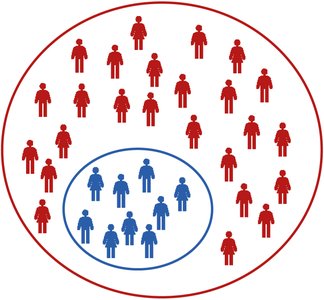
Statistics is the science of collecting, organizing, analyzing, and interpreting data to make informed decisions. Data refers to information gathered from counting, measuring, or collecting responses. The two fundamental groups in statistics are the population (the entire set of subjects or items of interest) and the sample (a subset of the population).
Population: The complete set of data ("every", "each").
Sample: A subset of the population, selected for study.
Parameter: A numerical value describing a characteristic of the population.
Statistic: A numerical value describing a characteristic of a sample.
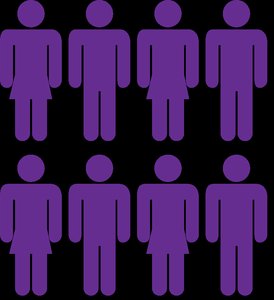
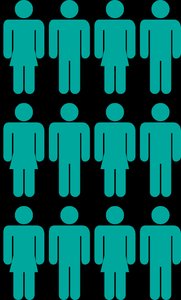
Example: If you measure the salary of every employee at a firm, you are working with a population. If you measure the salary of 12 out of 100 employees, you are working with a sample. The average salary of all employees is a parameter; the average salary of the sample is a statistic.
Types of Data
Qualitative vs. Quantitative Data
Data can be categorized as qualitative (descriptive, categorical) or quantitative (numerical). Quantitative data can further be classified as discrete or continuous.
Qualitative Data: Describes qualities or categories (e.g., favorite color, eye color).
Quantitative Data: Describes quantities or amounts.
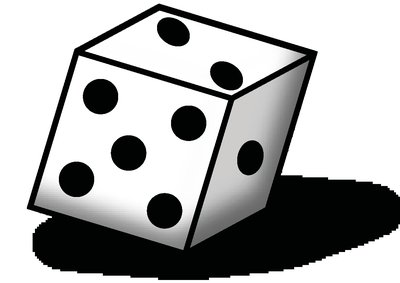
Discrete: Countable values that cannot be broken down further (e.g., dice roll, number of students).
Continuous: Measurable values that can be broken down further (e.g., time, temperature).
Example: Surveying the nationalities of people is qualitative. Measuring the distance people walk is quantitative and continuous. Counting the number of goals scored is quantitative and discrete.




Levels of Measurement
Classification of Data
Data can be classified by levels of measurement, which determine what types of mathematical operations are meaningful.
Nominal: Categories, names, or labels; no order or calculations (e.g., hair color).
Ordinal: Ordered categories; differences are not meaningful (e.g., letter grades).
Interval: Ordered, meaningful differences; no true zero (e.g., temperature in Celsius).
Ratio: Ordered, meaningful differences; true zero exists (e.g., heights, distances).
Example: Birth years are interval, satisfaction ratings are ordinal, working hours are ratio, favorite music genre is nominal.
Additional info: Interval data does not allow meaningful ratios (e.g., 80°F is not "twice as hot" as 40°F).
Collecting Data
Observational Studies vs. Experiments
There are two main ways to collect data:
Experiment: Apply a treatment and measure its effects; causation can be assumed.
Observational Study: Do not change anything, just measure characteristics; causation cannot be assumed.
Example: Testing a medication by giving subjects a placebo or the actual medication is an experiment. Surveying students about their sleep habits is an observational study.


Sampling
Simple Random Sampling
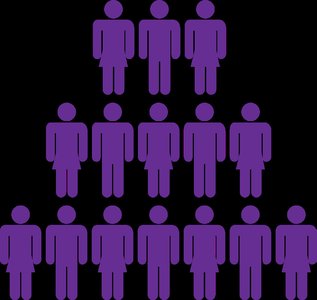
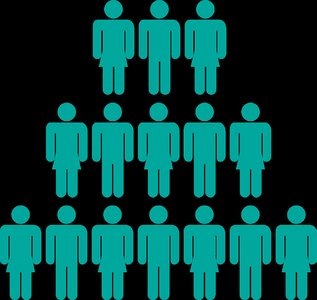
Sampling is the process of selecting a smaller group (sample) from a larger group (population). A representative sample reflects the characteristics of the population. In Simple Random Sampling (SRS), each subject and each possible group are equally likely to be selected.
Example: Randomly selecting marbles from a bag or students from a class.

Sampling Methods
There are several methods for sampling:
Simple Random Sampling (SRS): Randomly select from the whole population.
Systematic Sampling: Select every nth subject.
Cluster Sampling: Divide population into groups (clusters), then randomly select clusters.
Stratified Sampling: Divide population into groups (strata) with shared characteristics, then randomly select subjects from each stratum.
Example: A bakery tests every 12th cookie (systematic), an HR manager uses a random number generator (SRS), a university surveys random undergrads and grad students (stratified), randomly selecting a class per grade (cluster).
Additional info: Sampling methods are chosen based on practicality and the need for representativeness.
