 뒤로
Sampling Methods and Survey Design in Introductory Statistics
스터디 가이드 - 스마트 노트
 자료에 맞춘 맞춤형 노트, 핵심 정의, 예시, 맥락을 확장해 제공합니다.
Sampling and Surveys in Statistics
Understanding Populations and Samples
In statistics, the concept of a population is fundamental for making inferences. A population consists of all units of interest, and researchers aim to understand its characteristics by studying population parameters such as the mean, standard deviation, percentiles, and proportions. Since it is often impractical to study the entire population, a sample is selected to estimate these parameters. The sample must be representative to ensure valid conclusions.
Population: The entire group of individuals or items of interest.
Sample: A subset of the population used to make inferences about the population.
Population Parameter: A numerical summary of a population (e.g., mean, standard deviation).
Sample Statistic: A numerical summary calculated from the sample data.
Sampling Frame: The list or collection from which the sample is drawn.

Example: Estimating the average GPA of UT students who own iPads, or the proportion of cars with underinflated tires on Tennessee highways.
Statistical Notation
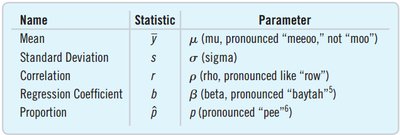
Statisticians use Greek letters for population parameters and Latin letters for sample statistics. This distinction helps clarify whether a value refers to the entire population or just the sample.
Mean: (sample), (population)
Standard Deviation: (sample), (population)
Correlation: (sample), (population)
Regression Coefficient: (sample), (population)
Proportion: (sample), (population)
Sample Size and Representativeness
The size of the sample and the method of selection are crucial for representativeness. The fraction of the population sampled is less important than the absolute sample size and its randomness. For example, to estimate proportions with a margin of error of 3%, a sample size slightly greater than 1000 is needed, regardless of whether the population is a county or the entire country.
Key Point: The sample size and selection method determine the quality of inference, not the population size.
Sampling Frame Bias: Occurs when the sampling frame does not cover the entire population.
Sampling Biases
Biases can distort the results of a survey or study. Common types include:
Voluntary Response Bias: Only individuals with strong opinions respond, leading to unrepresentative results.
Convenience Sampling: Samples are taken from easily accessible members, which may not represent the population.
Undercoverage: Some groups are not included or are underrepresented in the sample.
Nonresponse Bias: Those who do not respond may differ significantly from those who do.
Response Bias: External influences, such as question wording or interviewer behavior, affect responses.

Example: A survey sent to all residences may underrepresent homeless individuals (undercoverage). Telephone surveys may miss those who hang up (nonresponse bias).
Sampling Designs
Different sampling designs are used to minimize bias and maximize representativeness:
Simple Random Sample: Every member of the population has an equal chance of being selected.
Systematic Sample: Every k-th member is selected after a random start.
Stratified Random Sample: The population is divided into homogeneous groups (strata), and random samples are taken from each stratum.
Cluster Sample: The population is divided into clusters, some clusters are randomly selected, and all members within chosen clusters are surveyed.
Multistage Sample: Combines several sampling methods, often used in large-scale surveys.
Stratified vs. Cluster Sampling
Stratified sampling ensures representation of different groups, while cluster sampling is used for practicality when groups are similar to the overall population.
Feature | Stratified Sampling | Cluster Sampling |
|---|---|---|
Group Homogeneity | Homogeneous within strata, heterogeneous between strata | Clusters resemble overall population, heterogeneous within clusters |
Purpose | Reduce bias, ensure representation | Practicality, affordability |
Sampling Method | Random sample within each stratum | Random selection of clusters, census within clusters |
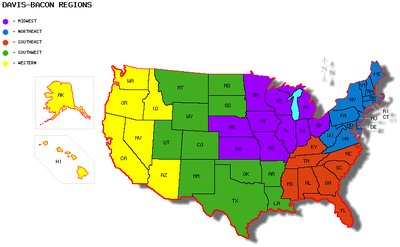
Example: Stratified sampling by dorm type for student opinions on sports; cluster sampling by bags of M&Ms for color distribution.
Multistage Sampling
Multistage sampling combines several methods, such as stratified and cluster sampling, to handle complex populations. Professional polling organizations often use multistage designs for efficiency and accuracy.
Example: The 2005 Lancet Survey of civilian war casualties in Iraq used neighborhoods as clusters and sampled dwellings within them.
Designing Valid Surveys
To ensure a valid survey, researchers must:
Define the research question clearly.
Identify the correct respondents.
Ask appropriate questions.
Ensure that the answers address the research objectives.
Additional info: The notes above expand on brief points from the slides, providing definitions, examples, and comparisons to make the guide self-contained and suitable for exam preparation.
