 뒤로
뒤로Acid-Base and Antibody-Antigen Equilibria: Analytical Chemistry Study Notes
스터디 가이드 - 스마트 노트
 자료에 맞춘 맞춤형 노트, 핵심 정의, 예시, 맥락을 확장해 제공합니다.
Acid-Base Equilibria and pH
Introduction to pH and Acid-Base Concepts
The pH scale is a fundamental concept in analytical chemistry, used to quantify the acidity or basicity of aqueous solutions. Understanding pH is essential for predicting chemical equilibria, buffer behavior, and the properties of biological and chemical systems.
pH Definition: pH is defined as the negative logarithm of the hydronium ion concentration: .
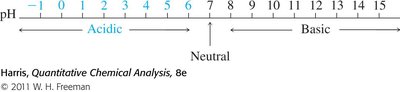
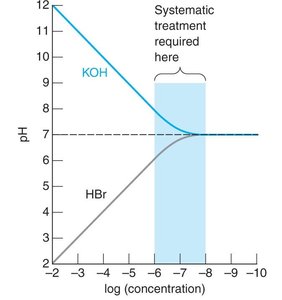
Acidic, Neutral, and Basic Solutions: Solutions with pH < 7 are acidic, pH = 7 is neutral, and pH > 7 is basic.
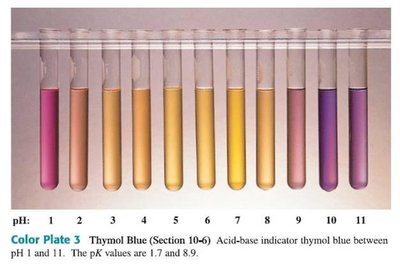
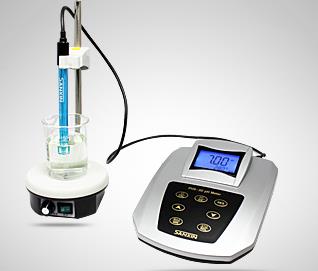
pH Measurement: pH can be measured using colorimetric indicators or electrochemical pH meters.
Acids, Bases, and Dissociation Constants
Acids and bases are classified as strong or weak depending on their degree of dissociation in water. The strength of an acid or base is quantified by its dissociation constant ( for acids, for bases).
Strong Acids/Bases: Completely dissociate in water (e.g., HNO3, NaOH).
Weak Acids/Bases: Partially dissociate, characterized by or values (e.g., acetic acid, ammonia).
pKa and pKb: ; lower pKa means a stronger acid.
Organic Functional Groups and Acid-Base Properties
Many organic molecules contain functional groups that can act as weak acids or bases. Their acid-base behavior is crucial in biological and chemical systems.
Carboxylic Acids: Typical pKa values range from 2.8 to 5.0.
Alcohols and Phenols: Alcohols are much weaker acids (pKa > 15), while phenols are moderately weak (pKa ~10).
Amines: Weak bases with pKa values for their conjugate acids typically between 9 and 11.
pH, pKa, and Species Distribution
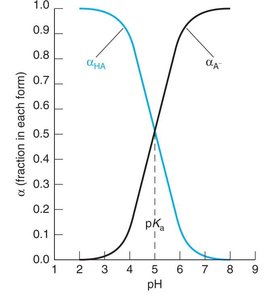
The relationship between pH and pKa determines the predominant species in solution. When pH = pKa, the concentrations of acid and conjugate base are equal.
When pH < pKa: The protonated (acidic) form predominates.
When pH > pKa: The deprotonated (basic) form predominates.
Buffer Solutions and Their Value
Buffer Definition and Function
Buffers are solutions that resist changes in pH upon addition of small amounts of acid or base. They are typically composed of a weak acid and its conjugate base (or a weak base and its conjugate acid).
Buffer Capacity: The ability of a buffer to resist pH change is greatest when pH ≈ pKa of the acid.
Biological Importance: Buffers are essential in maintaining pH in physiological systems and analytical procedures.
Henderson-Hasselbalch Equation
The Henderson-Hasselbalch equation provides a convenient way to calculate the pH of a buffer solution:
Where [A-] is the concentration of the conjugate base and [HA] is the concentration of the acid.
Preparation of Buffer Solutions
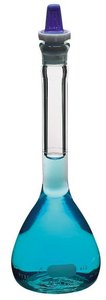
Buffers can be prepared by mixing a weak acid with its salt or by partial neutralization of a weak acid with a strong base. The pH is adjusted to the desired value using the Henderson-Hasselbalch equation.
Calculate the required amounts of acid and conjugate base.
Dissolve in water, adjust pH if necessary, and dilute to the final volume.
Polyprotic Acids and Amino Acids
Polyprotic Acids
Polyprotic acids can donate more than one proton, each with its own dissociation constant (pKa1, pKa2, etc.). The titration and equilibrium calculations for these acids are more complex due to multiple equilibria.
Example: Sulfurous acid (H2SO3) has two pKa values: pKa1 = 1.857, pKa2 = 7.172.
Sequential Proton Loss: Each proton is lost in a stepwise manner, and the pH at each stage can be calculated using ICE tables and equilibrium expressions.
Amino Acids as Polyprotic Species
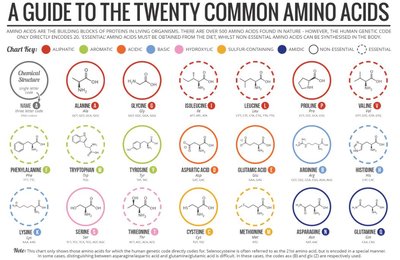
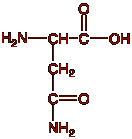
Amino acids contain at least two ionizable groups (amino and carboxyl), and some have ionizable side chains. They exist as zwitterions at physiological pH and have characteristic isoelectric points (pI).
Zwitterion: A molecule with both positive and negative charges but overall neutral.
Isoelectric Point (pI): The pH at which the amino acid has no net charge. For amino acids without ionizable side chains, .
Antibody-Antigen Equilibria
Antibody-Antigen Binding Equilibrium
Antibody-antigen interactions are a key example of equilibrium in biological systems. The binding can be described by an equilibrium constant (affinity constant, ):

Applications in Analytical Chemistry
Antibody-antigen equilibria are exploited in immunoassays, such as ELISA and lateral flow tests (e.g., pregnancy tests), for sensitive and selective detection of analytes.
Sandwich Assays: Use two antibodies to increase specificity and sensitivity.
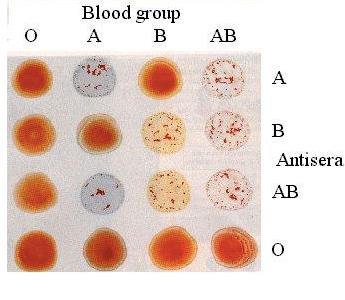
Agglutination Assays: Rely on visible clumping due to antibody-antigen complex formation.
Monoclonal vs. Polyclonal Antibodies
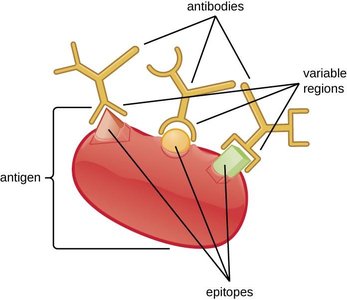
Monoclonal antibodies recognize a single epitope, while polyclonal antibodies recognize multiple epitopes on the same antigen. The choice depends on the analytical application and required specificity.
Monoclonal: High specificity, useful for detecting single variants.
Polyclonal: Broader recognition, useful for detecting multiple forms or variants.
Summary Table: Key Acid-Base and Antibody-Antigen Concepts
Concept | Definition/Equation | Example/Application |
|---|---|---|
pH | pH of blood ≈ 7.4 | |
Buffer | Weak acid + conjugate base | Acetate buffer, phosphate buffer |
Henderson-Hasselbalch | Calculating buffer pH | |
Antibody-Antigen Equilibrium | Immunoassays, diagnostics |
