Consider the endosymbiosis theory for the origin of the mitochondrion. How did each endosymbiotic partner benefit from the relationship?
검증된 단계별 안내
1
Understand the endosymbiosis theory, which suggests that mitochondria originated from free-living prokaryotes that were engulfed by a host cell.
Identify the benefits for the engulfed prokaryote: it gained protection and a stable environment within the host cell.
Identify the benefits for the host cell: it gained an efficient energy production system, as the engulfed prokaryote evolved into mitochondria capable of aerobic respiration.
Consider how this mutualistic relationship allowed for increased energy production, which supported more complex cellular functions and the evolution of eukaryotic cells.
Reflect on the evidence supporting this theory, such as the presence of mitochondrial DNA, which is similar to bacterial DNA, and the double membrane structure of mitochondria.
비슷한 문제에 대한 검증된 영상 답변:
이 영상 해법은 위 문제에 도움이 된다고 튜터들이 추천한 것입니다.
영상 길이:
3m
영상 재생:
0 댓글
주요 개념
질문에 올바르게 답하기 위해 반드시 이해해야 하는 핵심 개념들은 다음과 같습니다.
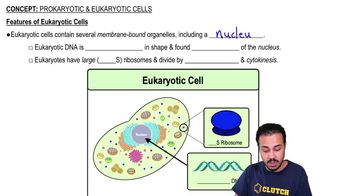
Endosymbiosis Theory
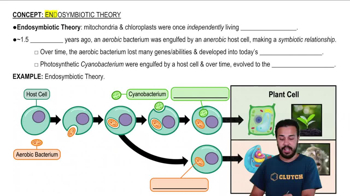
The endosymbiosis theory posits that certain organelles, like mitochondria, originated from free-living prokaryotic organisms that were engulfed by ancestral eukaryotic cells. This symbiotic relationship allowed the engulfed prokaryotes to live within the host cell, leading to a mutually beneficial arrangement that evolved over time into a permanent partnership.
Mutualism is a type of symbiotic relationship where both partners benefit from the interaction. In the context of endosymbiosis, the host cell provided protection and nutrients to the engulfed prokaryote, while the prokaryote contributed to the host's energy production through processes like aerobic respiration, enhancing the host's survival and efficiency.
Evolution of Eukaryotic Cells
The evolution of eukaryotic cells is marked by the incorporation of prokaryotic cells through endosymbiosis, leading to complex cellular structures. This process not only facilitated the development of mitochondria but also allowed for greater metabolic capabilities, enabling eukaryotes to thrive in diverse environments and adapt to various ecological niches.

 3:41분
3:41분 검증된 단계별 안내
 07:29
07:29