Biologists think that endosymbiosis gave rise to mitochondria before plastids partly because
a. the products of photosynthesis could not be metabolized without mitochondrial enzymes.
b. all eukaryotes have mitochondria (or their remnants), whereas many eukaryotes do not have plastids.
c. mitochondrial DNA is less similar to prokaryotic DNA than is plastid DNA.
d. without mitochondrial CO2 production, photosynthesis could not occur.
검증된 단계별 안내
1
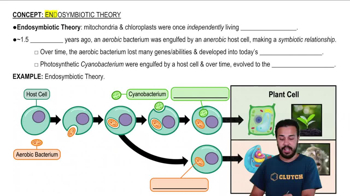
Identify the key concept: Endosymbiosis is a theory that explains the origin of mitochondria and plastids in eukaryotic cells.
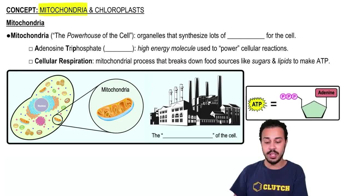
Understand the role of mitochondria and plastids: Mitochondria are involved in energy production through cellular respiration, while plastids, such as chloroplasts, are involved in photosynthesis.
Analyze the options: Consider the evidence supporting the sequence of endosymbiotic events leading to mitochondria and plastids.
Evaluate option b: Recognize that all eukaryotic cells have mitochondria or their remnants, suggesting mitochondria appeared before plastids, which are not present in all eukaryotes.
Conclude based on evidence: The presence of mitochondria in all eukaryotes supports the idea that mitochondria arose before plastids in the evolutionary timeline.
비슷한 문제에 대한 검증된 영상 답변:
이 영상 해법은 위 문제에 도움이 된다고 튜터들이 추천한 것입니다.
영상 길이:
55s
영상 재생:
0 댓글
주요 개념
질문에 올바르게 답하기 위해 반드시 이해해야 하는 핵심 개념들은 다음과 같습니다.
Endosymbiotic Theory
The endosymbiotic theory posits that certain organelles, specifically mitochondria and plastids, originated from free-living prokaryotes that were engulfed by ancestral eukaryotic cells. This theory explains how these organelles have their own DNA and replicate independently, supporting the idea that they were once separate organisms that formed a symbiotic relationship with host cells.
Mitochondria are organelles responsible for energy production through cellular respiration, while plastids, such as chloroplasts, are involved in photosynthesis. The presence of mitochondria in all eukaryotes suggests a fundamental role in energy metabolism, whereas plastids are only found in specific groups, indicating a later evolutionary development linked to photosynthesis.
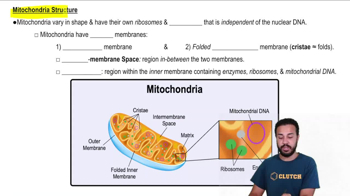
Mitochondrial DNA (mtDNA) is distinct from nuclear DNA and is inherited maternally. It is more similar to prokaryotic DNA than to nuclear DNA, supporting the idea that mitochondria originated from prokaryotic ancestors. This genetic evidence is crucial for understanding the evolutionary history of eukaryotic cells and their organelles.

 0:55분
0:55분 검증된 단계별 안내
 07:29
07:29