Is this statement true or false? 'Animal cells have mitochondria; plant cells have chloroplasts.' Explain your answer, and describe the functions of these organelles.
검증된 단계별 안내
1
Identify the organelles mentioned in the statement: mitochondria and chloroplasts.
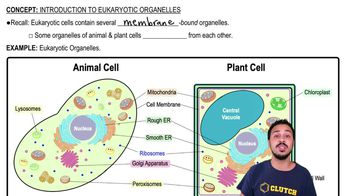
Understand the presence of these organelles in different types of cells: Animal cells and plant cells.
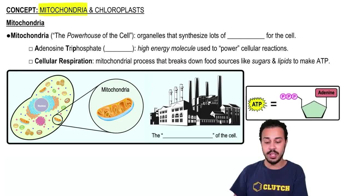
Recall that mitochondria are present in both animal and plant cells, serving as the powerhouse of the cell by generating ATP through cellular respiration.
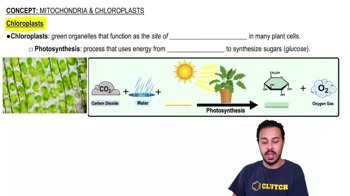
Recognize that chloroplasts are present in plant cells and some protists, responsible for photosynthesis, converting light energy into chemical energy stored in glucose.
Conclude that the statement is misleading because it implies exclusivity, whereas both mitochondria and chloroplasts can be found in plant cells, but only mitochondria are found in animal cells.
비슷한 문제에 대한 검증된 영상 답변:
이 영상 해법은 위 문제에 도움이 된다고 튜터들이 추천한 것입니다.
영상 길이:
1m
영상 재생:
0 댓글
주요 개념
질문에 올바르게 답하기 위해 반드시 이해해야 하는 핵심 개념들은 다음과 같습니다.
Mitochondria
Mitochondria are known as the powerhouse of the cell, responsible for producing adenosine triphosphate (ATP) through cellular respiration. This process converts nutrients into energy, which is essential for various cellular functions. Both animal and plant cells contain mitochondria, highlighting their critical role in energy metabolism.
Chloroplasts are organelles found in plant cells and some protists, responsible for photosynthesis. They contain chlorophyll, which captures sunlight and converts carbon dioxide and water into glucose and oxygen. This process not only provides energy for the plant but also contributes to the oxygen supply in the atmosphere.
Cellular organelles are specialized structures within cells that perform distinct functions necessary for cell survival and operation. In eukaryotic cells, such as those of animals and plants, organelles like mitochondria and chloroplasts play vital roles in energy production and metabolic processes. Understanding these organelles is crucial for grasping how cells maintain homeostasis and perform their functions.