Skip to main content
Anatomy & Physiology
나의 코스
배우기
시험 준비
AI 튜터
학습 가이드
교과서적 해결책
플래시카드
탐험해 보세요
앱을 사용해 보세요
나의 코스
배우기
시험 준비
AI 튜터
학습 가이드
교과서적 해결책
플래시카드
탐험해 보세요
앱을 사용해 보세요
뒤로
Introduction to the Integumentary System quiz #5
카드를 뒤집기 위해 탭할 수 있습니다.
How does the skin contribute to wound healing?
카드를 뒤집기 위해 탭할 수 있습니다.
👆
How does the skin contribute to wound healing?
The skin repairs itself through cell division and tissue regeneration.
진행 상황 추적
컨트롤 버튼이 '내비게이션' 모드로 변경되었습니다.
1/40
관련 플래시카드
관련 실천
추천 영상
Introduction to the Integumentary System definitions
Introduction to the Integumentary System
15 용어
Introduction to the Integumentary System quiz #1
Introduction to the Integumentary System
39 용어
Introduction to the Integumentary System quiz #2
Introduction to the Integumentary System
39 용어
Introduction to the Integumentary System
5. Integumentary System
4 문제점
주제
Bruce
Integumentary System: Thermoregulation
5. Integumentary System
1 문제
주제
Bruce
5. Integumentary System - Part 1 of 2
4 주제
8 문제점
장
Bruce
5. Integumentary System - Part 2 of 2
5 주제
8 문제점
장
Bruce
VideoThumbView.guidedCourse
06:54
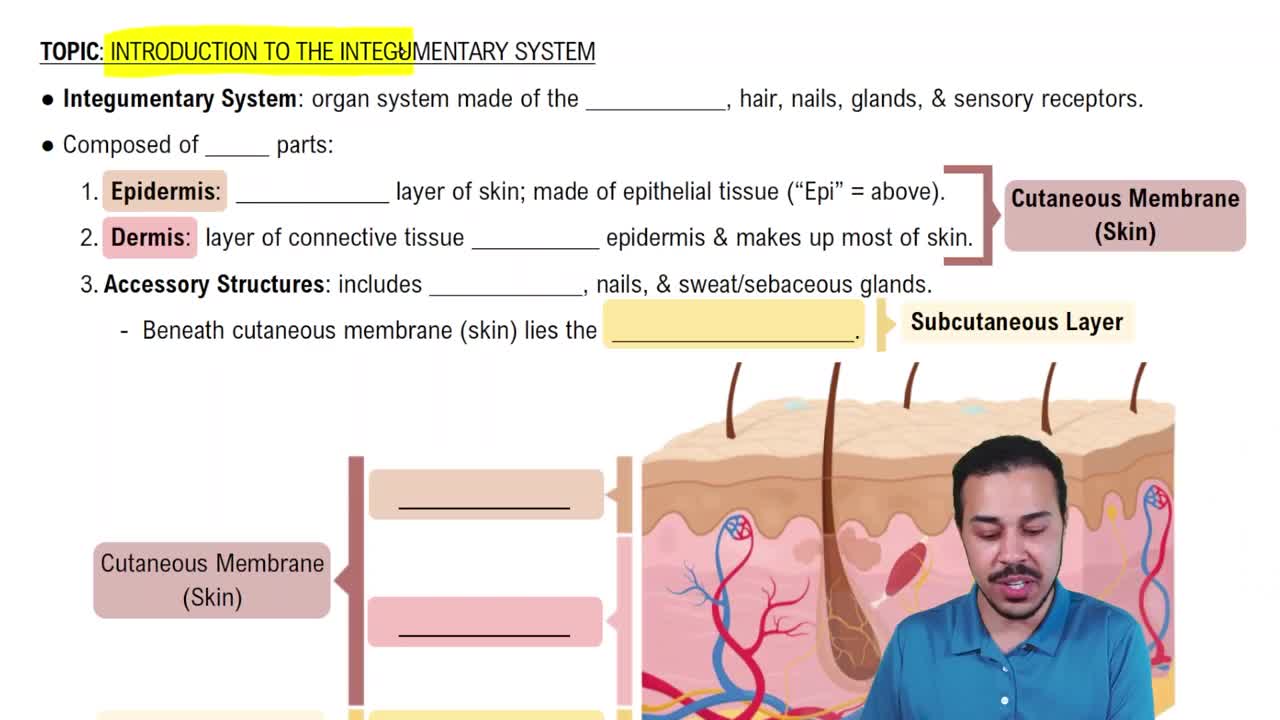
Introduction to the Integumentary System
19992
views
661
rank
3
comments
VideoThumbView.guidedCourse
03:40
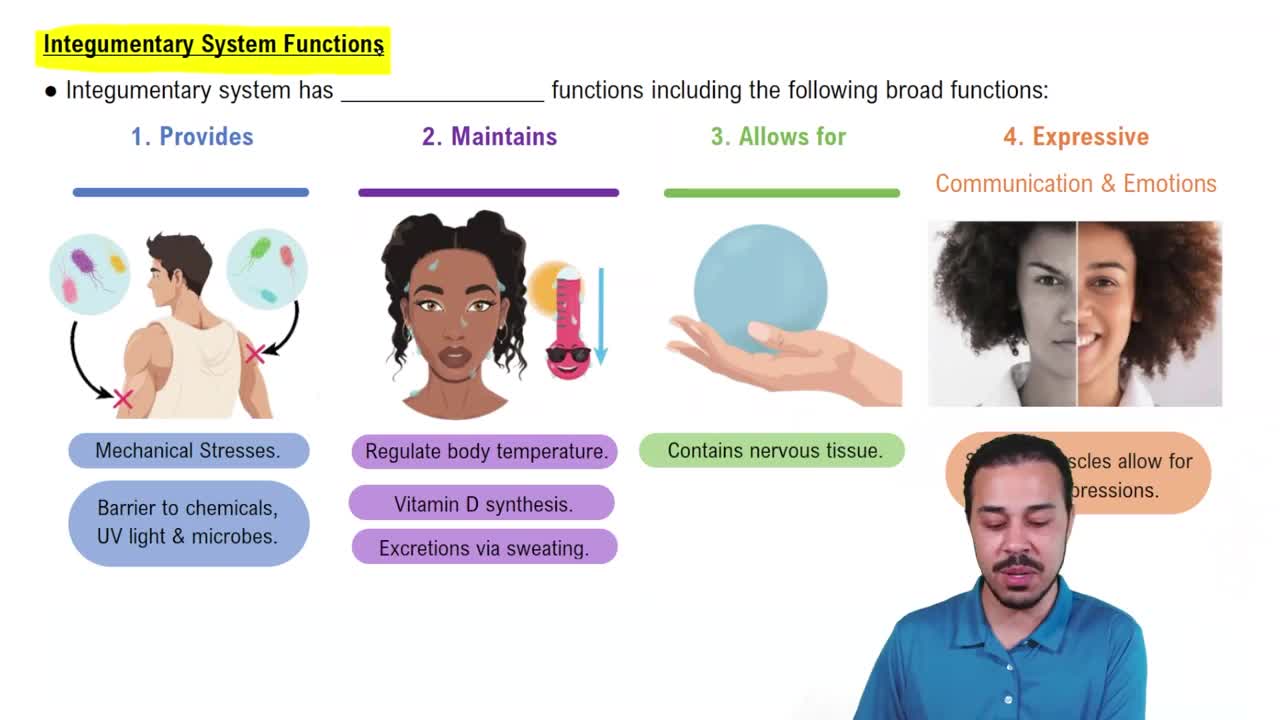
Integumentary System Functions
12936
views
330
rank
1
comments
VideoThumbView.guidedCourse
02:47
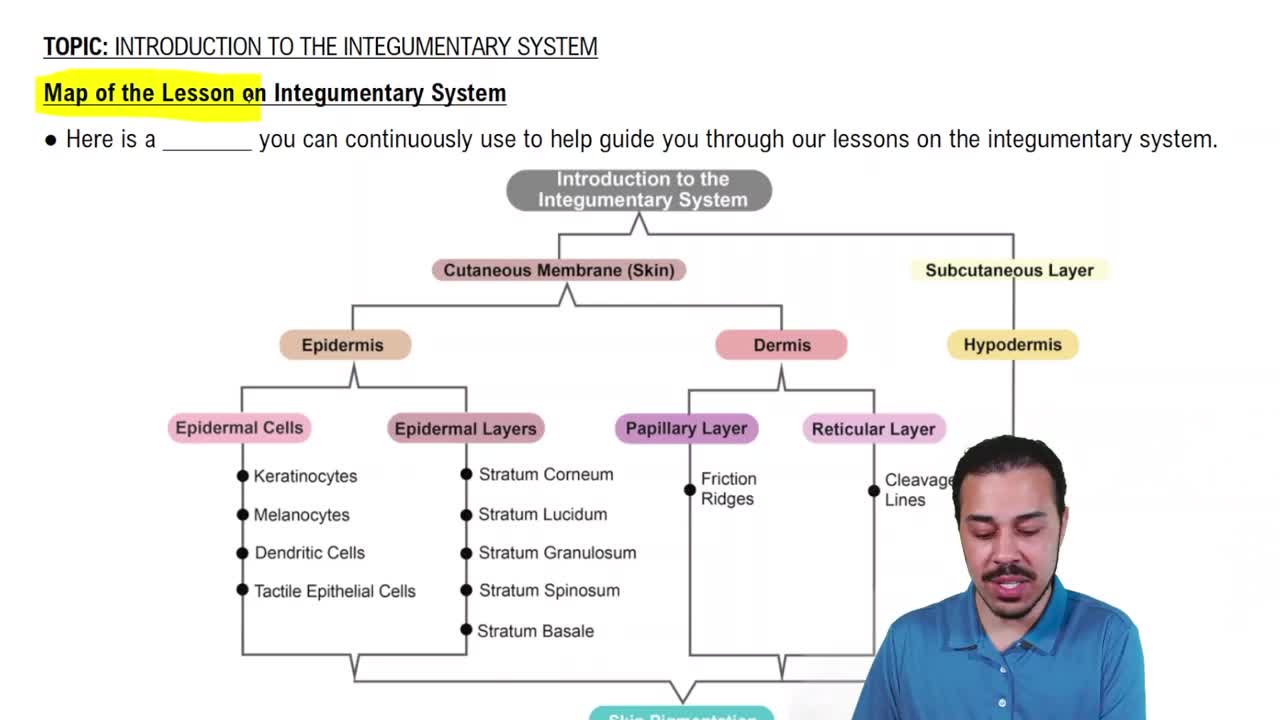
Map of the Lesson on Integumentary System
11312
views
520
rank
2
comments
이 집합의 용어 (40)
하이드의 정의
How does the skin contribute to wound healing?
The skin repairs itself through cell division and tissue regeneration.
What is the function of collagen fibers in the dermis?
Collagen fibers provide strength and structure to the skin.
What is the function of elastic fibers in the dermis?
Elastic fibers allow the skin to stretch and return to its original shape.
How does the skin help protect internal organs?
The skin acts as a physical barrier, shielding internal organs from injury and infection.
What is the function of the stratum granulosum in the epidermis?
The stratum granulosum helps form a waterproof barrier in the skin.
What is the function of the stratum spinosum in the epidermis?
The stratum spinosum provides strength and flexibility to the skin.
What is the function of the stratum lucidum in the epidermis?
The stratum lucidum provides an extra layer of protection in thick skin, such as on the palms and soles.
How does the skin help prevent infection?
The skin acts as a barrier and contains immune cells that help prevent infection.
What is the function of hair follicles?
Hair follicles produce hair and play a role in sensation and protection.
What is the function of the nail matrix?
The nail matrix produces new nail cells for nail growth.
How does the skin respond to changes in temperature?
The skin adjusts blood flow and sweat production to regulate temperature.
What is the function of subcutaneous fat?
Subcutaneous fat insulates the body and stores energy.
How does the skin help detect pain?
The skin contains nerve endings that sense pain stimuli.
What is the function of Merkel cells in the skin?
Merkel cells are involved in the sensation of touch.
How does the skin contribute to the body's defense against dehydration?
The skin's barrier prevents excessive water loss from the body.
What is the function of the stratum spinosum?
The stratum spinosum provides strength and flexibility to the epidermis.
How does the skin help in the synthesis of vitamin D?
The skin initiates vitamin D synthesis when exposed to UV light from the sun.
What is the function of the dermal papillae?
Dermal papillae increase the surface area for exchange of gases, nutrients, and waste products between the dermis and epidermis.
How does the skin help regulate blood flow?
The skin can constrict or dilate blood vessels to regulate heat loss.
What is the function of the skin in excretion?
The skin excretes waste products such as salts and urea through sweat.
How does the skin protect against mechanical injury?
The skin acts as a tough barrier that absorbs and disperses mechanical forces.
What is the function of the skin in sensory perception?
The skin contains receptors that detect touch, pressure, pain, and temperature.
How does the skin help maintain electrolyte balance?
The skin excretes electrolytes such as sodium and potassium in sweat.
What is the function of the skin in nonverbal communication?
The skin allows for facial expressions that communicate emotions.
How does the skin contribute to the immune system?
The skin contains immune cells that help detect and fight pathogens.
What is the function of the skin in protecting against environmental hazards?
The skin acts as a barrier to chemicals, microbes, and physical injury.
How does the skin help regulate body temperature during exercise?
The skin increases sweat production and blood flow to dissipate heat.
What is the function of the skin in vitamin D metabolism?
The skin initiates the conversion of a precursor molecule to vitamin D when exposed to sunlight.
How does the skin help prevent the entry of pathogens?
The skin forms a physical and chemical barrier to block pathogens.
What is the function of the skin in detecting environmental changes?
The skin's sensory receptors detect changes in temperature, pressure, and pain.
How does the skin help in the healing of wounds?
The skin repairs itself through cell division and tissue regeneration.
What is the function of the skin in protecting underlying tissues?
The skin shields underlying tissues from injury, infection, and dehydration.
How does the skin help in the removal of metabolic wastes?
The skin removes metabolic wastes through sweat.
What is the function of the skin in maintaining internal stability?
The skin helps maintain homeostasis by regulating temperature and fluid balance.
How does the skin contribute to the sense of pressure?
The skin contains specialized receptors that detect pressure.
What is the function of the skin in protecting against UV radiation?
The skin contains melanin, which absorbs and disperses UV radiation.
How does the skin help in the detection of temperature changes?
The skin contains thermoreceptors that sense changes in temperature.
What is the function of the skin in providing a waterproof barrier?
The skin's outer layers and sebum create a waterproof barrier to prevent water loss.
How does the skin help in the regulation of blood pressure?
The skin can constrict or dilate blood vessels, affecting blood pressure.
What is the function of the skin in protecting against abrasion?
The skin's tough outer layer protects against abrasion and friction.
 뒤로뒤로
뒤로뒤로
 06:54
06:54